Open USD Enters the US Stablecoin Race
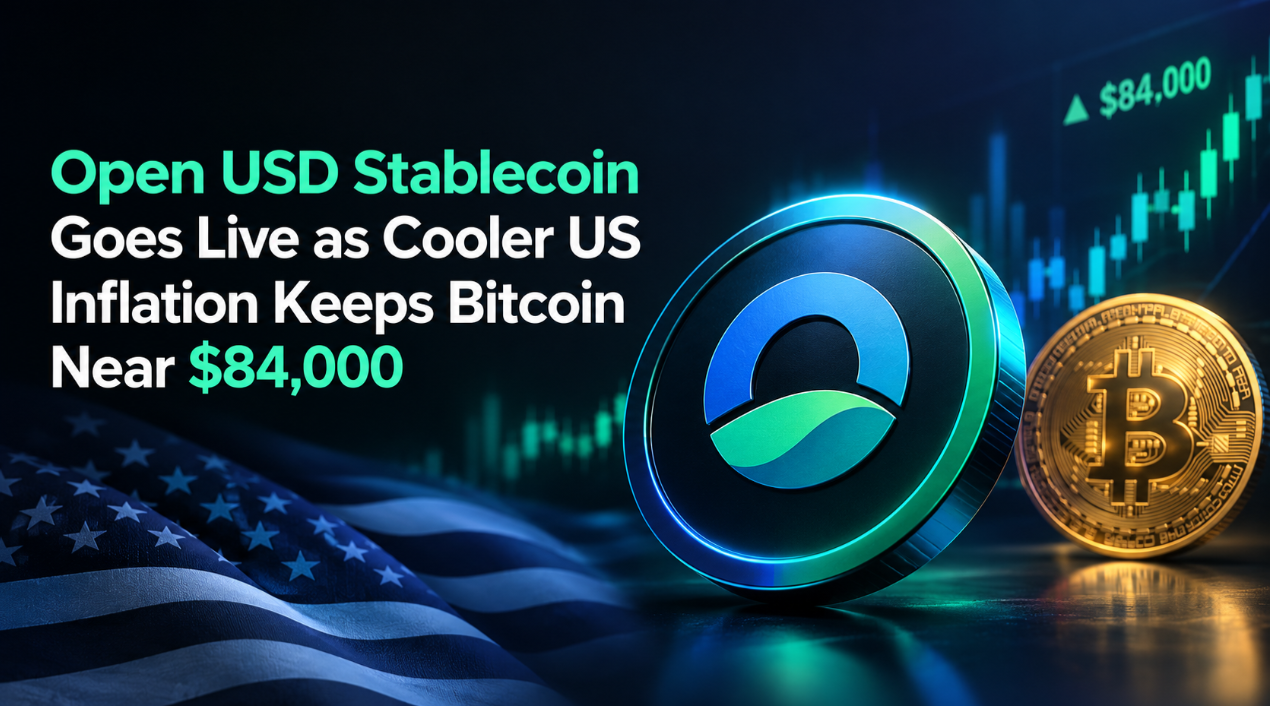
Open Standard, the consortium behind the new dollar-backed token Open USD (OUSD), switched the stablecoin on September 30. The token is live natively on Base, Ethereum, Solana and Tempo. It is issued by Bridge, the stablecoin infrastructure company owned by Stripe, and its reserves are held at BlackRock, Lead Bank and BNY.
Five founding partners, Coinbase, Mastercard, Shopify, Stripe and Visa, hold equal initial stakes and have committed more than $1 billion in launch liquidity. The wider network of companies planning to integrate the token now exceeds 200.
How Businesses Can Access OUSD
Businesses can convert US dollars to OUSD and back at a 1:1 rate with no minting or redemption fees. BVNK, Stripe and the Visa Stablecoin Platform were available from day one, while Coinbase access begins on October 1. Early trading support is expected on Coinbase, Kraken and Uniswap, and Chainlink serves as an official data oracle.
The model differs from established issuers. Partners are meant to share in the earnings generated by the reserves, minus a small management fee, rather than leaving that income with a single issuer. Open Standard has promised monthly reserve attestations, but it has not yet published a detailed breakdown of the reserve composition.
Softer Inflation Lifts Bitcoin, Briefly
The second story came from macro data. US core PCE inflation for August eased to 3.0% year over year, the lowest reading since February and below the 3.3% economists had expected. The monthly gain was 0.2%.
The report cooled expectations of another Federal Reserve rate hike, and Bitcoin responded by climbing above $85,000 on Wednesday. The move did not last. Bitcoin closed the day near $83,554, essentially flat, after stronger hiring data and elevated long-term Treasury yields pulled it back.
Why the $82,000–$85,000 Range Still Holds
The 10-year Treasury yield finished September close to 5.3%, which keeps borrowing costs high and makes yield-bearing assets more competitive. Bitcoin has now traded between roughly $82,000 and $85,000 for more than a week. Analysts point to $85,000 as the level bulls must reclaim and to the $83,000 area as nearby support. Signals from spot Bitcoin ETFs have been mixed across data trackers, and Citigroup recently raised its 12-month Bitcoin price target to $113,000.
What This Means for US Crypto Investors
Taken together, the two stories show a market that is maturing but still sensitive to interest rates. Open USD signals that large payment networks, banks and asset managers are building regulated-style dollar rails on public blockchains. Bitcoin's reaction to the PCE report shows that price direction in the near term still depends heavily on Fed expectations and bond yields.
Investors should watch three things: whether OUSD gains real transaction volume after Coinbase access opens, whether Bitcoin can hold above $85,000, and how the next inflation and jobs reports shift rate expectations. This article is for information only and is not financial advice.