Key facts
| Maker | SatoshiLabs, a Czech "bitcoin-first tech holding" that also includes Invity, Tropic Square and Vexlas of 2026-11 · source |
|---|---|
| Current devices and list prices (US) | Safe 3 $59, Safe 5 $129, Safe 7 $249as of 2026-11-11 · source |
| Secure element | Safe 3 and Safe 5: EAL6+ certified secure element; Safe 7 adds a TROPIC01 chip alongside an OPTIGA EAL6+ element (company states)as of 2026-11-11 · source |
| Coin support | More than 1,000 coins and tokens via Trezor Suite and third-party wallet apps (company states)as of 2026-11-11 · source |
| Software | Trezor Suite for desktop and mobile; optional Tor; staking for Ethereum, Cardano and Solanaas of 2026-11-11 · source |
| Open source | Firmware monorepo on GitHub under GPL-3.0as of 2026-11-11 · source |
| Bug bounty | $0 to $2,000 for low severity up to $1,000 to $100,000 for critical findingsas of 2026-11-11 · source |
| Customer data incidents | January 2024 support-portal breach (about 66,000 users); August 2026 ShipMonk vendor breach (about 81,000 customers after update)as of 2026-09 · source |
| Native token | Noneas of 2026-11 · source |
What Trezor is and who makes it
Trezor is a hardware wallet: a small device that generates and holds private keys offline. Funds are not stored on the device. They live on the blockchain, and the device proves ownership by signing transactions you approve on its own screen. The brand belongs to SatoshiLabs, which describes itself as a Czech bitcoin-first technology holding. Its site says the story began when two founders met at the Prague hackerspace brmlab in 2011, and that the group also includes Invity (an investing app with a MiCA license, per SatoshiLabs), Tropic Square (a chip maker) and Vexl (a peer-to-peer bitcoin app).
Trezor is not an exchange or an online wallet account. There is no Trezor account that holds balances, and no native token. The pages reviewed do not name the exact legal entity that sells devices, so we state only the SatoshiLabs relationship; check the checkout terms for the contracting company.
Models and what each costs
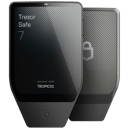
Trezor's own pages list three current devices. The Safe 3 ($59) has a 0.96-inch monochrome OLED screen and two buttons. The Safe 5 ($129) adds a 1.54-inch color touchscreen with haptic feedback and a microSD slot. The Safe 7 ($249) has a 2.5-inch color touchscreen, Bluetooth, Qi2 wireless charging and an aluminum body. All connect by USB-C. Per press reports, the older Model One and Model T were pulled from Trezor's store in 2026 but continue to receive support; the Model T has no secure element.
Prices are in US dollars on trezor.io on November 11, 2026, and other currencies and shipping differ. Trezor Suite itself is free to download, though buy, swap and staking features go through third-party providers that charge their own fees, which the Suite page does not list. Our separate reviews, Trezor, Trezor Safe 3 and Trezor Safe 5, cover how we score the products.
| Model | List price (US) | Display | Secure element (company states) | Notable features |
|---|---|---|---|---|
| Safe 3 | $59 | 0.96-inch OLED, buttons | EAL6+ certified | USB-C |
| Safe 5 | $129 | 1.54-inch color touchscreen | EAL6+ certified | Haptic feedback, microSD slot |
| Safe 7 | $249 | 2.5-inch color touchscreen | TROPIC01 plus OPTIGA EAL6+, STM32U5 microcontroller | Bluetooth, Qi2, post-quantum signed firmware claims |
How Trezor works and what Trezor Suite does
On first setup the device generates a recovery seed, usually 12 or 24 words, which you write down offline. Anyone with that seed can restore your wallet, so Trezor's security page says the seed is generated and stored offline and that it collects no personal data. A PIN (up to 50 digits on the Safe 7) protects the device, and an optional passphrase creates hidden wallets. The Safe 7 page also mentions multi-share backup. See our seed phrase storage guide for backup practice.
Trezor Suite is the companion app. It runs on desktop, Android and iOS, supports optional Tor routing, and offers buying, swapping and staking for Ethereum, Cardano and Solana through partners. On iOS, the Safe 3 and Safe 5 can connect but, per Trezor's product pages, cannot swap, send, set up or manage the device; the Safe 7 has full iOS functionality. Third-party wallet apps such as those listed on Trezor's site can also use the device.
Security model and open-source status
Trezor says Safe-series devices use an EAL6+ certified secure element, a chip designed to resist physical extraction of keys. The Safe 7 adds TROPIC01 from sister company Tropic Square, described as an auditable chip, plus a post-quantum signature scheme (SLH-DSA-128) for firmware verification. These are vendor claims; we did not find independent verification in the pages read, and press has reported lab attacks on earlier models, so no hardware wallet should be treated as invulnerable.
The firmware repository on GitHub is licensed GPL-3.0, so researchers can inspect it. Trezor runs a bug bounty that pays up to $100,000 for critical findings, with supply chain attacks in scope. The main practical risks are physical theft combined with a weak PIN, losing the seed, tampered devices bought from resellers, and phishing.
Data breaches and phishing exposure
Trezor has disclosed two incidents involving customer contact data, not device keys. In January 2024, unauthorized access to a third-party support ticketing portal exposed names and emails of up to about 66,000 people who had contacted support. BleepingComputer reports that this data was later used in phishing attempts to steal 24-word seeds.
In August 2026 Trezor disclosed that its logistics vendor ShipMonk exposed data of nearly 14,000 customers (names, shipping addresses, emails, phone numbers); a September update raised the total to about 81,000 after Trezor said ShipMonk failed to delete older data as its contract required. Trezor said its own systems were not compromised. The risk for users is targeted scams: Trezor will not ask for your recovery seed, and no legitimate support flow requires typing it into a website. Our phishing prevention guide lists warning signs.
Access, countries and how it compares
Buying a device requires no KYC with the wallet itself, but the store collects shipping details, and shipping availability and local pricing vary. Trezor Suite's buy and swap partners apply their own identity checks. We did not find a published country-by-country sales list in the pages read.
Hardware wallets are a distinct category from exchanges. For background see our hardware wallet buyer's guide and the category hardware wallet ratings. Peers include Ledger and Coldcard.
Similar services
Frequently asked questions
Who makes Trezor?
Does Trezor hold my crypto?
Is Trezor safe after the data breaches?
What does Trezor Suite cost?
Which Trezor models are currently sold?
Sources
- Trezor Safe 3 — Trezor (2026-11-11)
- Trezor Safe 5 — Trezor (2026-11-11)
- Trezor Safe 7 — Trezor (2026-11-11)
- Trezor Suite — Trezor (2026-11-11)
- Trezor security and bug bounty — Trezor (2026-11-11)
- SatoshiLabs — SatoshiLabs (2026-11-11)
- trezor-firmware repository — GitHub (2026-11-11)
- Trezor data breach impact now reaches 81,000 customers — BleepingComputer (2026-09)
- Trezor support site breach exposes personal data of 66,000 customers — Bitcoin Magazine (2024-01)
- Trezor Model T and Safe lineup comparison — Coin Bureau (2026-01-21)
This profile is for information only and is not investment advice. Company terms, fees and availability change; check the official site before you sign up or move funds.