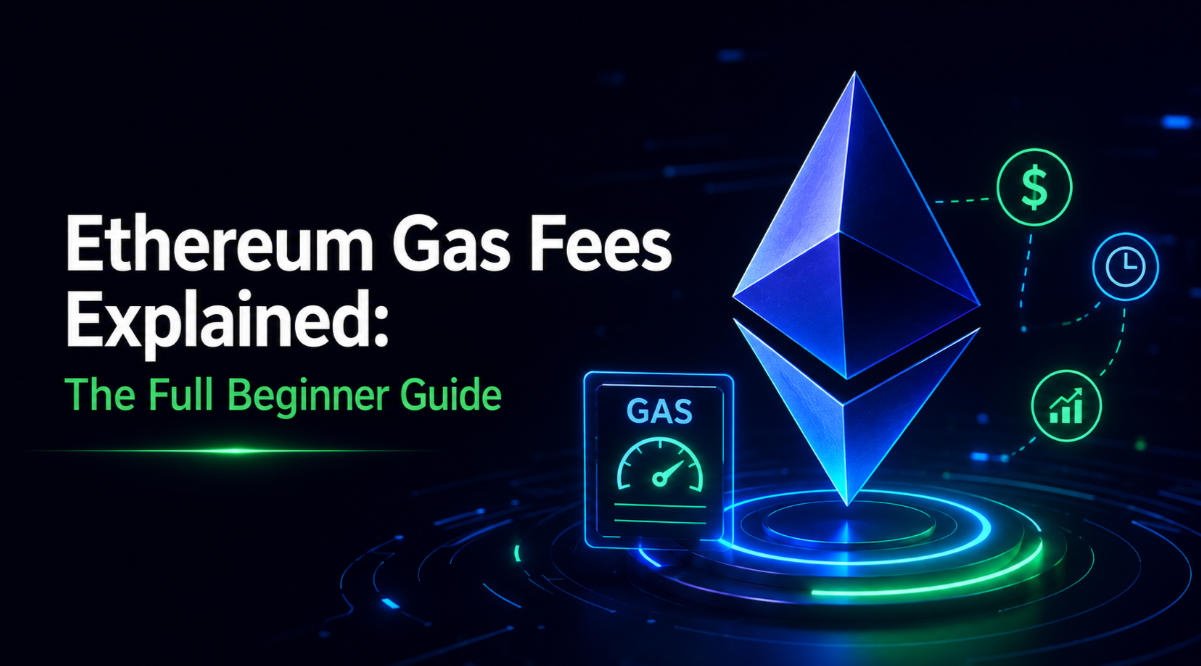
Gas fees are the transaction fees you pay when using Ethereum. They exist because Ethereum has limited block space; users bid for space through fees. Understanding gas fees is essential to using Ethereum efficiently — it's the difference between paying $1 or $50 for the same operation depending on timing and choices. This guide covers what gas actually is, why fees fluctuate, and specific strategies to reduce them.
What gas actually is
Every operation on Ethereum consumes computational resources — CPU, memory, storage. To prevent infinite loops or spam attacks, each operation costs "gas" — a unit measuring computational work. Users pay for the gas they consume in ETH.
Two numbers determine your total fee:
- Gas limit: how much gas the transaction can consume. Fixed by transaction type.
- Gas price: what you pay per unit, denominated in gwei. Varies with network demand.
Total fee = gas limit × gas price
Common transaction gas limits:
- Simple ETH transfer: 21,000 gas.
- ERC-20 token transfer: 65,000 gas.
- Uniswap swap: ~150,000 gas.
- Complex DeFi (Curve, Aave deposit): 200,000-500,000 gas.
- NFT mint: variable, often 100,000-300,000 gas.
Why fees fluctuate wildly
Gas price is set by supply and demand. Each block has capacity for about 30 million gas. When demand exceeds supply, users bid up the price to get included.
What drives demand spikes:
- NFT mint frenzies. Big NFT drops attract thousands of users trying to mint simultaneously.
- Major airdrops. When a valuable airdrop launches, users rush to claim.
- Market crashes. During flash crashes, liquidations and stop-losses execute in bulk.
- DEX arbitrage. Automated bots compete for arbitrage opportunities, bidding gas up.
On quiet days, gas is 5-20 gwei ($1-3 per typical transaction). During peak activity, it can spike to 200-1,000 gwei ($30-200 per transaction). The dispersion is enormous.
The best solution: Layer 2s
The dominant way to reduce fees in 2026 is to use Ethereum Layer 2s — networks that process transactions off Ethereum mainnet and settle to it periodically.
The major L2s:
- Base: built by Coinbase, most user-friendly for beginners.
- Arbitrum: largest by TVL, mature ecosystem.
- Optimism: similar to Arbitrum with different technical trade-offs.
- Scroll: zkEVM with Ethereum-equivalent security.
- Linea: Consensys-backed zkEVM.
Fee comparison for a typical DeFi swap:
- Ethereum mainnet: $5-50.
- Base/Arbitrum/Optimism: $0.05-0.50.
You get the same wallets (MetaMask, Rabby), the same tokens (USDC, ETH, and most others bridged), and the same DeFi apps (Uniswap, Aave). See Ethereum Layer 2 Explained for the deep dive.
Timing transactions on mainnet
If you must use Ethereum mainnet, timing matters:
- Weekends: usually cheaper than weekdays.
- Late US night, early European morning: often the cheapest hours.
- Avoid: US market hours during major news, NFT drop days.
Live gas monitoring: check ethgastracker.com or etherscan.io/gastracker before non-urgent transactions.
Setting custom gas in your wallet
MetaMask, Rabby, and other wallets let you customize gas settings before signing:
- Base fee: the current network minimum. Not adjustable.
- Priority fee (tip): what you pay validators to include your transaction faster. Set higher for urgent transactions; lower for cheap slow ones.
- Max fee: ceiling you'll pay. Set based on urgency and current network state.
For non-urgent transactions, you can save 20-50% by setting a low priority fee and waiting — the transaction pends until network demand drops enough to include it.
The ETH-for-gas trap
Every Ethereum transaction requires ETH for gas — even if you're only transferring another token. If you send USDC to your wallet without any ETH, you cannot move the USDC until you add ETH.
Practical rules:
- Always keep 0.01-0.05 ETH in any Ethereum wallet you use.
- When moving to a fresh wallet from an exchange, send ETH first before other tokens.
- On Layer 2s, the gas token is still ETH (bridged) — same rule applies.
EIP-1559 and how fees work now
Since August 2021, Ethereum uses a two-part fee structure (EIP-1559):
- Base fee: burned (removed from circulation), adjusts automatically each block based on utilization.
- Priority fee: paid to validators as tip.
The base fee burn creates a deflationary force on ETH supply during high network usage. In sustained-high-usage periods, more ETH is burned than newly issued via staking rewards, making ETH deflationary.
Common gas-related mistakes
- Setting gas too low. Transaction sits in the mempool indefinitely. You can speed up or cancel via wallet UI, but this costs additional gas.
- Signing transactions during peak hours without checking. Sometimes wallets suggest gas prices well above what's needed. Check ethgastracker to sanity-check.
- Ignoring L2 alternatives. For most non-institutional users, everything you want to do on Ethereum works on Base or Arbitrum at a fraction of the cost.
- Running out of ETH mid-batch. If you're executing multiple transactions, ensure enough ETH for all of them.
The gas fee experience defines whether Ethereum feels usable or unusable to a new user. In 2026, the solution is Layer 2s — same Ethereum, same wallets, same apps, at costs that would have been unbelievable in 2021.
Continue learning
Related: What Is Ethereum? · Ethereum Layer 2 Explained · Ethereum Staking Guide · What Is DeFi?.