The illusion of safety: why stablecoins can fail
The term "stablecoin" implies safety. In practice, stablecoins carry a unique set of risks that differ from both volatile crypto assets and traditional bank deposits. Understanding these risks is essential for anyone holding significant amounts in stablecoins — whether in a DeFi wallet, on a centralised exchange, or as part of a payment flow.
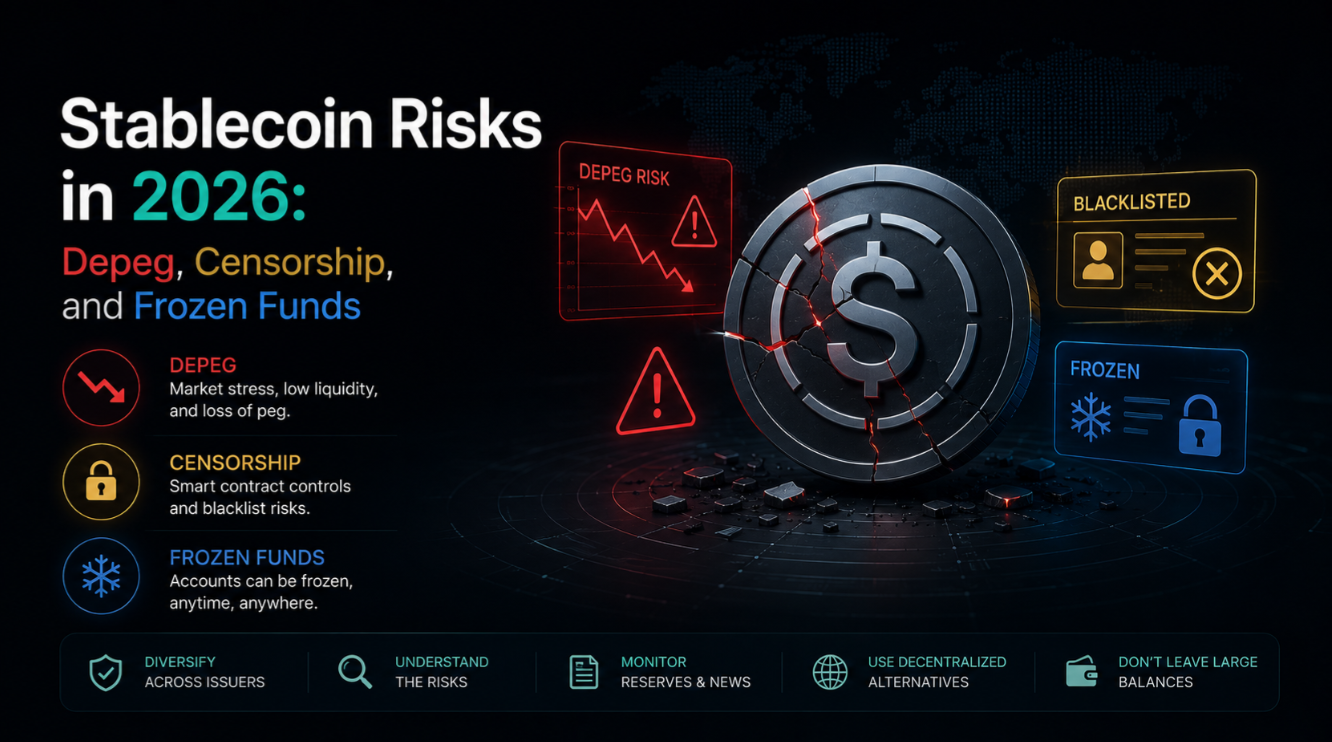
The major stablecoin risk categories are: depeg risk (the coin loses its $1 peg), censorship and freeze risk (your specific tokens are blocked), issuer and reserve risk (the backing assets are insufficient), and smart contract risk (for decentralised stablecoins like DAI). Each affects different stablecoins differently.
Depeg risk: when the dollar peg breaks
A depeg occurs when a stablecoin trades below (or above) its $1 target. Depegs range from temporary (USDC during SVB, recovering within hours) to permanent (TerraUSD/UST, losing 99%+ of value in May 2022). The type of stablecoin determines the depeg mechanism and recovery probability.
- Fiat-backed depegs (USDT, USDC): Caused by loss of confidence in reserves. Short-lived if reserves are real; permanent if backing is fraudulent. USDC's SVB depeg recovered because underlying assets were sound. A fraud-based depeg would not recover.
- Crypto-collateralised depegs (DAI): Caused by rapid collateral value collapse. DAI's design has multiple protection layers — PSM, DSR, collateral diversity — that have prevented a full depeg even during severe crashes like March 2020.
- Algorithmic depegs (UST, IRON): Caused by death spiral mechanics where the coin and its backing token fall together. TerraUSD lost $18 billion in days. There is no recovery mechanism once the spiral begins.
The UST collapse: the defining stablecoin failure
TerraUSD (UST) was an algorithmic stablecoin backed not by dollars but by the LUNA token. When confidence broke in May 2022, UST holders tried to redeem for LUNA, flooding the market with newly minted LUNA, which collapsed LUNA's price, making UST redemptions worth less, causing more panic selling. The death spiral destroyed $18 billion in value in days.
UST was not an isolated event. IRON Finance, Basis Cash, and Empty Set Dollar all failed through similar algorithmic mechanisms. The lesson: stablecoins without hard asset backing depend entirely on perpetual confidence. Any significant break in that confidence triggers a self-fulfilling collapse.
Freeze and censorship risk: your tokens can be blocked
Tether and USDC both maintain address freeze lists. The issuers can blacklist any wallet, rendering the tokens permanently unmovable. As of 2024, Tether had frozen over $1.5 billion in USDT across hundreds of addresses. Circle has frozen USDC in response to OFAC sanctions and court orders.
Who gets frozen? Primarily addresses associated with sanctions violations (North Korean hackers, Iranian entities), crime proceeds, protocol exploits, and court-ordered asset freezes in civil litigation. The risk to ordinary users is low — but not zero. Platforms that interact with sanctioned addresses can face secondary exposure.
- USDT freeze risk: Tether has shown willingness to freeze at law enforcement request with minimal public justification. Higher freeze frequency than USDC.
- USDC freeze risk: Circle follows a more transparent process, typically freezing only per OFAC, court order, or verified crime proceeds. More predictable.
- DAI freeze risk: Zero — no freeze function exists in the DAI contracts. Fully censorship-resistant at the contract level.
Reserve risk: what happens if backing assets disappear
For fiat-backed stablecoins, reserve risk is the possibility that the backing assets do not exist, are insufficient, or become inaccessible. This risk nearly materialised for USDC during the SVB crisis and has been alleged (though not proven) for Tether at various points.
Mitigation: hold USDC over USDT for higher reserve transparency confidence. Circle's monthly Deloitte attestations and segregated BlackRock money market fund custody represent the strongest reserve structure among major stablecoins. The Coinbase review covers how USDC reserves are structured in detail.
Smart contract risk for decentralised stablecoins
DAI and other decentralised stablecoins depend on smart contracts being exploit-free. A bug in the MakerDAO liquidation contracts could allow under-collateralised DAI to be issued, undermining the peg. In March 2020, a liquidation malfunction during the crypto flash crash resulted in $4 million in bad debt being absorbed by MKR dilution. The contracts were subsequently upgraded.
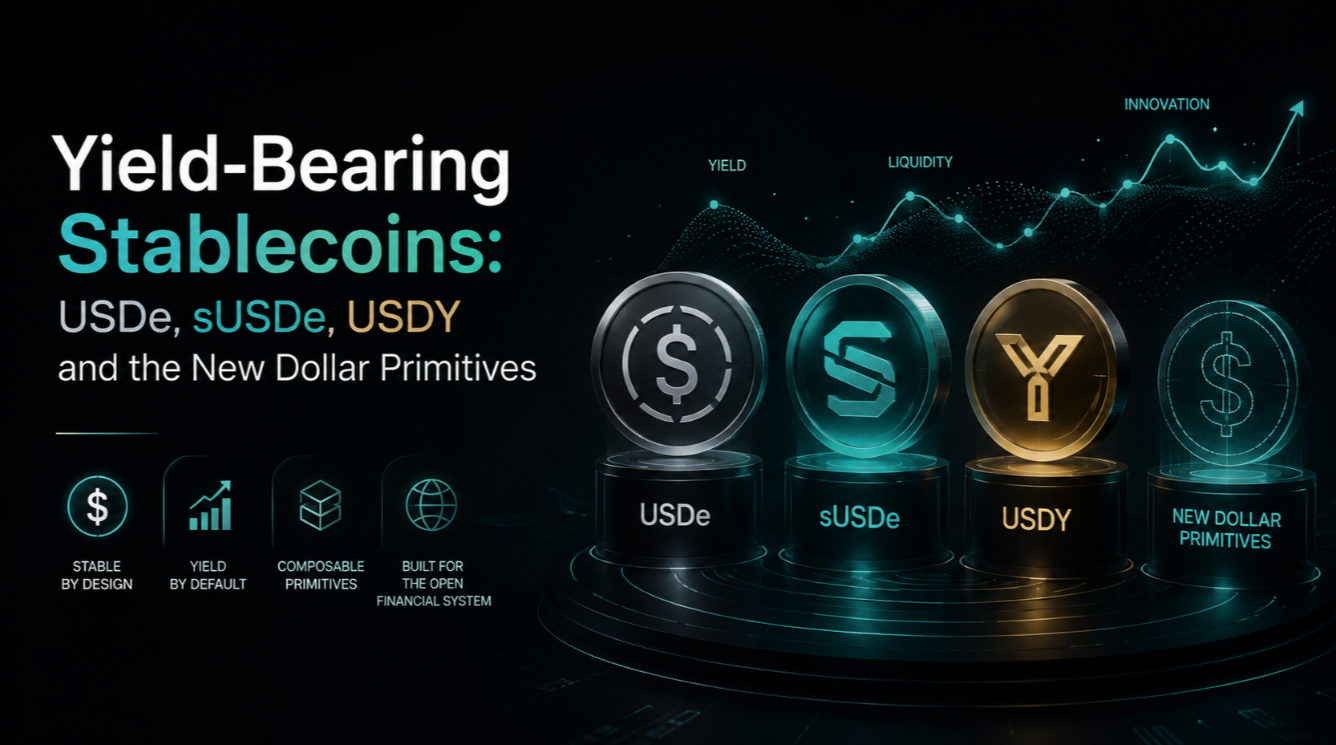
For USDe (Ethena), the risk is more complex: the peg depends on a delta-neutral derivatives position. If the funding rate on perpetual futures turns strongly negative for an extended period, the hedging cost can exceed the yield, eroding the backing. This is a novel risk class with limited historical data.
Exchange custody risk: your stablecoins on a CEX
Holding stablecoins on a centralised exchange means the exchange holds your private keys — not you. The exchange can halt withdrawals, go bankrupt (FTX, Celsius), or be hacked. FTX's collapse in 2022 left users unable to access billions in stablecoin balances for months. Some users received cents on the dollar in bankruptcy proceedings.
Best practice: hold stablecoins in self-custody (hardware wallet or audited DeFi protocol) for amounts above your "walking-around money" threshold. Only keep what you actively need for trading on centralised exchanges.
Regulatory risk: stablecoins in the crosshairs
Stablecoins are a primary target of financial regulators globally. The EU's MiCA regulation (effective 2024) imposes strict reserve and redemption requirements on stablecoins used in Europe, leading several issuers to delist non-compliant coins from European platforms. US stablecoin legislation, delayed for years, remains a significant variable that could reshape the market structure.
Potential regulatory outcomes include: mandatory bank-account backing (benefiting USDC, harming Tether), mandatory redemption rights for all holders (positive for stability), transaction limits or bans in certain jurisdictions. Holding diversified across multiple stablecoins and keeping non-custodial holdings reduces regulatory concentration risk.
How to reduce your stablecoin risk exposure
- Diversify: never hold 100% of your stablecoin balance in a single coin. USDC + DAI + a small USDT allocation covers different risk categories.
- Self-custody for large amounts: use a hardware wallet or DeFi protocol for balances over your exchange operational threshold.
- Avoid algorithmic stablecoins without robust hard asset backing.
- Monitor reserve reports: check Circle's monthly Deloitte attestations and Tether's quarterly reports.
- Use DAI for censorship-sensitive applications or DeFi interactions where freeze risk matters.
- For exchange balances, use regulated exchanges with proof of reserves.
The stablecoin risk matrix: four types at a glance
- Fiat-backed (USDC, USDT): Low depeg risk, medium reserve risk, high censorship risk.
- Crypto-collateralised (DAI): Low-medium depeg risk, low censorship risk, medium smart contract risk.
- Algorithmic (UST-type): Extreme depeg risk, avoid without extraordinary due diligence.
- Yield-bearing synthetic (USDe): Low-medium depeg risk, medium smart contract risk, novel funding rate risk.
Practical steps if your stablecoin depegs
If a stablecoin you hold depegs, the right response depends on the cause. A temporary depeg in a well-backed coin (like USDC during SVB) is often best held through — panic selling locks in losses. A deepening depeg in an algorithmic coin with no hard backing is a different story: exit quickly as death spirals accelerate. Monitor on-chain collateral ratios and issuer communications in real time. Set price alerts at $0.98 and $0.95 as early warning triggers.
This article is for educational purposes only. Not financial advice. Stablecoins can lose their peg or be frozen. Always conduct your own research and consult a financial professional before making large stablecoin allocations.