
Ethereum ETH
Rank #2$2,458.46▲ +3.64%(24h)▼ +1.75%(7d)
24h Low $2,324.9724h High $2,463.31
Market Cap
$300.26B
24h Volume
$14.02B
Circulating
122.14M ETH
All-Time High
$4,946.05
Ethereum Price Chart
Key Metrics
Market Cap
$300.26B
Volume (24h)
$14.02B
Circulating Supply
122.14M ETH
Max Supply
N/A
Ethereum Converter
Ethereum Converter
ETH
$USD
1 ETH = $2,458.46
Ethereum Historical Data
| All-Time High | $4,946.05 (August 24, 2025) |
| All-Time Low | $0.432979 (October 19, 2015) |
Where to Buy Ethereum
About Ethereum (ETH)
What is Ethereum?
Ethereum (ETH) is the second-largest cryptocurrency by market capitalization and the network where most on-chain experimentation happens. Vitalik Buterin proposed it in late 2013, and the Ethereum mainnet went live in July 2015. Where Bitcoin was designed as digital money, Ethereum was designed as a programmable ledger. Anyone can deploy a contract that runs as written, and anyone can interact with it.
ETH is the native token. You need ETH to pay transaction fees (called gas), to stake on the network, and to interact with virtually every Ethereum-based application. The token has no fixed supply cap, but issuance has been net-deflationary on most days since the EIP-1559 fee burn went live in 2021.
Ethereum price today
The Ethereum price comes from supply and demand across spot and derivatives markets. The most active pairs are ETH/USD, ETH/USDT, and ETH/BTC. Live data on this page is aggregated from a multi-venue market feed and refreshes every 60 seconds. The reference quote is a volume-weighted average across the venues with the deepest order books.
What moves Ethereum on any given day:
- Spot ETF flows. The US approved spot Ethereum ETFs in July 2024. BlackRock’s ETHA and Fidelity’s FETH publish daily creates and redemptions.
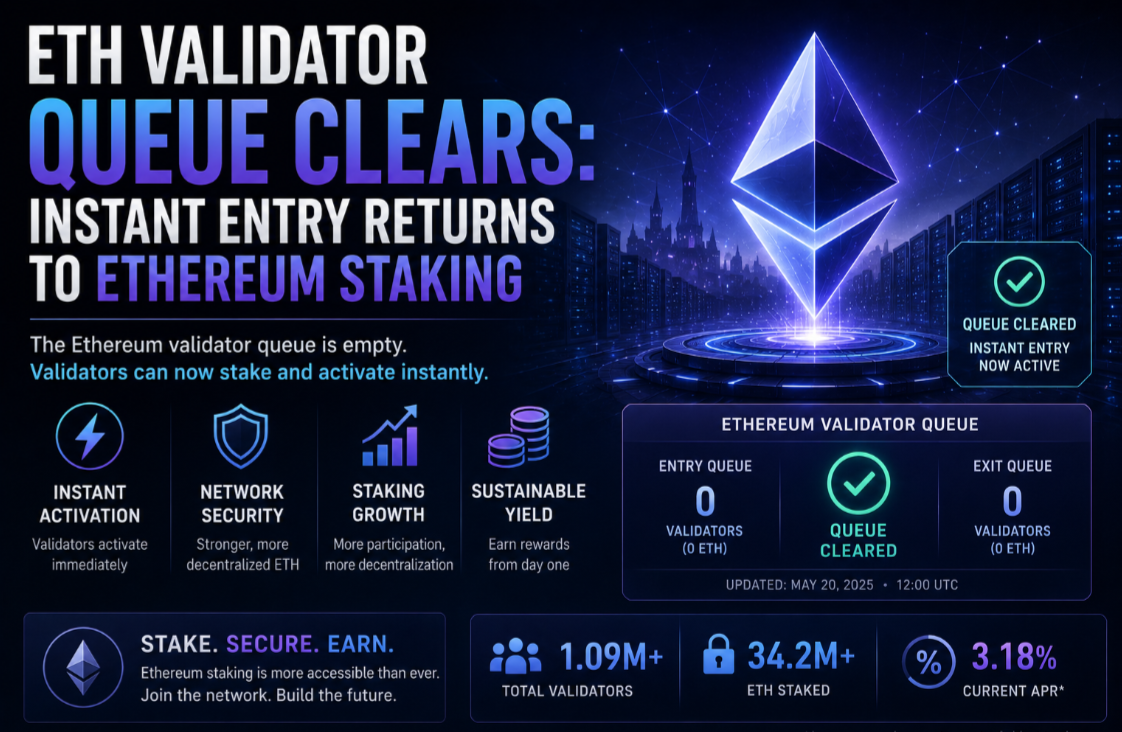
- Staking yield. About 28% of all ETH is staked. Yield drops when more ETH gets locked up and rises when validators exit.
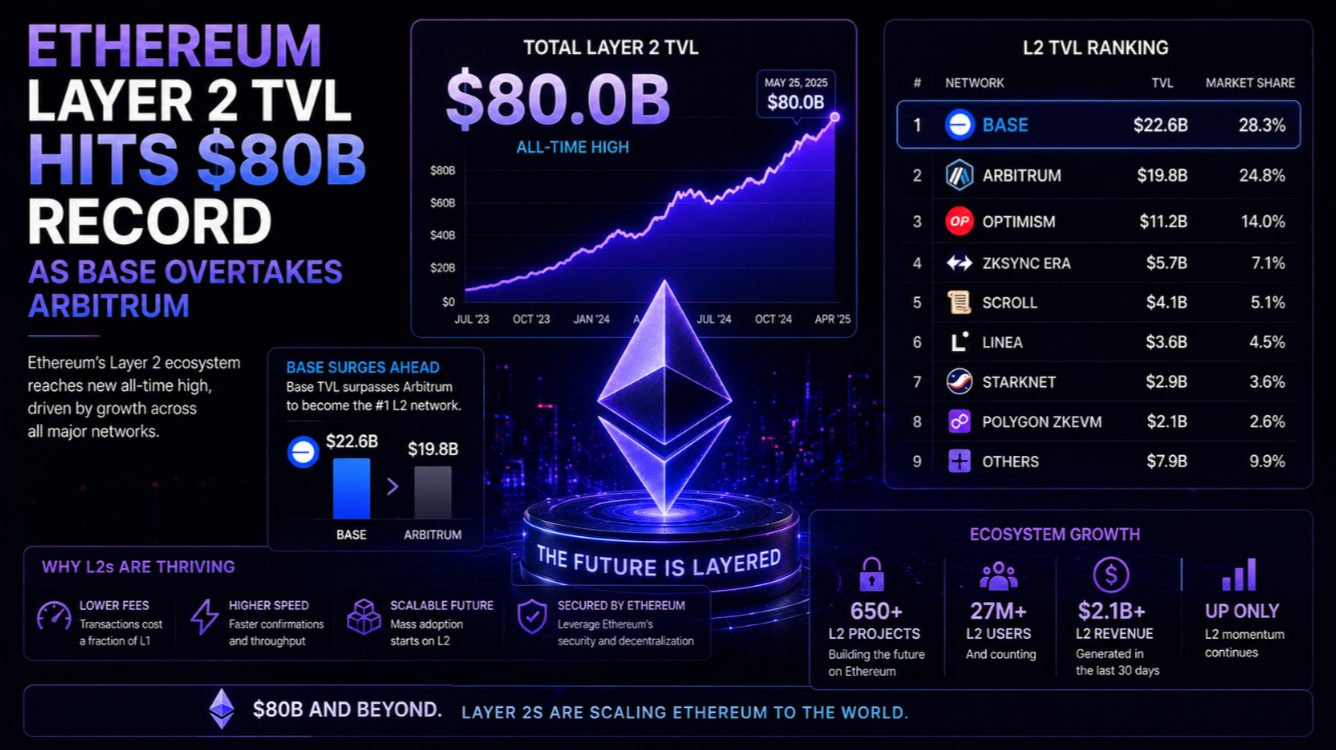
- Layer 2 activity. Arbitrum, Base, and Optimism settle most user transactions on top of Ethereum. When L2 volume spikes, ETH burn rises.
- Macro and risk-on appetite. Ethereum trades like a high-beta version of Bitcoin in most macro regimes.
The numbers in the price card above are live. The analysis below uses the levels at page load. For longer-term scenarios, see our Ethereum price forecast.
The Merge and Ethereum’s proof-of-stake economics
In September 2022, Ethereum switched from proof-of-work mining to proof-of-stake validation. The event was called the Merge, and it cut the network’s energy use by over 99%. Validators now secure the chain by locking up at least 32 ETH and proposing blocks in their assigned slots.
Three things changed on the day of the Merge:
- ETH issuance dropped from roughly 13,000 ETH per day under PoW to roughly 1,700 ETH per day under PoS.
FAQ
What is Ethereum used for?
Most on-chain activity runs on Ethereum or its Layer 2 networks. The biggest categories are decentralized finance (lending, swapping, derivatives), stablecoins (USDC and USDT both circulate primarily as Ethereum tokens), NFTs, and on-chain identity. ETH is the native token and is required to pay for any of these operations.
Is Ethereum a good investment?
Ethereum has outperformed Bitcoin in roughly half of the last seven calendar years on a USD basis, with deeper drawdowns in down years. Ethereum is more volatile than Bitcoin and more tied to actual on-chain activity. If DeFi and L2 use grow, ETH burn grows and supply contracts. If activity collapses, ETH inflates again. Holders with multi-year horizons have done well historically; short-term performance correlates more with macro than with Ethereum-specific news.
How does Ethereum staking work?
Validators lock up ETH and run software that proposes and attests to blocks. Solo stakers need 32 ETH and their own hardware. Most users stake through pools like Lido or Rocket Pool, or through an exchange. Annual yield sits around 3 to 4% APR, paid in ETH. Withdrawals work, but they queue during high-demand periods.
Why are Ethereum gas fees so high?
Block space on Ethereum is limited, and demand spikes faster than supply. When NFT mints, airdrops, or DeFi liquidations cluster, every user bids up gas to get included faster. The protocol burns the base portion of each fee, which is why high-fee periods make ETH net-deflationary. Routine transactions belong on a Layer 2 like Arbitrum or Base, where fees run 10x to 100x lower.
Is Ethereum better than Bitcoin?
They do different jobs. Bitcoin is the simpler asset: fixed supply, no smart contracts, treated as digital gold. Ethereum is more programmable but also more complex and less purely monetary. Most institutional investors hold both. Bitcoin is the base reserve; Ethereum is exposure to programmable money.
What is the Ethereum Merge?
The Merge happened in September 2022. It moved Ethereum from proof-of-work mining to proof-of-stake validation. Energy use dropped by over 99%. Issuance fell from roughly 13,000 ETH per day to 1,700 ETH per day. Combined with the EIP-1559 fee burn, ETH has been net-deflationary on most days since.
Can Ethereum reach $10,000?
A $10,000 ETH price would mean a market cap near $1.2 trillion at current supply. That is possible but not certain. The drivers would be sustained ETF inflows, growing L2 activity (which increases the burn), and continued institutional staking demand. Standard Chartered and a handful of other banks have published multi-year ETH targets in the $5,000 to $10,000 range. None of those projections is a guarantee.
Is Ethereum legal?
Ethereum is legal in most countries, including the US, the UK, the EU, Canada, Japan, and Australia. The US SEC has not declared whether ETH is a commodity or a security; the CFTC treats it as a commodity for derivatives purposes. A small number of jurisdictions restrict cryptocurrency broadly, including China and Algeria.
Stay informed
View all →