
Solana SOL
Rank #7$106.64▲ +3.53%(24h)▼ +3.55%(7d)
24h Low $100.9924h High $106.53
Market Cap
$62.85B
24h Volume
$3.23B
Circulating
589.32M SOL
All-Time High
$293.31
Solana Price Chart
Key Metrics
Market Cap
$62.85B
Volume (24h)
$3.23B
Circulating Supply
589.32M SOL
Max Supply
N/A
Solana Converter
Solana Converter
SOL
$USD
1 SOL = $106.64
Solana Historical Data
| All-Time High | $293.31 (January 19, 2025) |
| All-Time Low | $0.500801 (May 11, 2020) |
Where to Buy Solana
About Solana (SOL)
What is Solana?
Solana (SOL) is a high-throughput blockchain designed to settle transactions in under a second at fees measured in fractions of a cent. Anatoly Yakovenko proposed it in 2017, and the Solana mainnet launched in March 2020. Where Ethereum prioritizes a large validator set and modular scaling through L2s, Solana takes the opposite approach: a single fast L1 with fewer, more powerful validators.
SOL is the native token. It pays for transaction fees, secures the network through staking, and is required to interact with Solana applications. Total supply is uncapped, but issuance follows a declining schedule. Annual inflation is currently around 5% and falling toward a long-term 1.5% target.
Solana price today
The Solana price comes from supply and demand across spot exchanges and derivatives markets. The most active pairs are SOL/USD, SOL/USDT, and SOL/BTC. Live data on this page is aggregated from a multi-venue market feed and refreshes every 60 seconds.
What moves Solana on any given day:
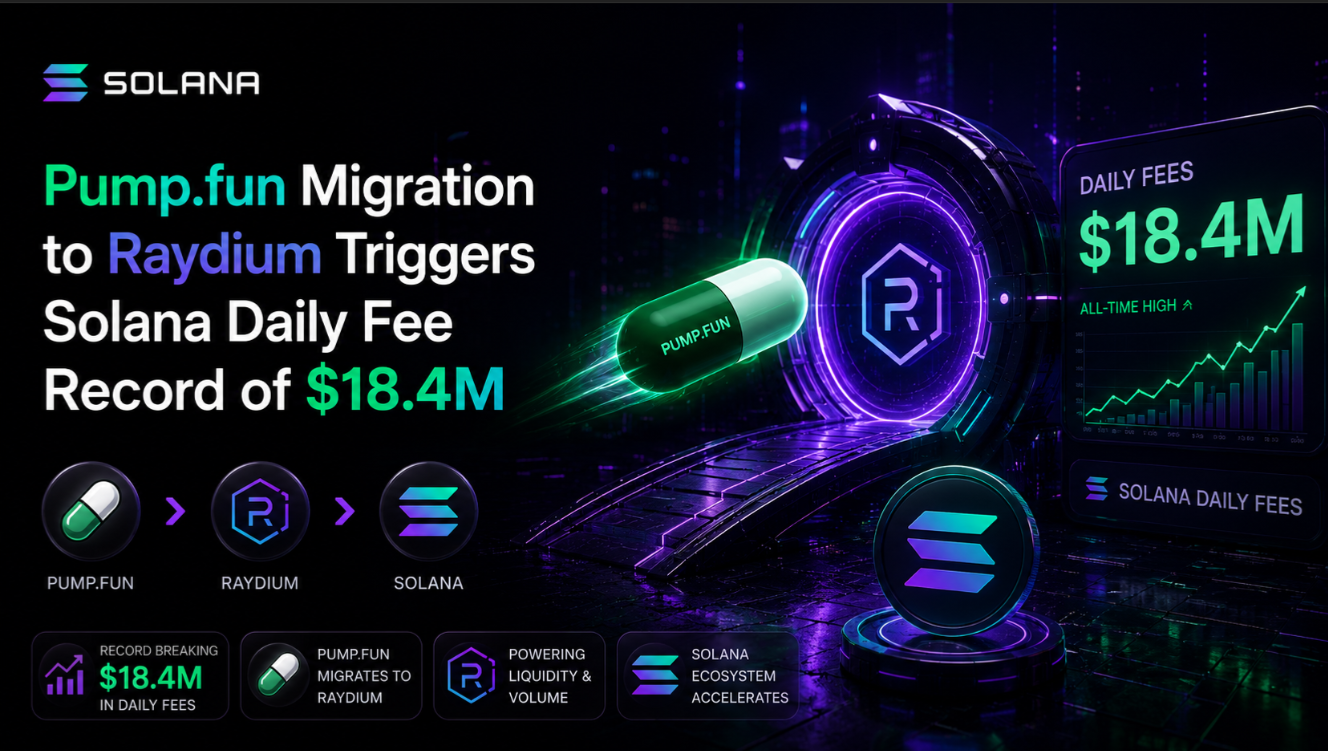
- Memecoin and DEX activity. Pump.fun, Raydium, and Jupiter generate most of the network’s transaction volume. When memecoin trading runs hot, SOL fees and validator revenue rise.
- Spot ETF speculation. Several issuers have filed for spot Solana ETFs. Each filing milestone (acceptance, deadline, approval) moves the SOL price.
- Staking flows. Around 65% of all SOL is staked. Liquid staking tokens like JitoSOL and mSOL are widely used as DeFi collateral.
- Outage news. Solana network downtime has caused short-term SOL price drops several times.
Live data drives the price card. Numbers cited below match the page-load snapshot.
Solana’s speed and the trade-offs that make it possible
Solana handles 3,000 to 5,000 sustained transactions per second under typical load and can spike to over 50,000 TPS in benchmarks. It does this through a stack of design choices that other blockchains do not make.
- Proof of History. A cryptographic clock that lets validators agree on transaction order without back-and-forth communication.
- Single global state. No sharding, no rollups. Every validator processes every transaction.
- Hardware-heavy validators. Running a Solana validator requires high-end CPU, NVMe storage, and fast network. The minimum spec eliminates hobbyist nodes.
FAQ
What is Solana used for?
Solana powers high-throughput on-chain activity that would be too expensive on Ethereum. The biggest categories are decentralized exchanges (Raydium, Jupiter, Orca), perpetual futures (Drift, Mango), payments and stablecoin transfers, NFTs (Magic Eden, Tensor), and the largest memecoin market in crypto via Pump.fun and similar launchpads.
Is Solana a good investment?
It depends on your time horizon and how much volatility you can tolerate. Solana has produced some of the largest gains in crypto and some of the largest losses. SOL fell from $260 to under $10 in 2022 before rebounding to new highs. Holders with multi-year horizons and tolerance for outage risk have done well historically. Short-term traders, less so.
How fast is Solana really?
Solana handles 3,000 to 5,000 sustained transactions per second under real load, with theoretical capacity much higher. By comparison, Ethereum mainnet handles roughly 15 TPS, and Visa averages 1,700 TPS. Solana settles transactions in under one second. The trade-off is hardware cost: validators need high-end CPUs and NVMe storage, which limits how many can run.
How does Solana staking work?
You delegate SOL to a validator through any Solana wallet (Phantom, Solflare, Backpack). The validator includes your stake when proposing or attesting to blocks, and rewards are paid in SOL roughly twice per day. Annual yield is around 6 to 8%. There is no minimum stake. Unstaking takes 1 to 3 days to clear.
Why does Solana go down so often?
Solana has had several outages caused by transaction floods, consensus bugs, and validator software issues. Each event led to a fix: better congestion control, stake-weighted QoS, and now a second validator client (Firedancer) in testing. Solana has not had a major outage since early 2024, but the chain is more complex than older blockchains, and outage risk is non-zero.
Is Solana better than Ethereum?
They are different products. Solana is faster and cheaper at L1. Ethereum has more developers, more total value locked, and more decentralization. Most institutional crypto allocations include both: Ethereum for the smart-contract stack, Solana for high-throughput applications.
Can Solana reach $1000?
A $1,000 SOL price would put the market cap near $570 billion at current supply. That is possible but not certain. Drivers would be sustained ETF flows, continued memecoin and DeFi activity, and stable network operation. VanEck and other research desks have published multi-year SOL targets in the $300 to $1000 range. None of those projections is a guarantee.
Is Solana legal?
Solana is legal in most countries, including the US, the UK, the EU, Canada, Japan, and Australia. The US SEC named SOL as an unregistered security in lawsuits against several exchanges in 2023, but those claims have not been tested in court for SOL specifically. A small number of jurisdictions, including China and Algeria, restrict cryptocurrency broadly.
Stay informed
View all →