
Rabby Wallet, developed by the DeBank team, reached 5 million monthly active users in April 2026 — a milestone that would have seemed unlikely two years ago when it was a niche tool known mainly to on-chain power users. The growth reflects a fundamental shift in what sophisticated DeFi participants demand from their wallets: not just transaction signing, but active security analysis, transparent risk scoring, and productive multi-chain UX. For a detailed feature and security assessment, see the Rabby review or compare all wallets at wallets rating.
Why Rabby Grew: Transaction Simulation as a Trust Layer
The single feature that most users cite when explaining why they switched to Rabby is pre-transaction simulation. When a user initiates any transaction — a swap, a lending deposit, a contract interaction — Rabby simulates the transaction against the current blockchain state and displays the expected token inflows and outflows before the user signs anything.
This sounds simple, but its implications are significant. Most wallet interfaces show users a raw transaction — a contract address, a hex data payload, and a gas estimate. Only technically sophisticated users can decode that payload to understand what they are actually authorising. Rabby translates this into human-readable expected outcomes: "You will spend 1,000 USDC and receive approximately 0.012 ETH." If the simulation shows unexpected outputs — tokens disappearing to an unknown address, approvals for unlimited amounts — the user sees this before committing.
Risk Scoring: Quantifying Smart Contract Danger
Beyond simulation, Rabby assigns a risk score to every transaction and dApp connection. The scoring model incorporates: contract age and audit status, protocol TVL and hack history, whether the approval amount is bounded or unlimited, whether the recipient address matches a known phishing database, and whether the transaction pattern matches known attack signatures.
Scores are displayed as a colour-coded badge (green/yellow/orange/red) alongside a brief human-readable explanation of the primary risk factors. A transaction with an unlimited token approval to an unaudited 3-month-old contract might score 65/100 risk with the note "Unlimited approval to unaudited contract — consider setting a spending limit." The user can proceed, but the friction is intentional.
- Simulated transactions flagged as high-risk: ~8% of all Rabby transactions (2025 data)
- User-reported phishing attempts blocked: 140,000+ in the past 12 months
- Approval revocations initiated from within Rabby: 2.3M in 2025
- Supported chains: 100+ EVM networks
- Open source: full extension and mobile codebase on GitHub
Multi-Chain UX: 100+ EVM Networks Seamlessly
Rabby's multi-chain experience differs from MetaMask's in a key respect: Rabby automatically detects which chain a dApp wants to interact with and switches without prompting the user for a manual network change. When a user visits a dApp deployed on Scroll, Rabby recognises the chain ID from the wallet_switchEthereumChain request and transitions automatically, eliminating the "wrong network" error that is one of the most common confusion points for cross-chain users.
The portfolio dashboard aggregates assets across all connected chains, showing a unified net worth with USD values and 24-hour change. The breakdown by chain and token is accessible with one click. For users managing positions across Arbitrum, Optimism, Base, and Ethereum simultaneously — a common configuration for DeFi active traders — this unified view replaces the need for a separate portfolio tracker.
Approval Management: The Hidden Security Feature
One of Rabby's most practically valuable features is the approval management dashboard, accessible from the main menu. Every token approval ever granted from a connected wallet — across all chains — is listed with the spender address, approval limit, and date. One-click revocation is built in.
The value of this feature becomes apparent during protocol exploits. When a DeFi protocol is hacked, users with unlimited approvals to that protocol's contracts are at risk even if they have already withdrawn their liquidity — the approval remains active and can be used to drain approved tokens from the user's wallet if the attacker controls the spender contract. Rabby users with the approval dashboard can revoke at-risk approvals within minutes of a hack announcement without leaving the wallet interface.
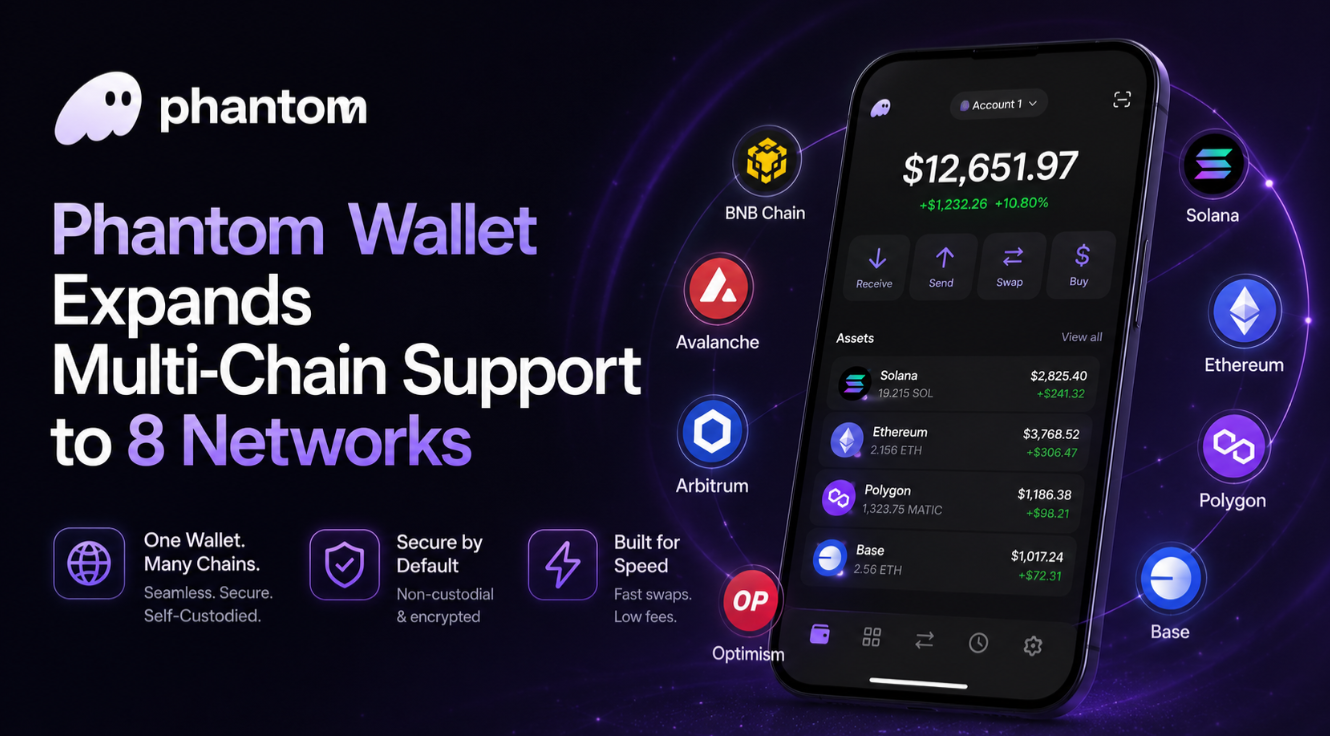
This capability, combined with Phantom's expanding multi-chain reach and MetaMask's Smart Account gas sponsorship, illustrates how wallet security features are converging upward across the industry. The wallets rating is updated quarterly to reflect these rapid changes across all major wallet products.
Roadmap: Mobile, Account Abstraction, Social Recovery
Rabby's 5 million MAU milestone was achieved primarily on the browser extension; mobile app downloads account for roughly 30% of the base. The DeBank team has indicated that the next major development cycle focuses on bringing full simulation and risk scoring to the mobile app — where transaction complexity and user security awareness tend to be lower — and adding ERC-4337 Smart Account support for gas sponsorship on Ethereum L2s.
Social recovery — the ability to designate trusted addresses that can collectively restore wallet access if the seed phrase is lost — is also on the roadmap. This feature, already available in MetaMask Smart Accounts, addresses the single largest user pain point in self-custody: the catastrophic consequences of losing a 24-word seed phrase. Rabby's implementation will reportedly use on-chain guardian contracts rather than any custodial service, maintaining its non-custodial ethos while reducing recovery risk.