
Why staking taxes are complex
Crypto staking rewards occupy a legal grey zone in most countries. The core question — are staking rewards ordinary income when received, or capital gains only when sold — has received different answers from tax authorities around the world. Getting this wrong can mean underpaying taxes (with penalties) or overpaying unnecessarily. This guide covers the treatment as of 2026 in the major English-speaking and European jurisdictions, but tax law changes frequently and this is not legal or tax advice.
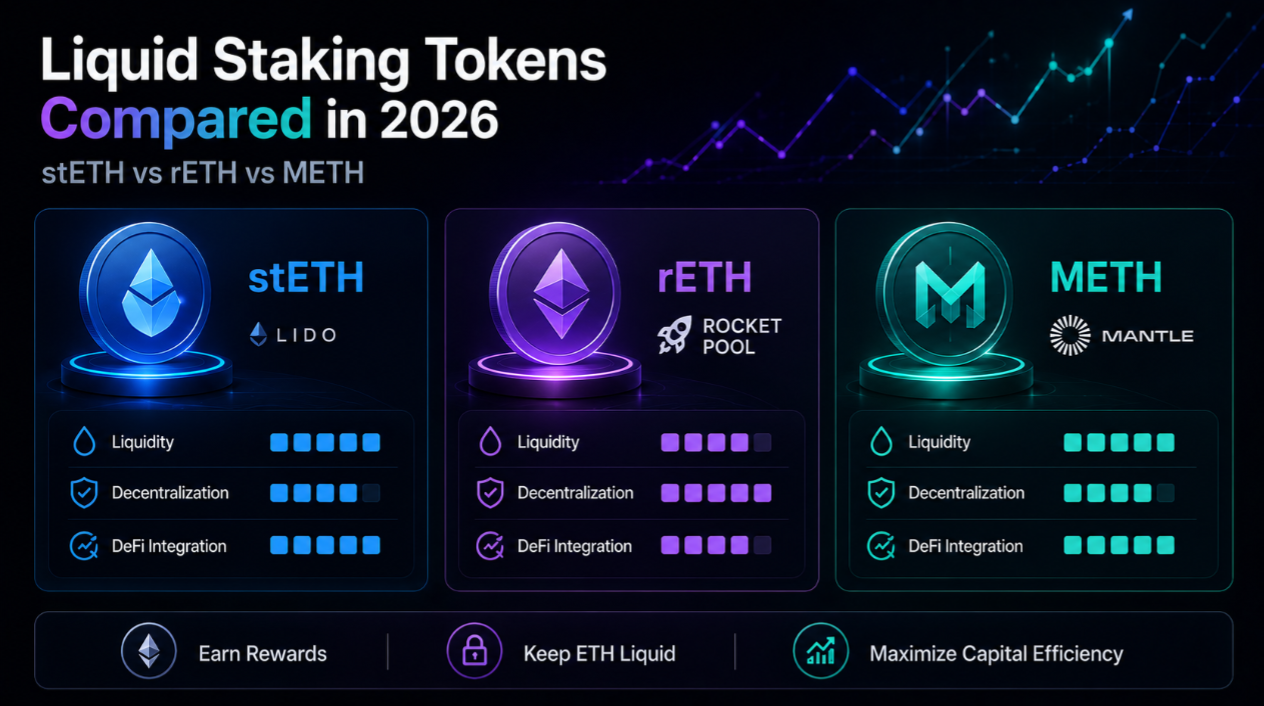
The complexity is compounded by liquid staking tokens (LSTs) like stETH, which rebase daily, and by the distinction between proof-of-work mining rewards (well-established case law in most jurisdictions) and proof-of-stake staking rewards (newer and still contested). Restaking via EigenLayer introduces yet another layer, as additional rewards come from securing third-party protocols.
United States: IRS guidance and the Jarrett case
In the United States, the IRS published Revenue Ruling 2023-14, confirming that proof-of-stake staking rewards are gross income in the year they are received, valued at fair market value at the time of receipt. This means you owe ordinary income tax on each batch of staking rewards as they enter your wallet — not when you sell.
The Jarrett case challenged this: Joshua and Jessica Jarrett argued that staking rewards are newly created property (like a farmer's harvest) and not income until sold. The IRS rejected a refund and the case is still winding through courts. Until a binding court decision overturns RR 2023-14, the IRS position stands.
- Solo staking: Each reward deposit to your withdrawal address is income at FMV on receipt. When you later sell those ETH rewards, the gain (sale price minus FMV at receipt) is capital gain — short-term if held less than 1 year, long-term at 0/15/20% rates if held longer.
- Liquid staking (rebasing, e.g. stETH): Each daily rebase may be a taxable income event. Many US taxpayers use wstETH to consolidate recognition into fewer events (the exchange rate change is still income but happens at withdrawal/sale, not daily).
- Liquid staking (non-rebasing, e.g. rETH): Unclear — the IRS has not specifically addressed non-rebasing LSTs. Some tax professionals treat the exchange rate appreciation as deferred until sale; others recognise income accrual annually. Conservative approach: recognise income annually based on exchange rate change.
United Kingdom: HMRC treatment of staking
HMRC's Cryptoassets Manual (updated in 2023) distinguishes between "staking as a trade" (rare, for professional staking operations) and staking as a passive income activity (the norm for most individuals).
For most UK individuals: staking rewards are miscellaneous income taxed at income tax rates (20%, 40%, or 45% depending on your tax band) in the tax year they are received. The pound-sterling value at receipt establishes your cost basis. When you sell, Capital Gains Tax applies on the gain over that basis. The annual CGT exempt amount (now £3,000 from 2024/25) applies to the capital gain portion only.
stETH rebasing: each rebase event creates a taxable income event. wstETH is simpler but the appreciation still constitutes income in HMRC's view when the LST is ultimately sold or exchanged. HMRC has not issued specific guidance on wstETH or rETH accrual mechanics — most UK crypto tax accountants treat exchange rate appreciation as income accruing annually.
Germany: potentially tax-free after 1 year
Germany has one of the most favourable tax treatments for crypto staking, though it is complex. Under German income tax law (EStG §23 and BMF letter guidance):
- Staking rewards as income: Rewards are generally treated as miscellaneous income (§22 Nr.3 EStG) and taxed at your personal income tax rate when received. However, amounts under €256 per year are tax-exempt.
- Extended holding period: There is significant debate and some state-level (Finanzamt) guidance suggesting that staking activity extends the tax-free holding period for the underlying coins from 1 year to 10 years. This is not uniformly confirmed at federal level and varies by Finanzamt.
- Reward coins held 1+ year: If the staking reward tokens themselves are held for more than 1 year after receipt, they qualify for the standard 1-year tax-free holding period and any sale gain is exempt from capital gains tax.
The German BMF (Bundesminanzministerium) issued updated guidance in May 2022 clarifying that staking, lending, and mining rewards are taxable income. For liquid staking, each rebase or exchange rate event needs careful analysis. German crypto tax tool Blockpit and Accointing have Germany-specific tax logic built in.
Portugal: still a low-tax jurisdiction in 2026
Portugal introduced a crypto tax framework in 2023 that brought an end to its previous tax-free status for casual investors. However, staking remains treated relatively favourably:
- Staking rewards: Classified as capital income (categoria E), taxed at a flat 28% (or progressive rates if you elect global taxation). There is no exemption for amounts under a threshold.
- Long-term holdings (2+ years): Gains on crypto held over 2 years are taxed at 0% capital gains rate. Staking rewards held for 2+ years after receipt may therefore be sold tax-free on the capital gain portion.
- Short-term sales: Gains on crypto held under 365 days are taxed at 28% (or progressive rates). Between 1–2 years: 50% of the gain is included in taxable income.
Australia: income tax on rewards at receipt
The Australian Taxation Office (ATO) treats staking rewards as ordinary income at fair market value in AUD at the time of receipt. This is aligned with the IRS approach. The AUD value at receipt becomes the cost basis for future CGT calculations when you sell.
Australia has a 50% CGT discount for assets held more than 12 months. This applies to the capital gain (sale price minus FMV at receipt) on staking rewards held over 12 months. The reward income itself is taxed at marginal income tax rates (up to 47% including Medicare levy) in the year of receipt regardless.
Switzerland: cantonal variation and wealth tax
Switzerland is unique in having no federal capital gains tax on private individuals' crypto holdings but a wealth tax applied annually to the portfolio value. Cantons vary significantly in their income tax treatment of staking rewards:
The Swiss Federal Tax Administration (FTA) treats staking rewards as taxable income at receipt for income tax purposes. The fair market value at year-end (or at receipt, depending on canton) establishes the taxable amount. The same amount becomes the cost basis for any future sale. Wealth tax is applied to the total crypto portfolio value at 31 December each year, with valuations based on ESTV-published year-end exchange rates.
Practical tools for calculating staking taxes
Tracking staking rewards for tax purposes requires connecting your wallet addresses and exchange accounts to a crypto tax platform. The leading platforms in 2026:
- Koinly: Supports auto-import from all major chains via wallet address sync. Strong multi-country tax rule support including rebasing LST tracking.
- CoinTracker: Best US-focused platform, with IRS Schedule D and Form 8949 generation. Good DeFi protocol tracking.
- Blockpit: Best German-speaking country support. Handles Austrian and Swiss rules well.
- TaxBit: Enterprise focus, used by Coinbase for US 1099 generation. Strong for centralised exchange activity.
Key tax planning considerations for stakers
- Track FMV at the exact time of every reward receipt — not daily close prices. On-chain timestamps enable this.
- Consider whether wstETH or non-rebasing LSTs simplify your tax accounting versus stETH daily rebases.
- In jurisdictions with long-term capital gains discounts (US, Australia), holding staking reward tokens for the qualifying period can significantly reduce tax.
- Staking through a company structure may change the tax treatment entirely — relevant for large stakers.
- Restaking rewards from EigenLayer or Symbiotic may be treated differently from base staking rewards — no jurisdiction has issued definitive guidance as of 2026.
This article provides a general overview of staking tax treatment as of 2026. Tax laws change frequently. Always consult a qualified tax professional who specialises in crypto assets in your jurisdiction before making decisions based on this content.