What is slashing in proof-of-stake
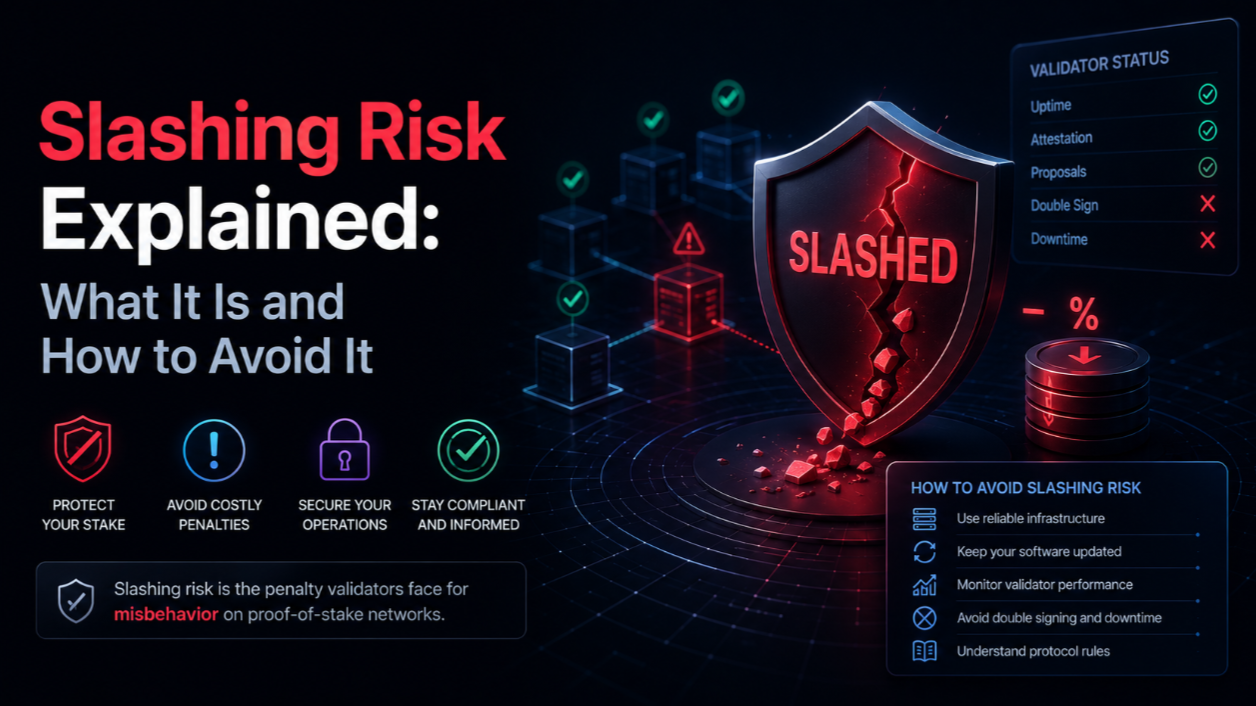
Slashing is the mechanism by which the Ethereum proof-of-stake protocol punishes validators that commit provably contradictory actions — signing two conflicting blocks or attestations. Unlike inactivity penalties (which are gradual), slashing is triggered by detected protocol violations and results in an immediate partial loss of the validator's 32 ETH stake plus a forced exit from the network.
The purpose of slashing is to make attacks on Ethereum economically irrational. If a validator (or coordinated group of validators) tries to rewrite history or double-sign votes to manipulate the chain, they destroy a significant portion of their own capital. The correlation penalty — which scales slashing severity with the number of simultaneous slashing events — is specifically designed to punish large coordinated attacks most harshly.
The two slashable offences in detail
Only two specific behaviours trigger slashing in Ethereum's consensus protocol:
- Double proposing: A validator proposes (signs) two different beacon chain blocks for the same slot. This is a direct attack on consensus — two conflicting blocks can't both be canonical.
- Surround voting or double voting: A validator makes two attestations that contradict each other. Specifically: signing a vote that "surrounds" (encompasses) a previous vote (surround slashing), or signing two distinct attestations for the same target (double voting).
Inactivity — missing attestations, going offline — is never slashable. Proposing a block that gets orphaned is not slashable. Only the specific contradictory-signing actions above trigger the slashing mechanism. This means nearly all accidental slashing incidents have a single root cause: running two instances of the same validator key simultaneously.
How the slashing penalty is calculated
When slashing is triggered, three separate penalties apply:
- Immediate penalty: The validator loses 1/32 of its effective balance (1 ETH on a full 32 ETH validator) instantly upon detection.
- Proposer and whistleblower rewards: The validator that included the slashing proof in a block gets a reward, funded from the slashed validator's balance.
- Correlation penalty (applied after 18 days in the exit queue): This scales with the total ETH slashed during the same 18-day window. If only one validator is slashed, the correlation penalty is near zero. If 1/3 of all validators are slashed simultaneously (the threshold for a successful 51% attack), each slashed validator loses its entire 32 ETH balance.
For an individual solo staker, a single accidental slashing typically costs around 1–2 ETH total (initial penalty + small correlation penalty + missed rewards during the 36-day forced exit period). Catastrophic for an individual, but far less than the 32 ETH maximum theoretical loss.
Why double signing is almost always the cause
The single most common trigger for slashing is running the same validator key on two machines at the same time. This happens in three common scenarios:
- Hardware migration without proper stop: Staker sets up a new machine, starts the validator, then forgets (or doesn't know) that the old machine is still running. Both sign attestations for the same slots, triggering a double-vote slashing.
- Backup system auto-failover: Operator sets up a hot standby that automatically switches on if the primary goes down. Primary suffers a brief network partition (still running), backup activates — both sign simultaneously.
- Cloud VM snapshot restore: Validator running in a VM. Operator restores a snapshot to a second VM while the original continues running. Both instances have the same keystore and sign from the same key.
All three scenarios are avoidance mistakes, not protocol complexity. With the right operational discipline, slashing is nearly impossible for solo stakers.
Slashing protection database: your first line of defence
Every major consensus client maintains a local slashing protection database (a SQLite file) that records every attestation and block proposal ever signed. Before signing any new message, the client checks this database to ensure no contradictory message has been signed before.
When migrating to a new machine or client, you must export this database from the old client and import it into the new client. All major clients (Lighthouse, Prysm, Teku, Nimbus, Lodestar) support the EIP-3076 interchange format for this. The slashing protection file is small (a few MB) and should be backed up alongside your keystore.
Critical rule: even with a slashing protection database import, wait at least two finalised epochs (approximately 13 minutes) after stopping the old client before starting the new one. The slashing protection database protects against accidental signing, but if both clients are simultaneously online, they may sign different messages before the database prevents a conflict.
Minimum steps for safe validator migration
- Stop the old validator client and confirm it has stopped (check logs, kill the process, verify the PID is gone).
- Wait at least 2–3 finalised epochs (~15 minutes) after the last attestation from the old instance.
- Export the EIP-3076 slashing protection database from the old client.
- Copy both the keystore file and the slashing protection database to the new machine.
- Import both into the new client.
- Start the new client and verify it picks up the validator without any error messages about protection violations.
- Monitor beaconcha.in for attestation performance on the new machine for at least 1 hour before decommissioning the old hardware.
Avoiding hot standby and auto-failover traps
Automated failover is one of the most dangerous patterns in validator operations. The problem: if your primary suffers a brief network partition, it is still "alive" and signing attestations from its local perspective — but the network can't hear it. Your automated failover brings up a second instance. Now both are signing. Network partition ends. Both signatures are broadcast. Slashing.
The correct approach for high-availability staking is Distributed Validator Technology (DVT) via Obol or SSV — where threshold signing prevents any subset of nodes from completing a signature without a quorum. This is not an auto-failover risk because no single node can sign independently. Lido DAO and EigenLayer are both moving toward DVT-based validator operation precisely to eliminate this class of risk.
Slashing risk for liquid staking users
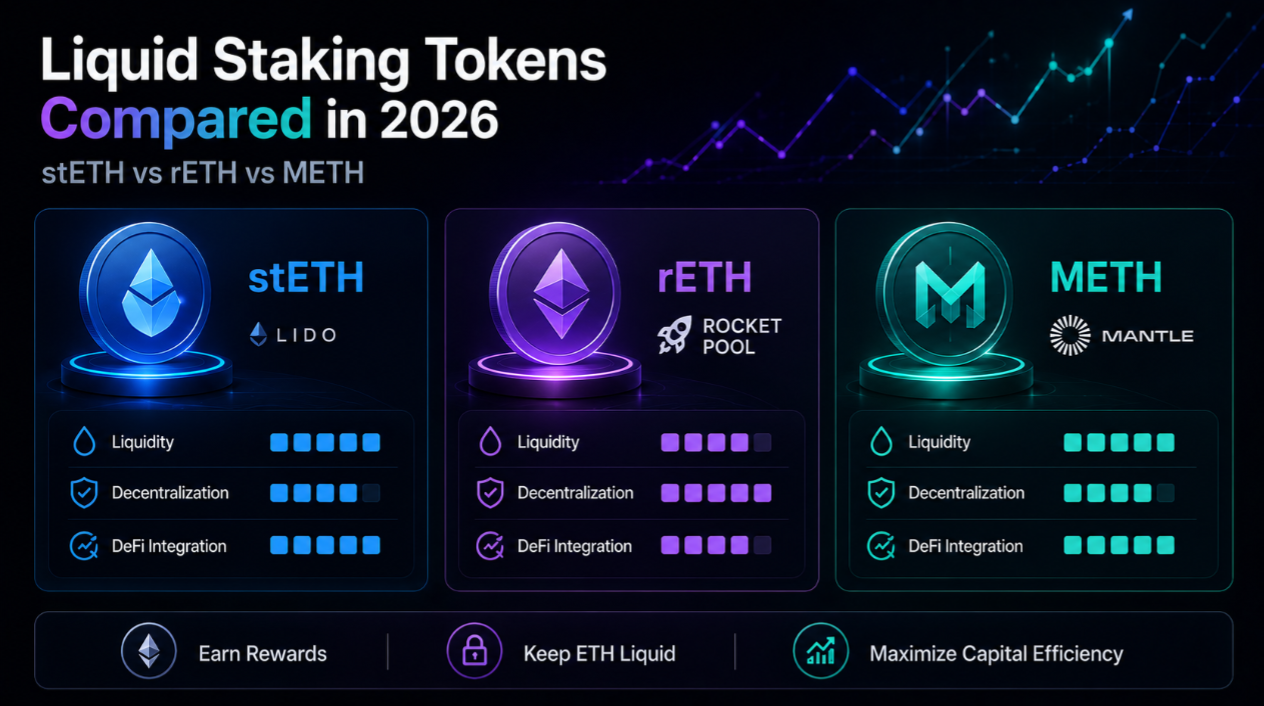
If you stake through a liquid staking protocol rather than solo staking, slashing risk still exists — it is just abstracted away from you. If one of Lido's node operators gets slashed, the protocol socialiseds the loss across all stETH holders (a tiny reduction in the ETH-per-stETH ratio). Lido has an insurance fund partially cushioning operator slashing events.
For Rocket Pool, mini-pool operators post RPL collateral (minimum 10% of ETH value) as insurance. If a mini-pool operator is slashed and the ETH balance drops below 16 ETH, RPL collateral is burned to compensate the pooled deposit — protecting rETH holders up to the collateral amount. Significant slashing events could exhaust this buffer, but Rocket Pool's decentralised operator model means correlated slashing risk is lower.
Can slashed ETH be recovered
No. Once the Ethereum protocol processes a slashing, the ETH is burned from the validator's balance. There is no appeals process, no customer service line, and no undo function. This is the permanent, irreversible nature of on-chain penalties.
Some insurance protocols (Nexus Mutual, InsurAce) offer slashing insurance for solo stakers and liquid staking protocol users. Premiums are typically 1–3% of covered value annually. Given that single-validator accidental slashing costs roughly 1–2 ETH, insurance may or may not be cost-effective depending on your stake size and risk tolerance.
This article is for educational purposes only. Always test on a testnet before any production validator migration. Not financial advice.