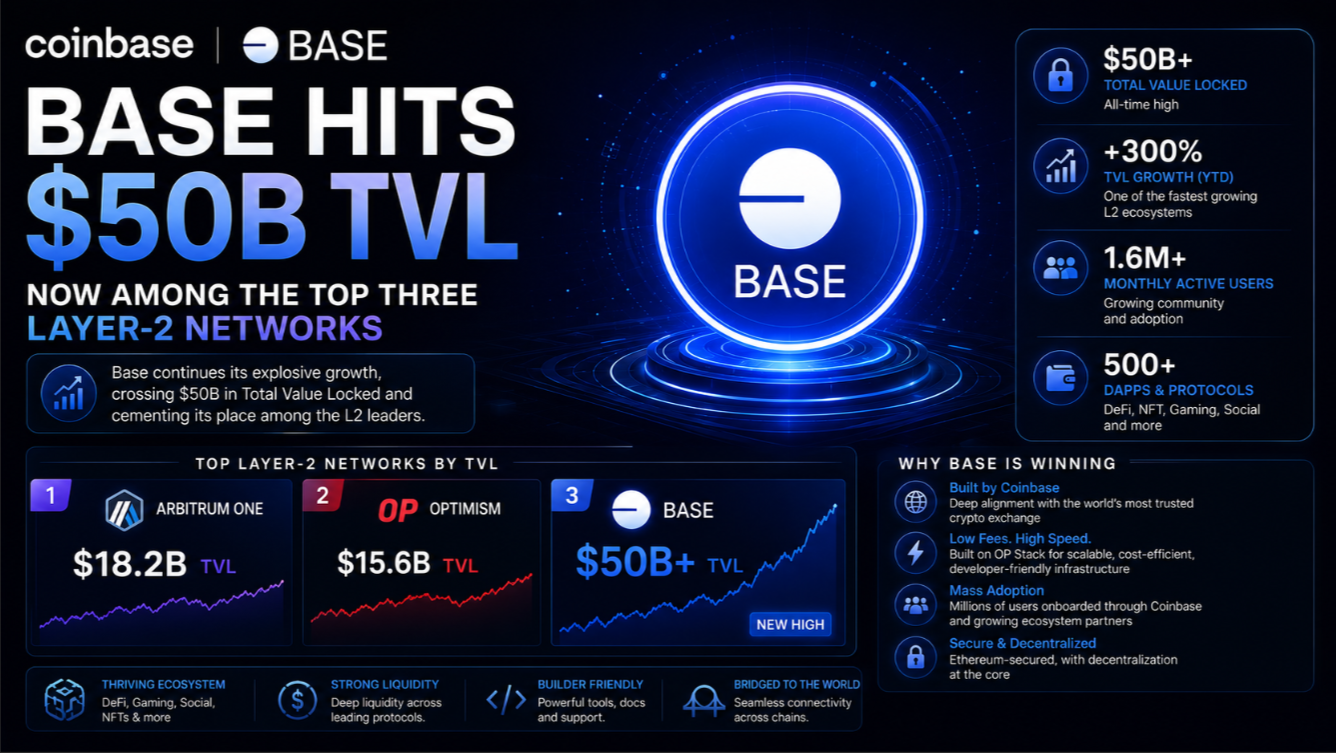
Coinbase Base reached a landmark $50 billion in total value locked in April 2026, cementing its position among the three largest Ethereum Layer-2 networks just under three years after its public launch. The milestone reflects a confluence of product decisions, ecosystem grants, and the unique distribution advantage that comes with being built by the largest US-regulated cryptocurrency exchange. For context on how L2 activity affects Ethereum's base layer, see the Ethereum market page and the Optimism market page.
Base's Growth Trajectory: From Zero to $50B in 33 Months
Base launched on mainnet in August 2023 with negligible TVL and heavy scepticism from the crypto community, much of it centred on Coinbase's role as the sole sequencer. By end of 2023, TVL had climbed to $400 million — modest but growing. The inflection point came in early 2024 when Aerodrome Finance migrated its veAMM model to Base and attracted $2B in liquidity within weeks, demonstrating that deep DeFi was possible on the chain.
The social layer amplified growth further. Farcaster's "frames" feature — interactive mini-apps embedded in social feeds, all settling transactions on Base — brought a wave of non-financial users who had never previously interacted with a blockchain. By lowering the first transaction from a $50 gas fee on mainnet to a $0.001 action inside a social post, Base converted social users into on-chain users at scale.
The 2025 DeFi super-cycle, driven by Ethereum restaking yields and the proliferation of structured products, pushed serious capital onto Base as Aerodrome, Morpho, and Moonwell attracted institutional allocators seeking higher yields than money market funds offered.
Aerodrome: The Engine Behind Base's TVL
Aerodrome Finance deserves special mention as the single protocol most responsible for Base's TVL explosion. A fork of Velodrome (Optimism's leading DEX), Aerodrome uses a vote-escrow tokenomics model where AERO holders lock tokens for veAERO to direct liquidity incentives. This flywheel — projects bribe veAERO voters to attract liquidity, which deepens their pools, which attracts more users, which drives more fee revenue to AERO stakers — proved uniquely effective at accumulating and retaining TVL.
Aerodrome's success created a de facto standard for Base DeFi: new protocols launching on Base typically deploy an Aerodrome pool before any other integration, knowing that's where liquidity provisioning activity is concentrated.
Institutional On-Ramp: Coinbase Distribution Advantage
The most distinctive advantage Base holds over independent L2 projects is Coinbase distribution. When Coinbase integrated Base as a native withdrawal destination in 2024, users could move funds from their exchange account directly to Base in seconds at zero fee — bypassing the traditional bridging UX entirely. This effectively made Base the "layer 1.5" for Coinbase's user base.
Prime clients (institutional accounts) gained the ability to move USDC onto Base for yield deployment via a single API call. For a fund manager allocating to DeFi, the difference between a 15-minute bridge with multiple confirmations and an instant API-driven transfer is not a minor UX improvement — it is a prerequisite for operational deployment.
Investors evaluating Base-based protocols can review Coinbase's custody and platform at the Coinbase review, and compare it with alternative L2 on-ramps at the exchange ratings page.
Risks: Sequencer Centralisation and Regulatory Exposure
Base's primary risk is structural: as a Coinbase-operated sequencer, Base transactions are ultimately subject to Coinbase's compliance obligations. Coinbase is a US-regulated entity subject to OFAC sanctions enforcement, meaning transactions to sanctioned addresses can be censored at the sequencer level — a capability that does not exist at the Ethereum base layer.
The second risk is concentration: if Coinbase's business faces regulatory action, acquisition, or operational disruption, Base users could face sequencer downtime. The OP Stack's escape hatch mechanism (forced inclusion via L1 transactions) provides a last-resort withdrawal path, but it requires Ethereum mainnet gas and is significantly slower than normal Base operations.
What the $50B TVL Milestone Means for L2 Competition
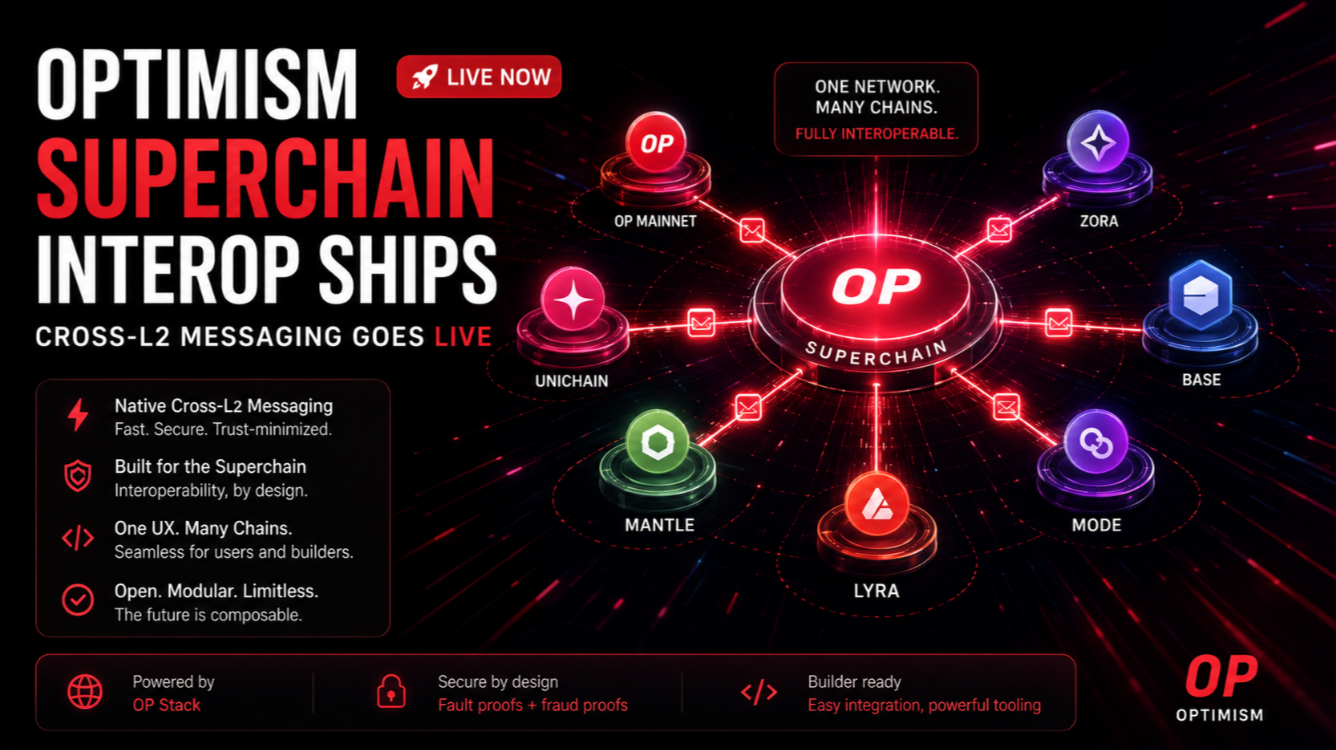
Base's success validates the distribution-first thesis for L2 adoption: technical excellence matters, but access to a pre-existing user base compounds faster than open-market developer acquisition. It also validates the OP Stack as a credible multi-chain framework — Base, OP Mainnet, and several Superchain members all share the same codebase, enabling interoperability upgrades like cross-chain messaging to benefit the entire ecosystem.
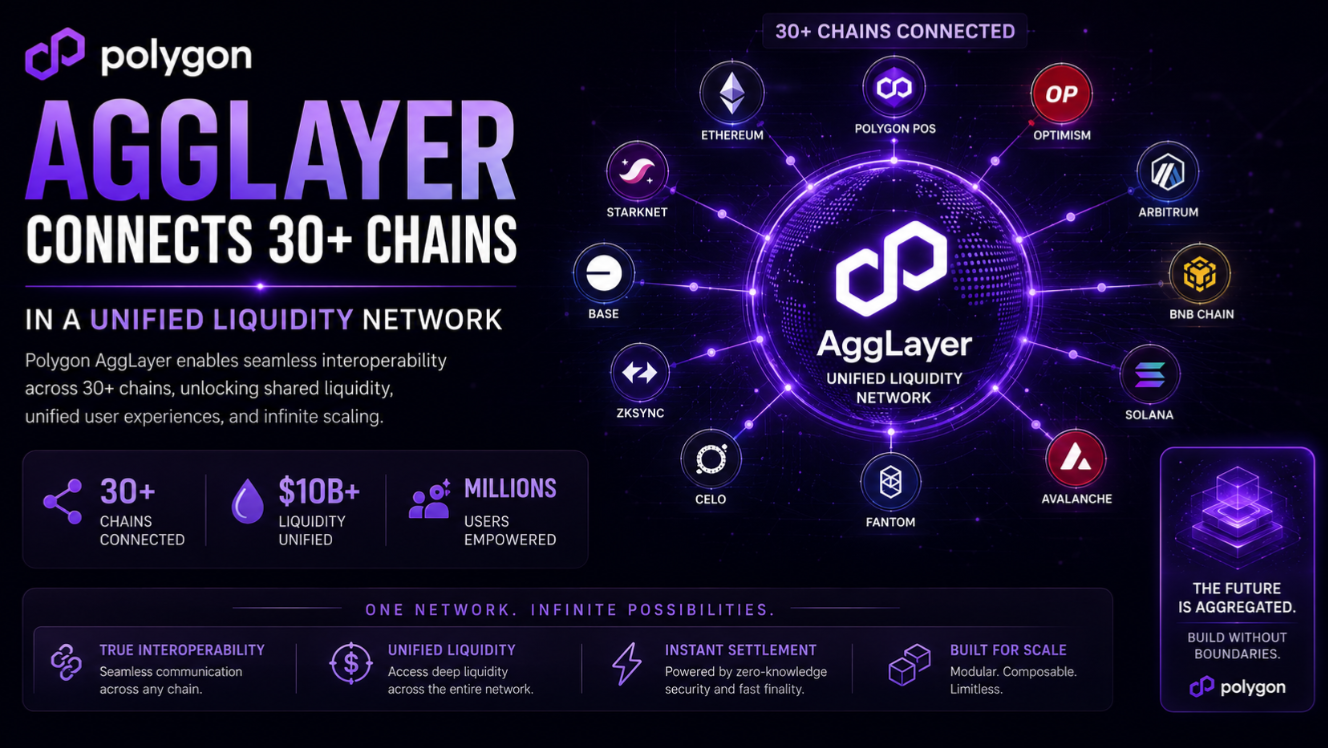
For a comparison with Arbitrum and Polygon's approaches to L2 scaling, see the Arbitrum market page and the Polygon market page. The L2 race is far from over, but the $50B milestone confirms Base as a permanent fixture in the competitive landscape.