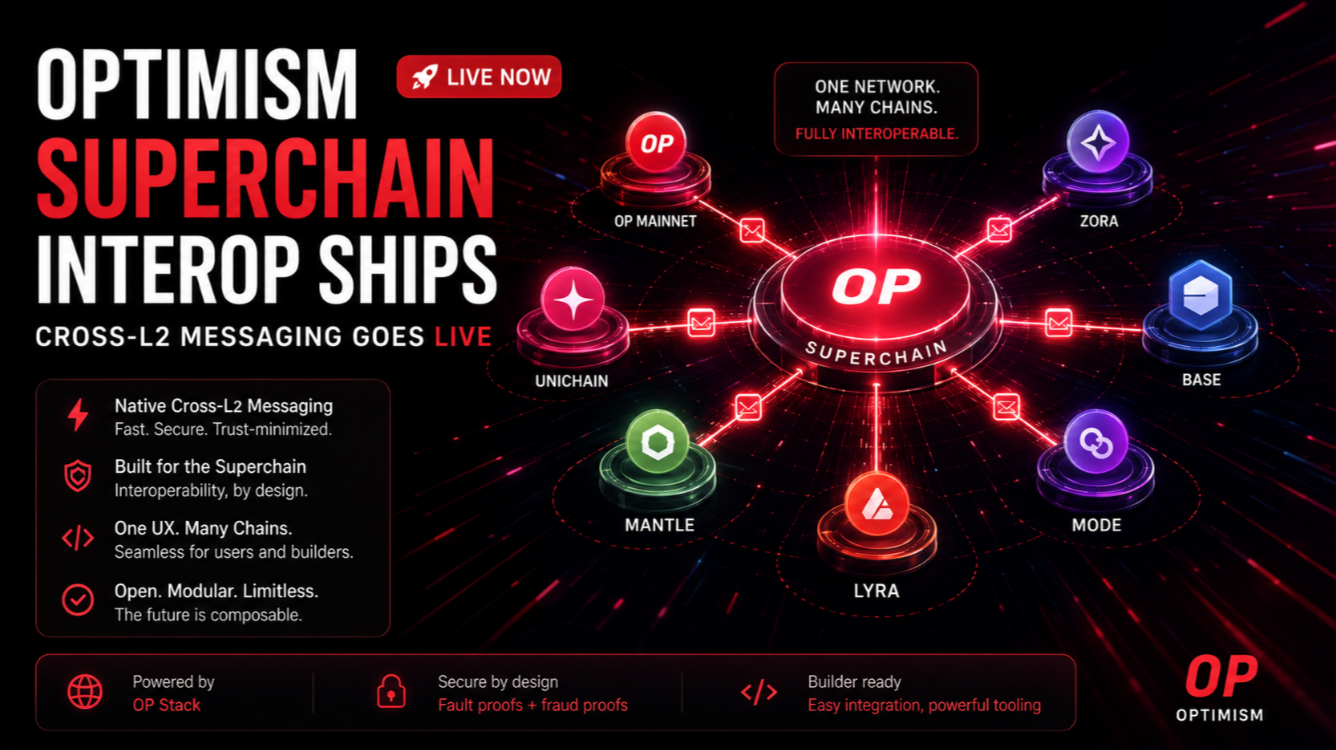
Optimism activated native cross-chain messaging across the Superchain in April 2026, enabling direct communication between smart contracts on OP Mainnet, Base, Mode Network, Zora, and all other OP Stack chains without third-party bridge infrastructure. The shipping of Superchain interop represents the completion of the first major milestone in the Optimism Collective's multi-year Superchain roadmap — and the beginning of a new phase in Ethereum L2 DeFi. Track the impact on Optimism's market data and broader Ethereum L2 trends via the Ethereum forecast.
The Superchain Vision: Shared Security, Unified Experience
Optimism's thesis has always been that the future of Ethereum scaling is not one L2 but many specialised chains sharing a common security infrastructure. The OP Stack provides a modular framework for deploying EVM-compatible L2s with shared components: a common sequencer specification, shared bridge contracts, compatible block formats, and now a native interoperability protocol.
The Superchain model creates network effects: every new OP Stack chain that joins the Superchain adds its liquidity and users to a shared pool accessible by all other member chains. A user on Zora (NFT-focused) can interact with a lending protocol on Base without leaving their wallet's chain context — the cross-chain message is handled transparently by the interop protocol.
Technical Mechanics of Superchain Cross-Chain Messaging
Superchain interop works through a shared message-passing standard called the CrossL2Inbox contract. When a smart contract on Chain A wants to trigger an action on Chain B, it emits a standardised message event. Chain B's sequencer monitors CrossL2Inbox events from all other Superchain members and includes the triggering action in the next block. The message's validity is guaranteed by the shared fault-proof mechanism that secures all OP Stack chains.
The critical security property is that messages cannot be forged: since all Superchain chains share the same proof system and Ethereum as the ultimate arbiter, a fraudulent message from Chain A would require successfully attacking Chain A's dispute game — as difficult as attacking any individual OP Stack chain.
- Message latency: ~2-4 seconds soft confirmation (same block time as both chains)
- Security model: shared OP Stack fault proofs, no additional trust assumptions
- Supported payloads: arbitrary calldata, ETH value transfers, ERC-20 transfers
- Current Superchain members with interop active: OP Mainnet, Base, Mode, Zora, Metal L2, Fraxtal
- Planned additions by Q3 2026: World Chain, Cyber, Soneium (Sony), Mantle (pending)
DeFi Applications Enabled by Cross-Chain Messaging
The DeFi implications of native cross-chain messaging are profound. Several protocols announced Superchain-native deployments on the same day as the interop activation:
Velodrome Finance (the leading OP Mainnet DEX) launched SuperSwap, which routes trades across all Superchain chains to find the best execution price, executing as a single user transaction regardless of how many chains the route crosses.
Aave v4's Superchain module enables cross-chain collateral: users can deposit WBTC on Base as collateral and borrow USDC on OP Mainnet, with collateral monitoring and liquidation logic operating cross-chain through the native messaging protocol.
Across Protocol (previously reliant on third-party bridges) has migrated its Superchain routes to native interop, eliminating relayer fees on cross-Superchain transfers and reducing bridge times from minutes to seconds.
Superchain Sequencer Economics Post-Interop
Interop changes the economic model for Superchain sequencers. Previously, each chain's sequencer operated independently — Base's sequencer processed Base transactions and kept all sequencer fees; OP Mainnet's did the same. Cross-chain interop creates shared transaction ordering dependencies: a cross-chain message's inclusion on Chain B depends on the ordering of the triggering event on Chain A.
The OP Stack's shared sequencer specification, currently in development, will allow a single sequencer to produce blocks for multiple chains simultaneously, guaranteeing atomic cross-chain inclusion. This is a prerequisite for the most complex DeFi composability — atomic arbitrage across multiple Superchain DEXs, for instance — and represents the next major milestone after the current messaging layer activation.
Competitive Implications: OP Stack vs Polygon AggLayer
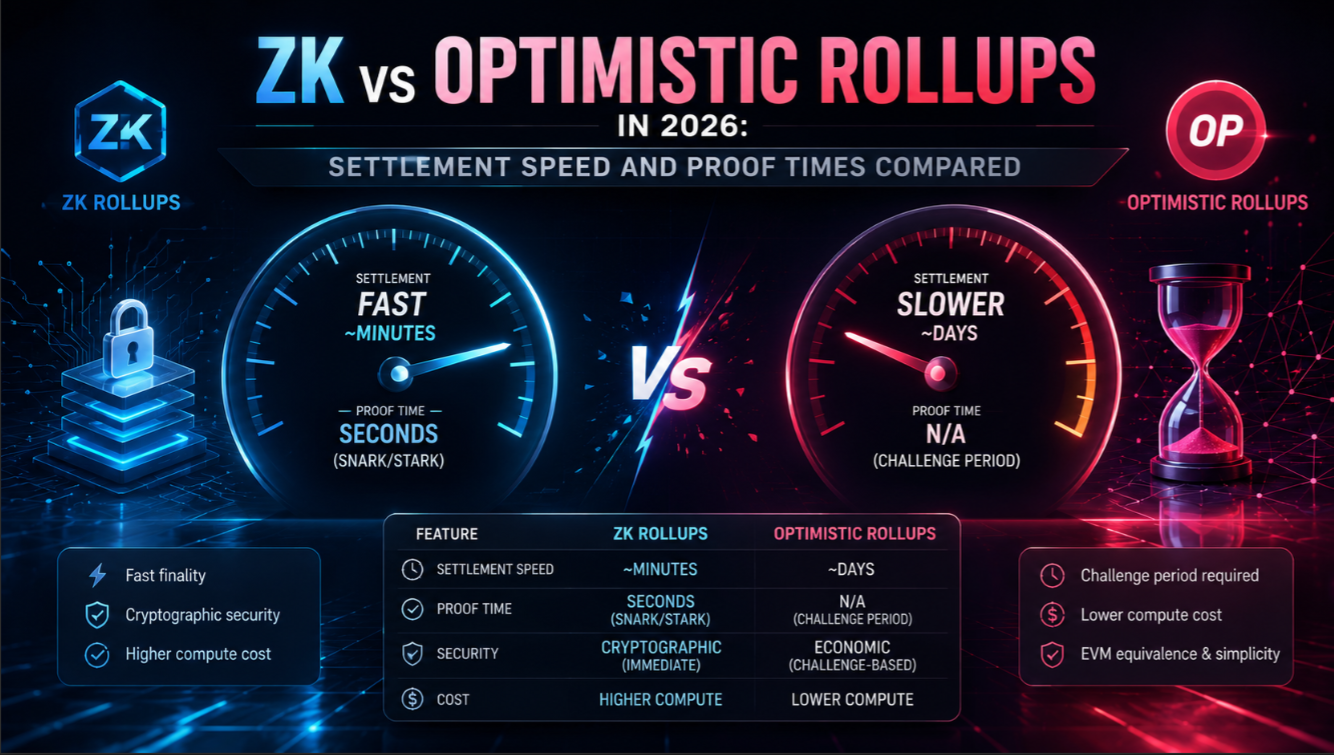
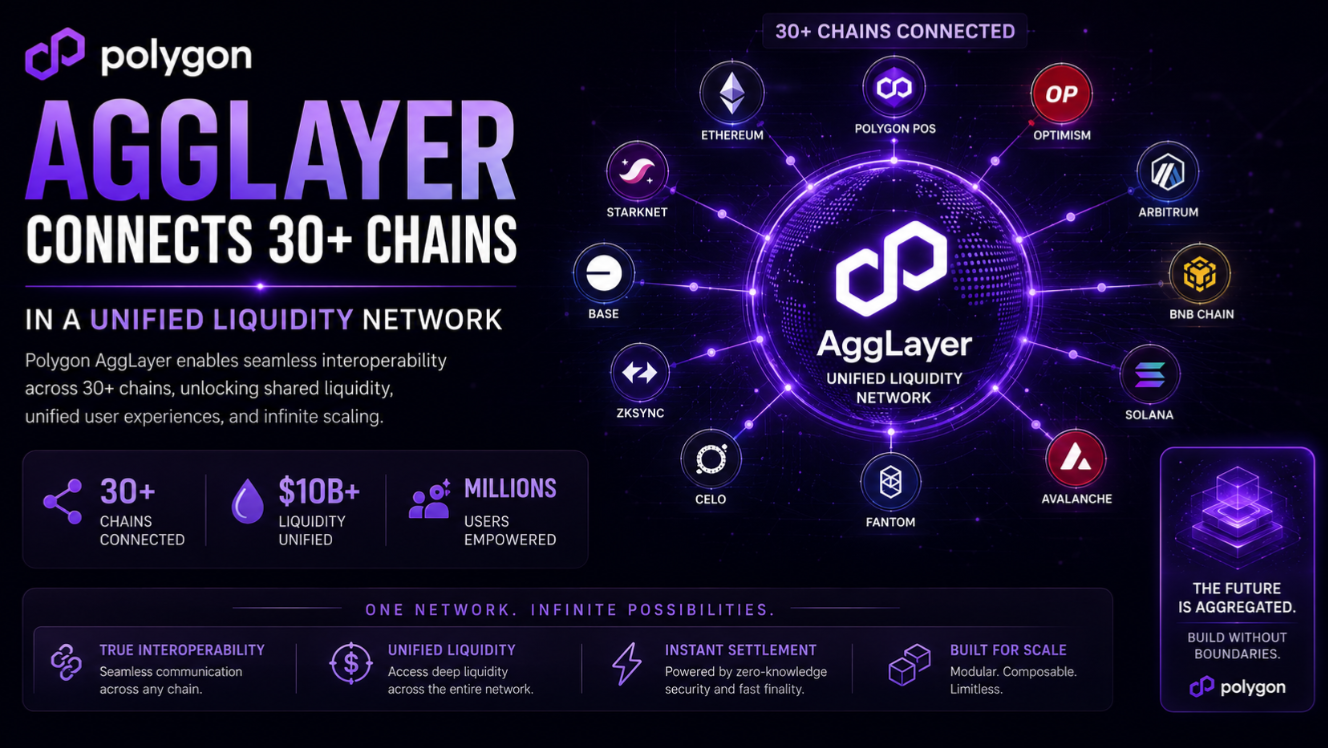
Optimism's Superchain interop and Polygon's AggLayer are converging on similar endpoints from different architectural starting points. Superchain uses optimistic fraud proofs with a shared sequencer; AggLayer uses ZK pessimistic proofs with a shared aggregator. Both aim to create a network of chains with unified liquidity, but their security trade-offs differ: Superchain's 7-day withdrawal finality vs AggLayer's ~30-minute ZK finality.
The competitive pressure is healthy. Base's participation in Superchain interop instantly made the $50B TVL ecosystem addressable from any other Superchain chain — a liquidity depth that AggLayer's 30-chain network is still building toward. For developers choosing between the two ecosystems, the decision increasingly rests on tooling preferences and team familiarity rather than fundamental capability differences.
Investors can compare L2 ecosystems directly via the Arbitrum market page, Optimism market page, and Polygon market page.