Two years into production deployment of ZK rollups, the debate between ZK and optimistic rollup architectures has moved from theoretical to empirical. We now have real data on settlement latency, proof generation costs, developer experience, and DeFi suitability across multiple production networks. This article provides a current-state comparison using benchmarks from Linea, zkSync Era, Scroll, and Polygon zkEVM on the ZK side, and Arbitrum One, OP Mainnet, and Base on the optimistic side. The results have direct implications for asset flows tracked on the Arbitrum market page, Optimism market page, and Ethereum forecast.
The Core Architectural Difference
Both rollup types execute transactions off-chain and post compressed transaction data (calldata or blobs) to Ethereum for data availability. The crucial difference is how they prove correctness of their execution.
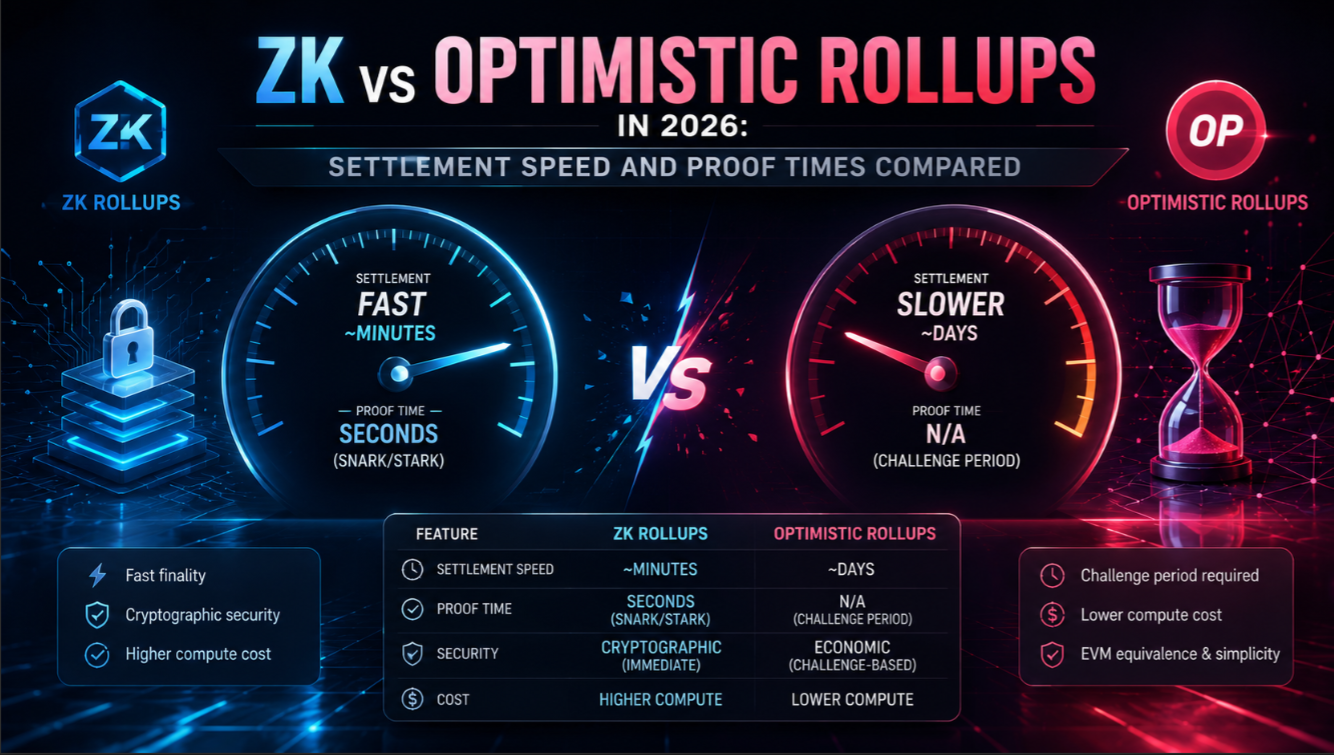
Optimistic rollups post a state root to Ethereum immediately after sequencing and assume it is correct. Anyone watching the chain has a 7-day window to submit a fraud proof if the state root is wrong. If no challenge occurs, the state root achieves economic finality. This design is simple and computationally cheap — the sequencer doesn't need to generate proofs for every block.
ZK rollups generate a cryptographic proof (a SNARK or STARK) that mathematically guarantees the state root is the correct result of executing all the batched transactions. Ethereum's verifier contract checks the proof — a computation that takes constant time regardless of batch size — and immediately finalises the state. There is no dispute window because the proof makes disputes impossible.
Settlement Latency: 2026 Benchmarks
The most practically relevant metric for users and DeFi protocols is settlement latency — how long until a transaction is irreversibly final on Ethereum. Here are current benchmarks:
- Arbitrum One (optimistic): soft confirmation ~250ms; Ethereum finality ~7 days (economic), ~12 minutes (probabilistic with fast bridge)
- OP Mainnet / Base (optimistic): soft confirmation ~2 seconds; Ethereum finality ~7 days (economic), ~12 minutes (probabilistic)
- Polygon zkEVM (ZK): soft confirmation ~3 seconds; Ethereum finality ~30-45 minutes (one proof cycle)
- zkSync Era (ZK): soft confirmation ~1 second; Ethereum finality ~20-30 minutes
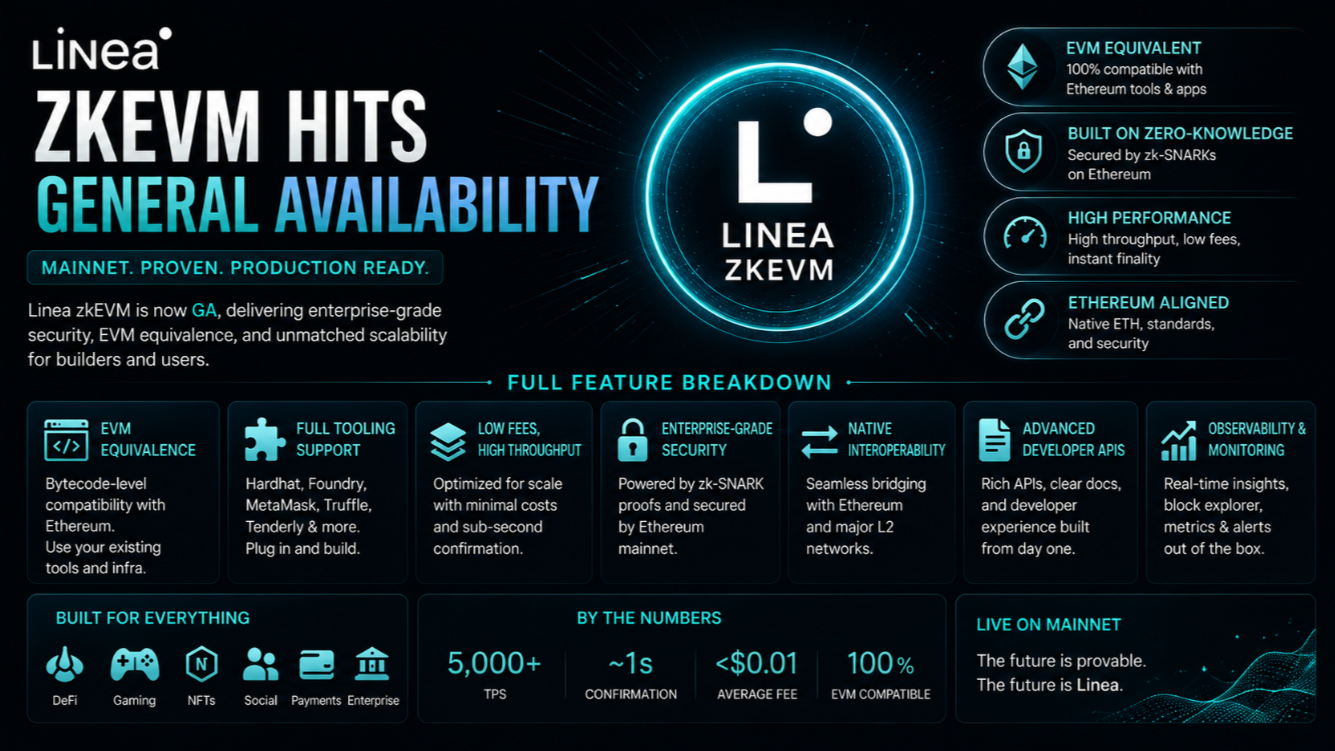
- Linea (ZK): soft confirmation ~2 seconds; Ethereum finality ~8-12 minutes (post-v3 prover)
- Scroll (ZK): soft confirmation ~3 seconds; Ethereum finality ~15-20 minutes
The headline finding: ZK rollups now offer faster Ethereum finality (8-45 minutes) than optimistic rollups' 7-day economic finality, while optimistic systems offer slightly faster soft confirmation due to no proof generation overhead.
Proof Generation: The Hardware Arms Race
ZK proof generation has undergone a hardware revolution in 2025-2026. Three companies — Supranational, Cysic, and Ulvetanna — have delivered custom FPGA and ASIC hardware specifically designed for zkEVM proof generation, achieving 10-50x speedups versus GPU-based provers.
The result is proof generation times that were unimaginable two years ago. Linea's v3 prover on reference hardware achieves:
- Simple transfers (token swaps, ETH sends): ~90 seconds per block proof
- Complex DeFi (multi-hop AMM trades, lending interactions): ~4-6 minutes per block proof
- Recursive aggregation (combining 10 block proofs into one): additional 2-3 minutes
- Full cycle from batch close to Ethereum submission: 8-12 minutes for a typical mixed batch
Parallel proof generation — running multiple provers simultaneously on different block segments — is now standard practice, allowing ZK rollups to process blocks continuously without waiting for previous proofs to complete.
Security Models: What You're Actually Trusting
The security profiles of the two architectures are genuinely different and the choice matters for high-value applications.
ZK rollup security rests on two assumptions: (1) the cryptographic hardness of the underlying proof system (PLONK, STARK, etc.) — compromising a well-audited proof system is computationally infeasible with current technology; (2) the correctness of the proof circuit implementation — a bug in the circuit could allow invalid state roots to be "proved" valid. The latter risk is real and has been partially realised in testnets; circuit auditing is expensive and time-consuming.
Optimistic rollup security rests on the liveness assumption: at least one honest party is monitoring the chain and willing to submit a fraud proof within 7 days. If all watchers are offline, bribed, or censored during the dispute window, an invalid state root achieves finality. This is a social and operational assumption rather than a purely cryptographic one.
In practice, both architectures have upgrade keys held by development teams — the most significant shared security risk. Multi-sig upgrade delays (typically 7-14 days) are the current standard protection against malicious upgrades, with decentralised governance as the long-term goal for both rollup types.
DeFi Suitability: Use-Case Fit Analysis
Given the trade-offs above, which architecture better suits specific DeFi applications?
- High-frequency trading / perps: Optimistic rollups win on soft confirmation speed (~250ms on Arbitrum) and throughput, making them better for latency-sensitive trading applications.
- Cross-chain asset bridges: ZK rollups win on finality time — 8-45 minutes vs 7 days means capital can be deployed faster and liquidity providers' risk window is shorter.
- Payments and remittances: Near-equivalent — both offer sub-$0.01 fees; ZK wins for recipients who want faster Ethereum finality without relying on fast-bridge liquidity providers.
- NFT minting and gaming: Optimistic rollups (especially Base and Zora) dominate due to developer ecosystem maturity and lower proof overhead for high-volume, low-value transactions.
- Privacy-preserving DeFi: ZK architecture is the natural fit — privacy features can be built natively into the proof system without additional overhead.
The Convergence Thesis
The sharpest debate in 2024 was "ZK vs optimistic." By 2026, that framing has softened significantly. Arbitrum is building zkNitro — a ZK proof layer for Arbitrum One that will eventually replace the fraud proof system while retaining Arbitrum's existing state and DeFi ecosystem. Optimism's Superchain roadmap includes a ZK proof option for chains that prefer faster finality. Several optimistic rollups have already replaced their dispute games with ZK-based validity proofs for specific transaction types.
The trajectory points toward a world where "optimistic" and "ZK" describe a rollup's current implementation rather than its permanent identity. Fast ZK provers and shared sequencer infrastructure will increasingly converge the two architectures' practical properties, leaving security model nuances as the primary distinguishing factor.
For investors evaluating L2 exposure, the Arbitrum market page, Mantle market page, and Polygon market page provide current TVL and fee data to complement this architectural analysis.