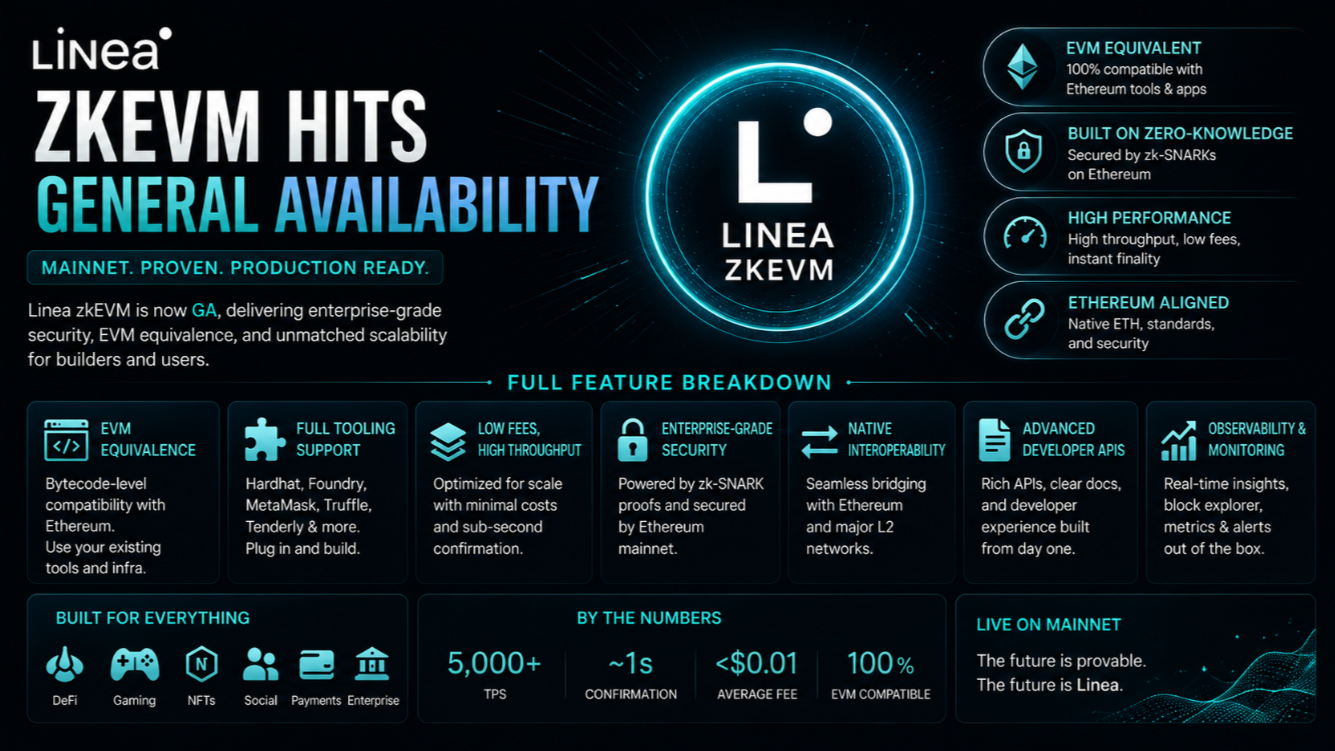
ConsenSys announced the general availability of Linea zkEVM in April 2026, marking the end of a carefully staged beta that began in mid-2023. GA removes the last permissioned restrictions from the network, opening unrestricted smart contract deployment, a decentralised prover network, and full MetaMask integration to every developer and user globally. As zkEVM rollups mature from experimental to production infrastructure, Linea's GA is one of the most consequential milestones in the Ethereum Layer-2 ecosystem this cycle.
What General Availability Actually Means
The term "general availability" in the context of a blockchain network has a specific technical meaning: all permissioned guardrails that existed during beta testing have been removed. For Linea specifically, this involved three distinct changes. First, the contract deployment whitelist — which required new protocols to apply through ConsenSys before going live — was dissolved entirely. Any Ethereum-compatible contract can now deploy to Linea without approval.
Second, proof submission transitioned from a ConsenSys-operated prover to a permissionless network of third-party provers. During beta, ConsenSys generated all ZK proofs in-house, which was operationally simpler but represented a centralisation risk. Now, independent node operators running Linea's prover software compete to submit proofs, earning fees proportional to their proof output. The decentralised prover network launched with 18 independent operators contributing compute.
Third, the sequencer's internal rate limits on transaction throughput were removed, allowing the network to scale to its hardware-constrained ceiling of approximately 2,000 TPS — up from a soft cap of 400 TPS enforced during beta.
The Linea Prover: Lattice-Based Architecture
Linea's technical differentiator is its prover architecture. Most zkEVM rollups use SNARK-based provers (PLONK, Halo2, Groth16) that require circuit compilation — transforming EVM opcodes into arithmetic circuits before generating proofs. This process requires specialised knowledge and makes supporting new opcodes or EVM upgrades expensive.
Linea uses a lattice-based approach (derived from research at ConsenSys's Applied Cryptography team) that proves EVM bytecode execution directly without circuit compilation. This enables Type-2 EVM equivalence — Linea's prover can generate proofs for any valid EVM execution trace, including future Ethereum opcode additions, without requiring updates to the prover circuit.
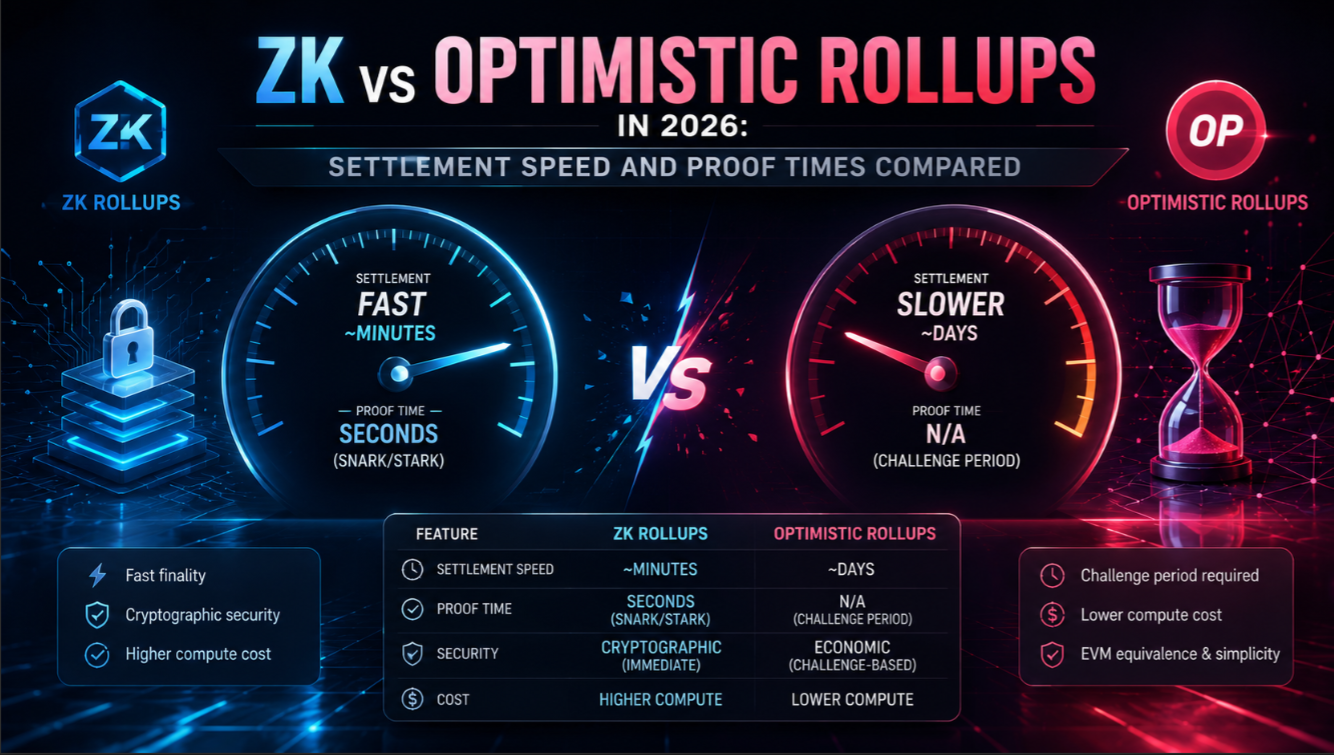
The v3 prover released with GA achieves proof times of under 8 minutes for standard blocks, down from 45+ minutes in the original v1 prover. This directly translates to Ethereum finality time: users can consider their Linea transactions fully settled in ~10 minutes rather than the near-hour waits of early beta.
MetaMask and Infura: ConsenSys Infrastructure Advantage
Linea's parent company operates two of the most widely used Ethereum infrastructure products: MetaMask (the most popular Ethereum wallet with ~30M monthly active users) and Infura (one of the largest RPC and node providers). These assets translate into structural advantages that independent L2 teams cannot easily replicate.
MetaMask displays Linea as a featured network in its network selector, with one-tap addition requiring no manual RPC configuration. The Linea bridge is accessible directly from MetaMask's Portfolio view. For users who already have ETH in MetaMask, bridging to Linea involves three clicks and no external website visits.
Infura provides Linea's default RPC endpoint with the same reliability SLAs (99.9% uptime) that enterprise developers rely on for Ethereum mainnet. DApp developers who already use Infura can add Linea to their multi-chain deployments by changing a single config string, using their existing API key.
DeFi Ecosystem at GA Launch
Linea enters GA with a functioning DeFi ecosystem that matured during the beta period. Key protocols include:
- Nile (Velodrome-model DEX): largest Linea DEX with $280M TVL
- Mendi Finance (lending): Aave v3 fork, $190M TVL
- Lynex (concentrated liquidity AMM): Algebra-based, $140M TVL
- LineaBank (money market): $110M TVL
- Total ecosystem TVL at GA launch: approximately $980M
The Linea Surge incentive programme (which awarded LXP points for on-chain activity) ran for 18 months during beta and successfully bootstrapped these protocols. With GA, ConsenSys announced an ecosystem grants programme with $50M allocated over two years to fund new protocol development.
Developer Experience: Deploying on Linea
For Ethereum developers, deploying on Linea is straightforward. Because Linea achieves Type-2 EVM equivalence, existing Hardhat or Foundry projects require only two configuration changes: the RPC endpoint (wss://linea-mainnet.infura.io/ws/v3/YOUR_KEY) and chain ID (59144). Contract addresses differ from Ethereum but all internal contract logic, events, and interfaces behave identically.
Key developer resources added at GA: a dedicated block explorer (Lineascan, forked from Etherscan), a native cross-chain messaging bridge SDK, a bridge API for programmatic deposits/withdrawals, and Foundry plugin support for Linea-specific deployment configurations.
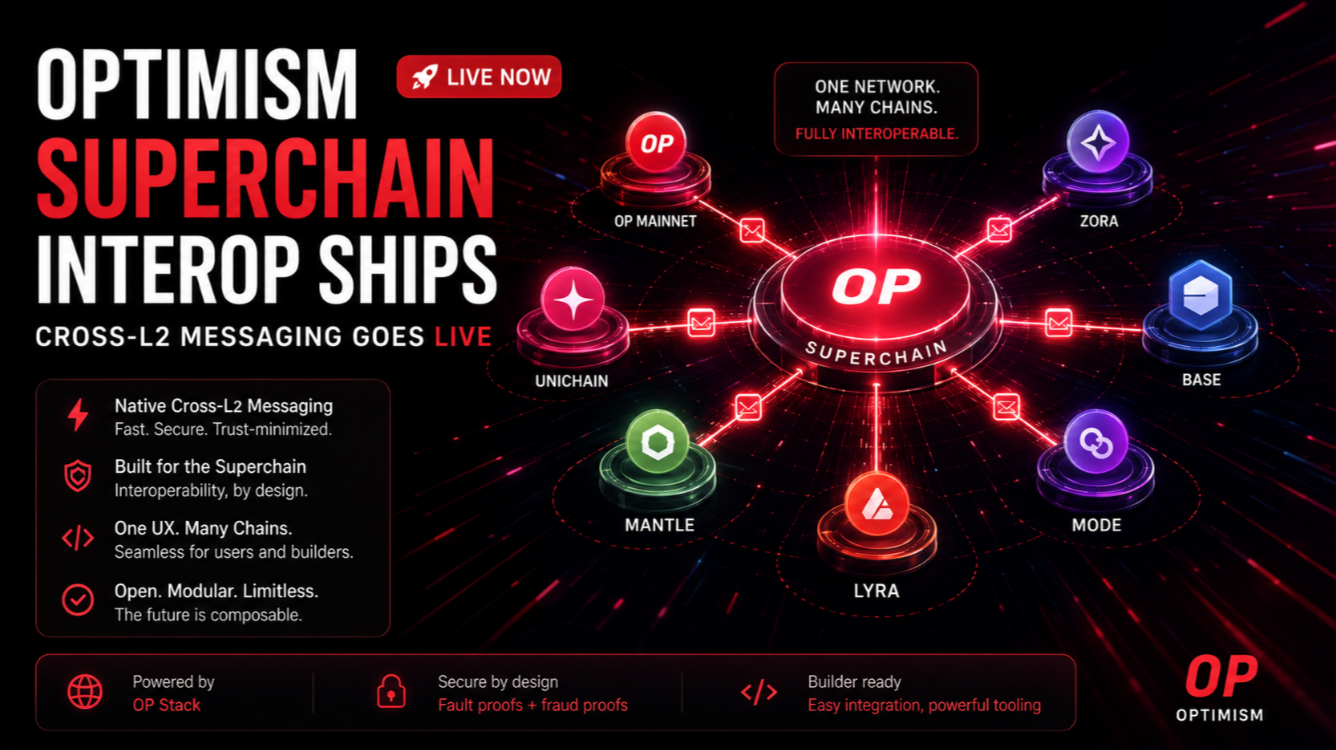
Developers building on Linea can compare it with other Ethereum-aligned L2s — including Arbitrum and Optimism — to evaluate the best deployment target for their specific performance and security requirements.
What GA Means for Linea's Competitive Position
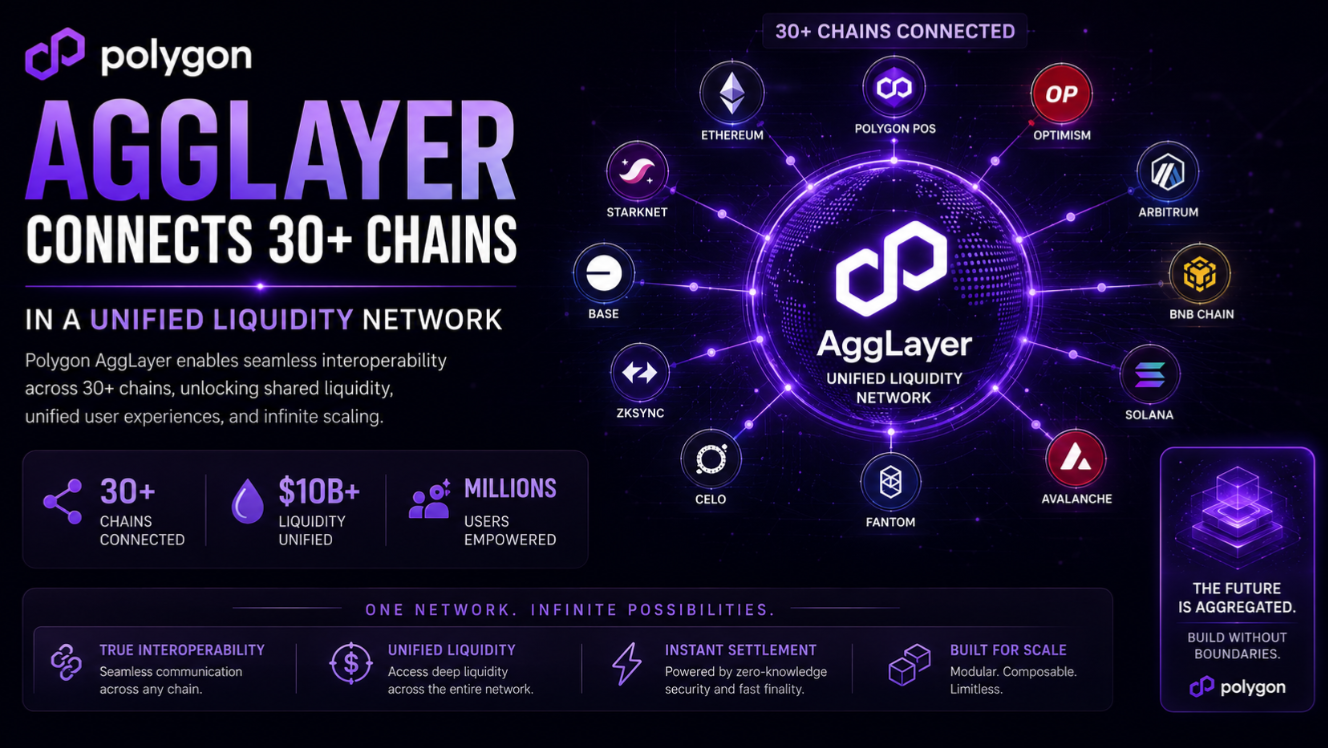
Linea enters a crowded market. Arbitrum One and Base hold dominant TVL positions; zkSync Era, Scroll, and Polygon zkEVM compete in the ZK space. Linea's differentiation ultimately rests on the ConsenSys ecosystem moat: MetaMask distribution, Infura RPC, and the enterprise relationships that ConsenSys has cultivated since 2014.
GA is not the finish line — it is the starting line for network effects. With permissioned barriers removed, Linea's growth rate will depend on whether its developer experience and MetaMask integration convert user familiarity into protocol deployment at scale. The first six months post-GA will be a critical signal of Linea's long-term trajectory in the zkEVM race.
For Ethereum price context and how L2 activity affects ETH fundamentals, see the Ethereum price forecast.