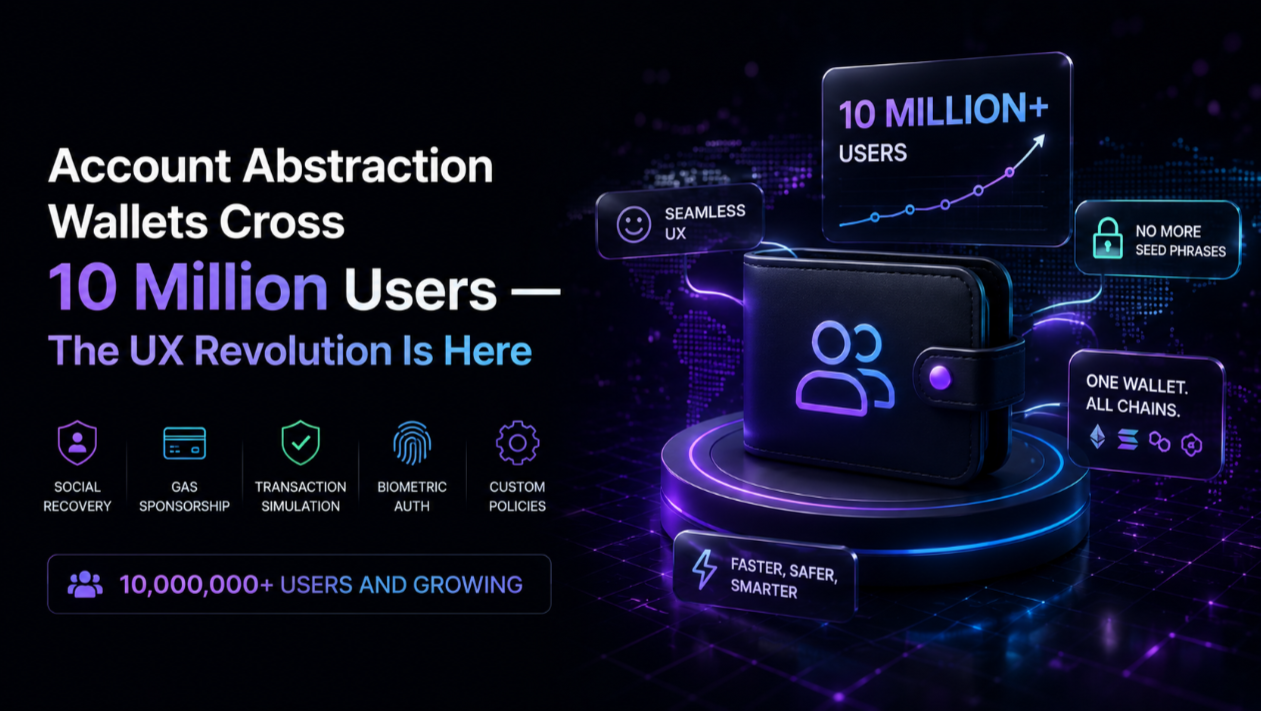
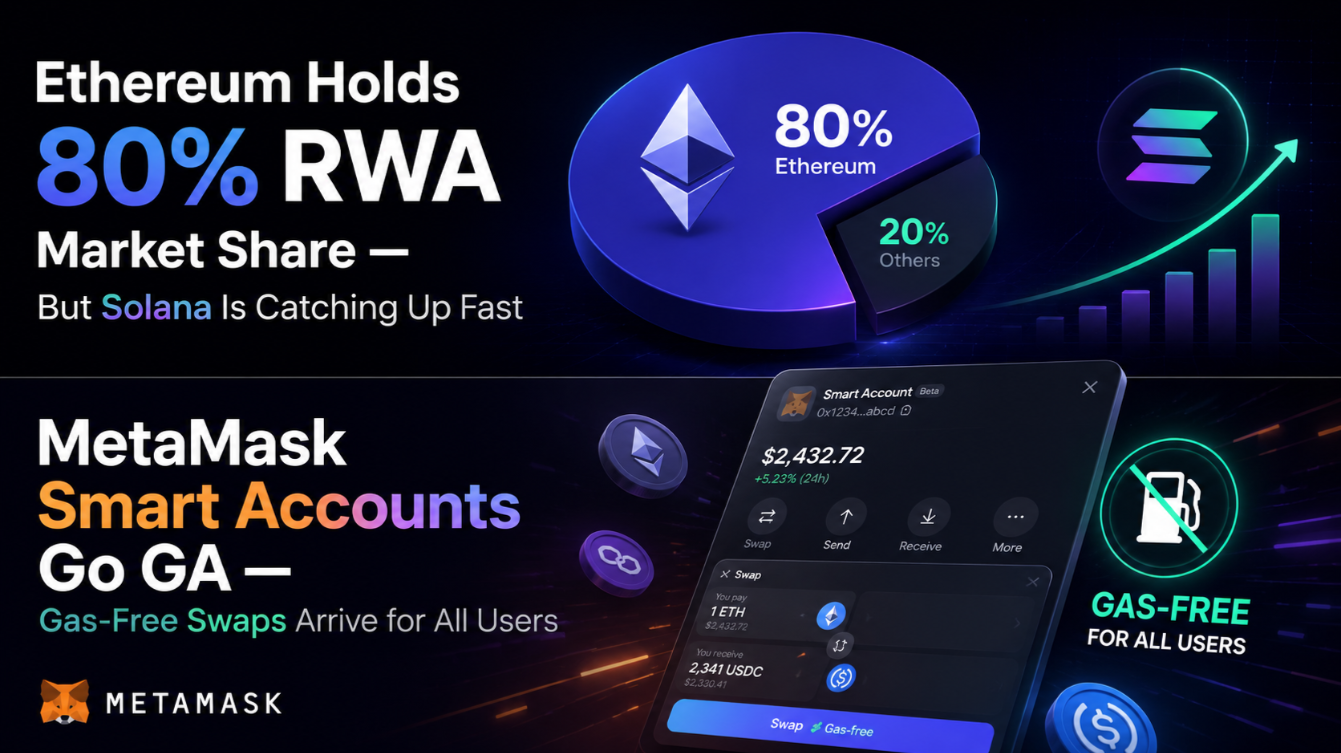
MetaMask shipped one of the most consequential upgrades in its eight-year history in March 2026: Smart Accounts are now generally available to all users across the browser extension and mobile app. The feature — built on the ERC-4337 account abstraction standard — replaces the friction-heavy externally owned account (EOA) model with smart contract wallets that can sponsor gas, batch operations, and enforce granular session permissions. For a comprehensive overview of MetaMask compared to competing wallets, see the MetaMask review and the wallets rating.
What Changed Under the Hood
Traditional Ethereum wallets are EOAs: a private key signs transactions, and the user pays ETH gas for each one. This model has three persistent pain points. First, new users must acquire ETH before they can do anything — a chicken-and-egg problem that blocks onboarding. Second, every action requires a separate signature prompt, creating friction in multi-step DeFi flows. Third, losing a seed phrase means losing funds permanently with no recovery path.
Smart Accounts solve all three. Under ERC-4337, instead of broadcasting a standard transaction, the wallet submits a UserOperation to a mempool of bundlers, which package it into a transaction executed by the EntryPoint contract. A Paymaster contract can intercept this flow and cover the gas cost, charging the user in any ERC-20 token or simply sponsoring the fee entirely. MetaMask's implementation layers a seamless UI over this infrastructure so users never see bundlers or EntryPoints — they just see lower costs and fewer confirmations.
Gas-Free Swaps: How the Economics Work
The headline feature at GA launch is gas-free swaps on supported networks. When a user initiates a swap through MetaMask's built-in aggregator, the Smart Account flow routes the transaction through MetaMask Gas Station, a Paymaster that fronts the ETH gas cost. MetaMask recovers this cost through a modest spread — typically 0.1-0.2% — applied to the swap output, bundled invisibly into the quoted price.
For users swapping stablecoins or low-value amounts, this is a significant quality-of-life improvement. A $50 USDC-to-USDT swap previously required holding roughly $3-8 of ETH purely for gas on Ethereum mainnet, creating a barrier for users who receive payments in stablecoins and do not separately maintain an ETH balance. On Layer 2 networks where gas costs are already low, the Paymaster approach allows MetaMask to subsidise fees entirely as a user acquisition investment.
- Supported at GA: Ethereum, Arbitrum, Optimism, Base, Polygon
- Gas sponsorship model: Paymaster spread (0.1–0.2%) on swap output
- Batch transactions: up to 5 operations in a single UserOperation
- Session keys: configurable expiry (15 min – 24 h), per-dApp value caps
- Recovery: social recovery via trusted guardians (email, hardware key, trusted address)
Batch Transactions and DeFi Productivity
Beyond gas sponsorship, Smart Accounts unlock batch transactions — the ability to execute multiple contract calls atomically in a single UserOperation. A DeFi power user who previously needed three separate transactions to approve a token, supply collateral, and borrow against it can now do all three in one click, paying gas once and eliminating the risk of partial execution if any step fails.
For yield-farming workflows — deposit, stake, claim, reinvest — batch transactions reduce both cost and cognitive overhead dramatically. MetaMask has partnered with several leading DeFi protocols to pre-build common batch flows accessible via one-click UI elements, essentially turning complex multi-step strategies into single-button actions available directly from the MetaMask popup.
Session Keys: Safer Gaming and Trading
Session keys represent perhaps the most novel security improvement in the Smart Accounts release. When a user launches a blockchain game or opens a trading terminal, they can grant that application a session key: a temporary delegated signer with precisely scoped permissions. The session key might be allowed to execute in-game item transfers up to 0.01 ETH per hour for the next two hours — nothing else.
This capability closes a long-standing vulnerability in how web3 applications request wallet access. Previously, granting a dApp signing permission gave it broad authority over user assets until manually revoked. With session keys, the scope is enforced by the smart contract itself — a compromised or malicious dApp operates only within the defined parameters, cannot move funds beyond the cap, and loses all authority when the session expires.
Competitive Context: MetaMask vs Rabby vs Phantom
MetaMask's Smart Accounts launch arrives as the wallet market undergoes rapid competitive consolidation. Rabby Wallet has built a loyal following among advanced DeFi users through its transaction simulation and risk-scoring features. Phantom leads in multi-chain consumer UX, having already expanded beyond Solana to EVM chains. MetaMask's advantage is its installed base — over 30 million monthly active users — and the brand recognition that makes it the default recommendation for new Ethereum users.
Smart Accounts give MetaMask a technically competitive feature set, but execution on UX simplicity and ecosystem integrations will determine whether the installed base converts to active Smart Account users. The wallets rating tracks how each wallet scores across security, UX, multi-chain support, and fee transparency.