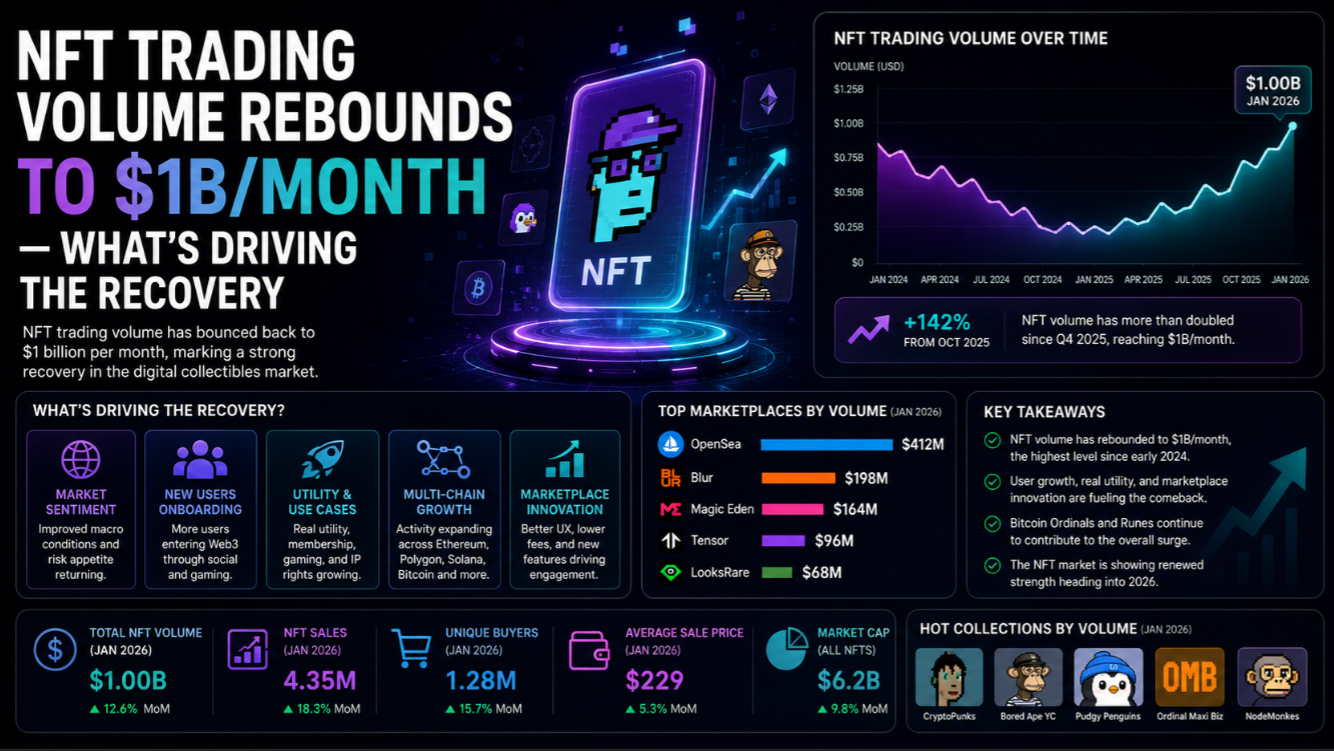
NFT markets are staging a meaningful comeback. Monthly trading volume across all major chains has crossed $1 billion — a level not seen since the frenzied peak of early 2022. Unlike that era, which was driven by speculative flipping and FOMO-fueled floor chasing, the current recovery shows distinct structural characteristics: diversified chain activity, a new cohort of collectors, and a competitive marketplace landscape reshaping fee dynamics.
The Numbers Behind the Rebound
Combined NFT volume across Ethereum, Bitcoin (Ordinals and Runes), Solana, and Polygon surpassed $1.05 billion in March 2026, according to aggregated data from Dune Analytics and NFT-specific trackers. Ethereum-based collections still represent roughly 52% of total value, but their share has compressed from over 90% at the 2022 peak as Bitcoin Ordinals and Solana collections claim larger slices.
The $1 billion figure includes secondary market trades, primary drops, and on-chain royalty settlements. Wash trading — historically a distortion in raw volume figures — appears lower as marketplace protocols implement stricter detection and some platforms tie fee incentives to verified organic volume.
Driver 1: Bitcoin Ordinals and the BTC Collector Base
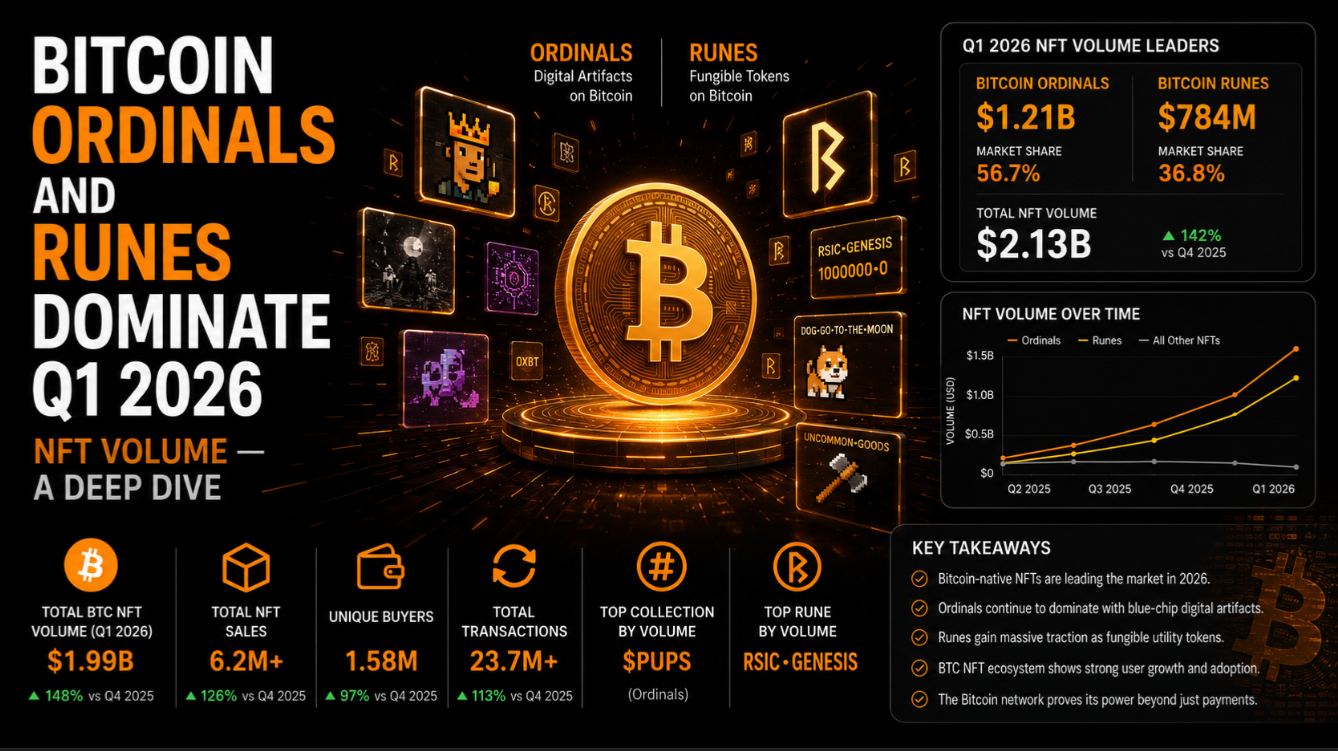
Bitcoin Ordinals have introduced an entirely new collector class to NFTs: long-term Bitcoin holders who previously had no reason to engage with digital art or collectibles. Inscription-based NFTs tap directly into BTC's security and scarcity narrative, making them culturally distinct from Ethereum-based PFPs. Collections like Quantum Cats, NodeMonkes, and Bitcoin Puppets have each recorded floor prices exceeding 0.1 BTC, with total Ordinals volume now accounting for nearly 18% of the monthly total.
The Runes protocol, launched at the April 2024 halving, extended Bitcoin's NFT-adjacent activity further by enabling fungible token issuance on BTC. While Runes are technically fungible, they drive Bitcoin block demand and indirectly support the fee ecosystem that underpins Ordinals activity.
Driver 2: The Aggregator and Fee War
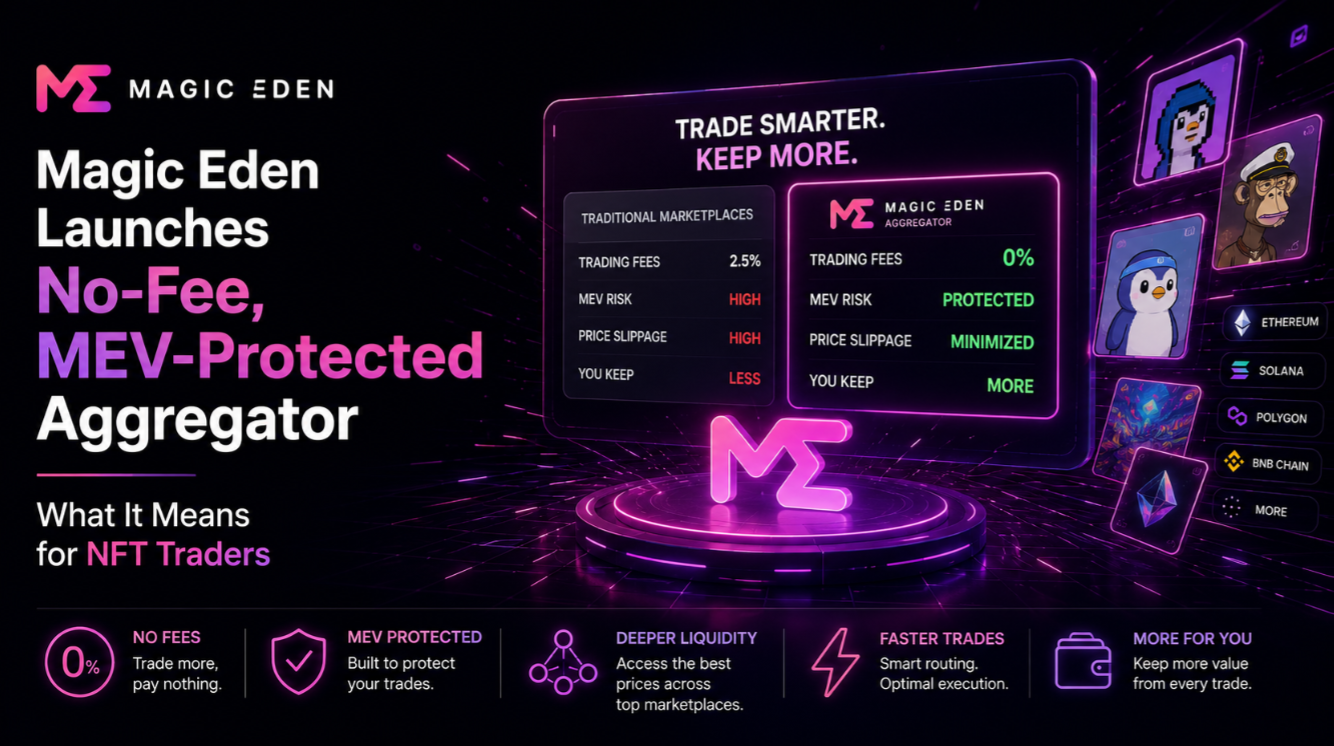
The competitive battle among NFT marketplaces has directly benefited collectors. Blur NFT pioneered the zero-royalty model and token incentive flywheel that compressed spreads and attracted professional traders. OpenSea review forced the incumbent to respond with fee reductions and an improved aggregator interface. Magic Eden review has expanded aggressively beyond Solana, bringing a multi-chain aggregator with MEV-protected order routing.
Lower fees mean higher effective returns on each trade, which reduces the breakeven threshold for profitable activity and draws in more market participants. The fee compression cycle is a structural tailwind for volume even when speculative interest is moderate. See our NFT marketplace ratings for a full comparison of trading costs, royalty policies, and liquidity depth.
Driver 3: A New Collector Cohort
Surveys of NFT buyers in Q1 2026 reveal a meaningful shift in collector demographics. The 2021-2022 boom was dominated by DeFi natives seeking yield and status. The current cycle is drawing in digital-art enthusiasts, brand-conscious consumers responding to physical-digital crossovers (more on this below), and Gen-Z collectors who entered crypto via gaming and social platforms rather than trading.
This new cohort exhibits longer holding periods, lower flip rates, and stronger community engagement metrics — all signals of healthier organic demand compared to the previous cycle's speculative excess.
Risks and What to Watch
Volume recovery does not guarantee sustained price appreciation. The NFT market remains sensitive to broader crypto sentiment, Ethereum gas price spikes, and the quality of new project launches. Key risks include:
- Macro risk-off events compressing discretionary spending
- Ethereum L1 gas spikes pricing out smaller collectors
- Project team rug pulls damaging market-wide sentiment
- Royalty policy uncertainty creating long-term creator retention issues
Despite these risks, the structural improvements — multi-chain distribution, aggregator competition, and a more diverse collector base — suggest the $1 billion monthly threshold is more durable than it was in 2022. The market is leaner, more competitive, and building on genuine utility rather than pure speculation.
Conclusion
NFT trading volume's return to $1 billion per month is the result of compounding structural changes rather than a single catalyst. Bitcoin Ordinals brought a new chain and collector class into the ecosystem. Marketplace competition compressed costs and improved execution. And a new cohort of buyers is engaging with NFTs for cultural and utility reasons beyond speculative flipping. For a full look at which platforms are capturing this volume, check our NFT marketplaces ratings page.