What is Ethereum and why does it matter
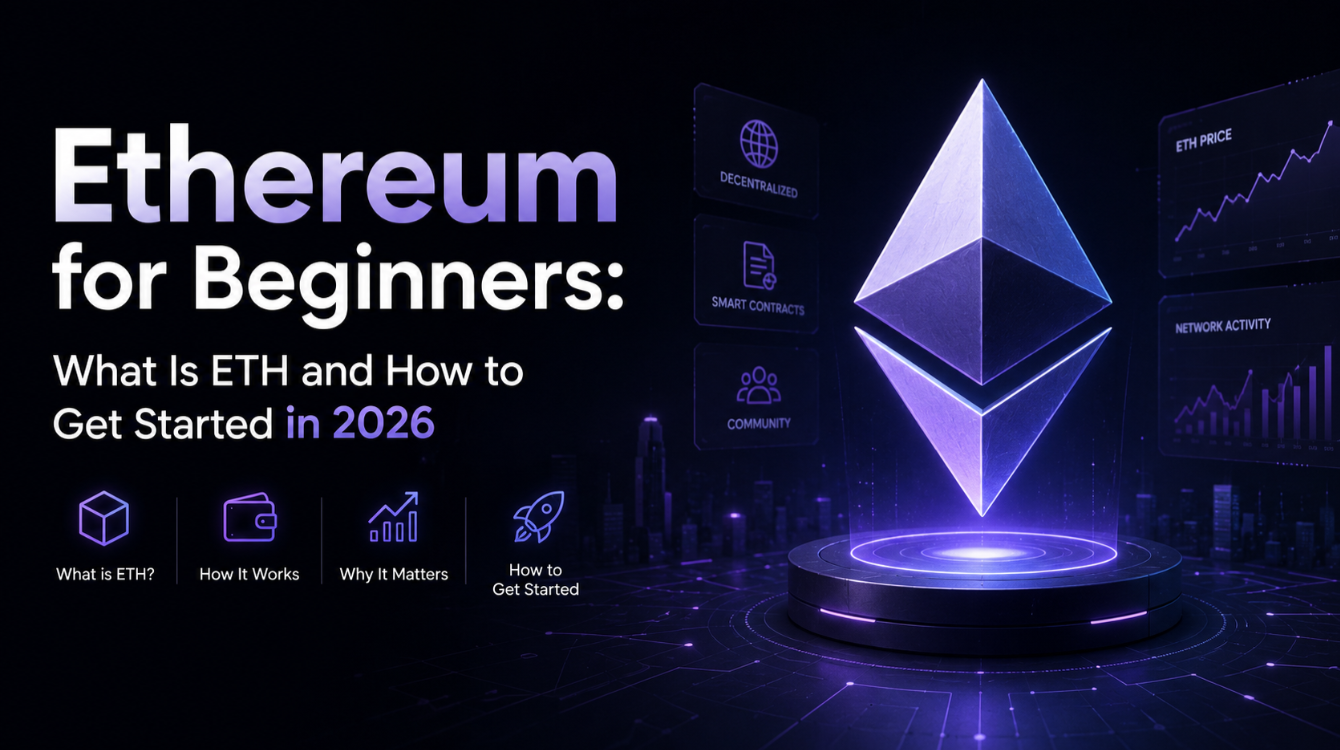
Ethereum is a decentralised blockchain platform launched in 2015 by Vitalik Buterin and co-founders. Unlike Bitcoin, which is primarily a digital currency and store of value, Ethereum is a programmable blockchain — a global computer that can run self-executing programs called smart contracts. This programmability makes Ethereum the foundation of decentralised finance (DeFi), NFTs, decentralised autonomous organisations (DAOs), and most of what people call "crypto applications".
As of 2026, Ethereum is the second-largest cryptocurrency by market capitalisation after Bitcoin. It secures over $120 billion in DeFi protocols, processes millions of transactions daily across its mainnet and Layer 2 networks, and has a thriving developer ecosystem of over 400,000 monthly active developers. Understanding Ethereum is understanding how the decentralised internet is being built.
ETH: the native currency of the Ethereum network
ETH (Ether) is the native cryptocurrency of the Ethereum network. It serves three primary purposes:
- Gas: Every computation on Ethereum costs gas, paid in ETH. Sending ETH, interacting with a smart contract, or minting an NFT all require paying a gas fee in ETH to compensate validators.
- Staking collateral: Validators who secure the Ethereum network by proposing and attesting blocks must stake 32 ETH as economic collateral. If they behave dishonestly, they lose part of that stake (slashing).
- Store of value and money: ETH is increasingly held as a long-term asset. Since EIP-1559 introduced fee burning, ETH supply is often net deflationary during periods of high network activity, adding a scarcity element similar to (but mechanically different from) Bitcoin's fixed supply.
For current price and market data, visit the Ethereum market page. For price predictions and technical analysis, see our ETH price forecast.
How to buy ETH: step by step
Buying ETH for the first time is simpler than it was in 2017. Here is the standard process:
- Choose a regulated exchange: For first-time buyers, Coinbase (US/EU), Kraken (global), or Binance (most countries outside US) are the most established. Each requires identity verification (KYC).
- Create and verify your account: Provide email, create a strong password, enable two-factor authentication (2FA), and complete identity verification (government ID + selfie). This usually takes 10–30 minutes.
- Fund your account: Add fiat via bank transfer (cheapest, takes 1–3 days) or debit/credit card (instant, higher fees typically 1.5–3.5%).
- Buy ETH: Navigate to the trading section, select ETH, enter the amount in fiat you want to spend, review the fee, and confirm. You now own ETH — but it is still held by the exchange.
- Consider a self-custody wallet: For amounts you plan to hold, withdrawing to a self-custody wallet removes exchange counterparty risk. See the next section.
Self-custody wallets: taking control of your ETH
When your ETH sits on an exchange, the exchange holds the private keys. "Not your keys, not your coins" is a mantra in the industry for a reason: multiple exchanges have collapsed (FTX, Celsius, Voyager) with users unable to recover funds. For holdings beyond what you plan to trade actively, a self-custody wallet is the safer choice.
MetaMask is the most popular Ethereum wallet, used by over 30 million people. It is a browser extension and mobile app. Setup takes 5 minutes: install the extension, create a wallet, write down your 12-word seed phrase on paper (never digital), and confirm it. The seed phrase is your master key — anyone with it controls your funds. Store it in a secure physical location, never in a cloud service or photo.
For larger holdings (above $5,000–$10,000), consider a hardware wallet: Ledger or Trezor. These store private keys on a dedicated offline device, meaning even if your computer is compromised, your ETH is safe. Hardware wallets work seamlessly with MetaMask for DeFi interactions while keeping keys offline.
Understanding Ethereum addresses and transactions
Every Ethereum wallet has a public address — a string of 42 characters starting with "0x" (example: 0xAbCd...1234). This is like a bank account number: you can share it to receive ETH or tokens. Your private key (or seed phrase) is what authorises outgoing transactions — never share it.
When you send ETH, the transaction includes: the sender address, recipient address, amount, gas limit, max fee, and your cryptographic signature. Validators include it in a block, confirm it with their stake, and the recipient's balance updates. You can track any transaction using its transaction hash (txHash) on Etherscan.io — the public Ethereum block explorer.
Gas fees: what you pay to use Ethereum
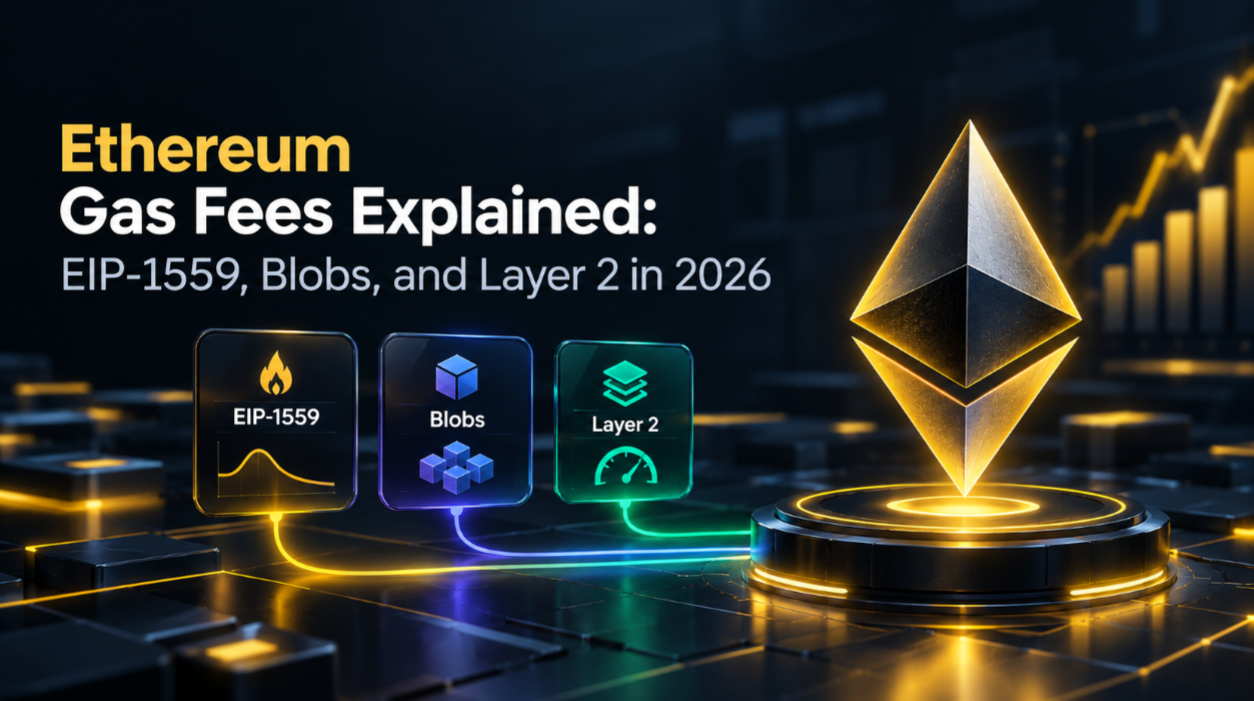
Gas fees are the cost of using the Ethereum network. They are paid in ETH and go to validators who process your transaction. Fees vary based on network demand: during busy periods, fees spike; during quiet periods (weekends, late-night UTC), they are lowest.
For beginners, most wallets (including MetaMask) automatically estimate an appropriate gas fee. You can reduce fees by timing non-urgent transactions for low-activity periods, or by using Layer 2 networks like Arbitrum for most everyday DeFi interactions, where fees are fractions of a cent.
What can you actually do with ETH
ETH is not just a currency to hold — it is access to a global financial system. Things you can do with ETH:
- Earn staking yield: Deposit ETH into a liquid staking protocol (Lido, Rocket Pool) to earn 3–5% APY with no minimum and no technical requirements.
- Lend and borrow: Supply ETH or stablecoins to Aave to earn interest, or borrow against your ETH without selling it.
- Trade tokens: Swap any ERC-20 token for another on Uniswap, the most used decentralised exchange, with no account required — just a wallet connection.
- Collect NFTs: Buy, sell, and collect digital art, gaming items, and collectibles on OpenSea or Blur.
- Participate in governance: Hold governance tokens (earned via DeFi participation) to vote on protocol decisions.
- Send value globally: Transfer ETH to anyone in the world in seconds, with no bank intermediary or geographic restriction.
ERC-20 tokens: the broader Ethereum ecosystem
Ethereum hosts thousands of tokens created using the ERC-20 standard. Stablecoins (USDC, USDT, DAI) are ERC-20 tokens pegged to the US dollar — invaluable for moving value without crypto price risk. DeFi governance tokens (UNI, AAVE, CRV), wrapped Bitcoin (WBTC), and liquid staking tokens (stETH, rETH) are all ERC-20 tokens on Ethereum.
Your MetaMask wallet holds ETH and ERC-20 tokens at the same address. You interact with all of them using the same wallet. When you swap tokens on Uniswap or lend on Aave, you are working with ERC-20 tokens. The Lido DAO token and EigenLayer are examples of prominent ERC-20 ecosystem tokens.
Ethereum Layer 2 networks: cheaper and faster
Ethereum's main scalability solution is its Layer 2 ecosystem. Rollups like Arbitrum execute transactions off the main chain and batch-settle on Ethereum, delivering sub-cent fees with the same security guarantees. For everyday DeFi activity — swapping, lending, staking — L2 networks are the recommended starting point for beginners. You bridge ETH from mainnet once, then operate at 100x lower cost on the L2.
Common beginner mistakes to avoid
- Sharing your seed phrase: No legitimate service, support agent, or wallet will ever ask for your seed phrase. If someone asks, it is a scam. Your seed phrase gives complete control of all assets in your wallet.
- Using an exchange wallet for everything: Exchanges are for buying and selling. For holding, use self-custody. FTX users learned this the hard way in 2022.
- Sending to the wrong address: Blockchain transactions are irreversible. Always double-check the first and last four characters of any address before confirming. Use address book features in your wallet.
- Falling for phishing sites: Fake versions of MetaMask, Uniswap, and major DeFi sites circulate constantly. Bookmark official URLs, never click links from emails or social media DMs.
- Ignoring gas fees: A $5 gas fee on a $20 purchase is a 25% overhead. Use L2 networks for small amounts and check gas before confirming any transaction.
- FOMO buying: Buying ETH during peak excitement after a large price run-up is a classic mistake. Dollar-cost averaging — buying fixed amounts regularly — reduces timing risk.
Where to learn more about Ethereum
The best learning resources for beginners: ethereum.org (official, excellent documentation), Bankless (newsletter and podcast), The Defiant (news and education), and Week in Ethereum News (weekly technical digest). For hands-on practice, Ethereum testnet faucets let you experiment with wallets and DeFi with fake ETH at no cost. Use Sepolia testnet for safe experimentation before committing real funds.
For ongoing market data and analysis, bookmark the Ethereum market overview and the ETH price forecast. For wallet guidance, our MetaMask review covers setup, security, and best practices in full.
This article is for educational purposes only. Not financial advice. Cryptocurrency investments carry significant risk of loss. Never invest more than you can afford to lose. Always conduct your own research.