The rivalry that defines blockchain in 2026
Ethereum and Solana are the two most consequential smart-contract platforms of 2026. Ethereum launched in 2015 and pioneered decentralised applications; Solana launched in 2020 with a radically different architecture targeting throughput that Ethereum could not match. Five years on, both networks are thriving — but for different reasons and different users. Understanding the real technical and practical differences is essential for anyone choosing where to build, invest, or transact.
Architecture: proof-of-stake with very different designs
Both Ethereum and Solana use proof-of-stake consensus, but the similarity ends there. Ethereum is a modular blockchain: the base layer (L1) focuses on security and decentralisation. Scalability is delegated to Layer 2 rollups — separate chains that post their state proofs to Ethereum. This creates a rich ecosystem of specialised execution environments with Ethereum's security guarantees.
Solana is a monolithic blockchain: all execution, consensus, and data availability happen on a single layer. Solana achieves high throughput via several innovations: Proof of History (a cryptographic clock allowing validators to agree on event ordering without extensive communication), Gulf Stream (mempool-less transaction forwarding), and Turbine (block propagation over a tree of network paths). The result is a single chain capable of processing 50,000–65,000 theoretical transactions per second (TPS) versus Ethereum mainnet's ~15–30 TPS.
Throughput and speed: raw numbers vs real-world experience
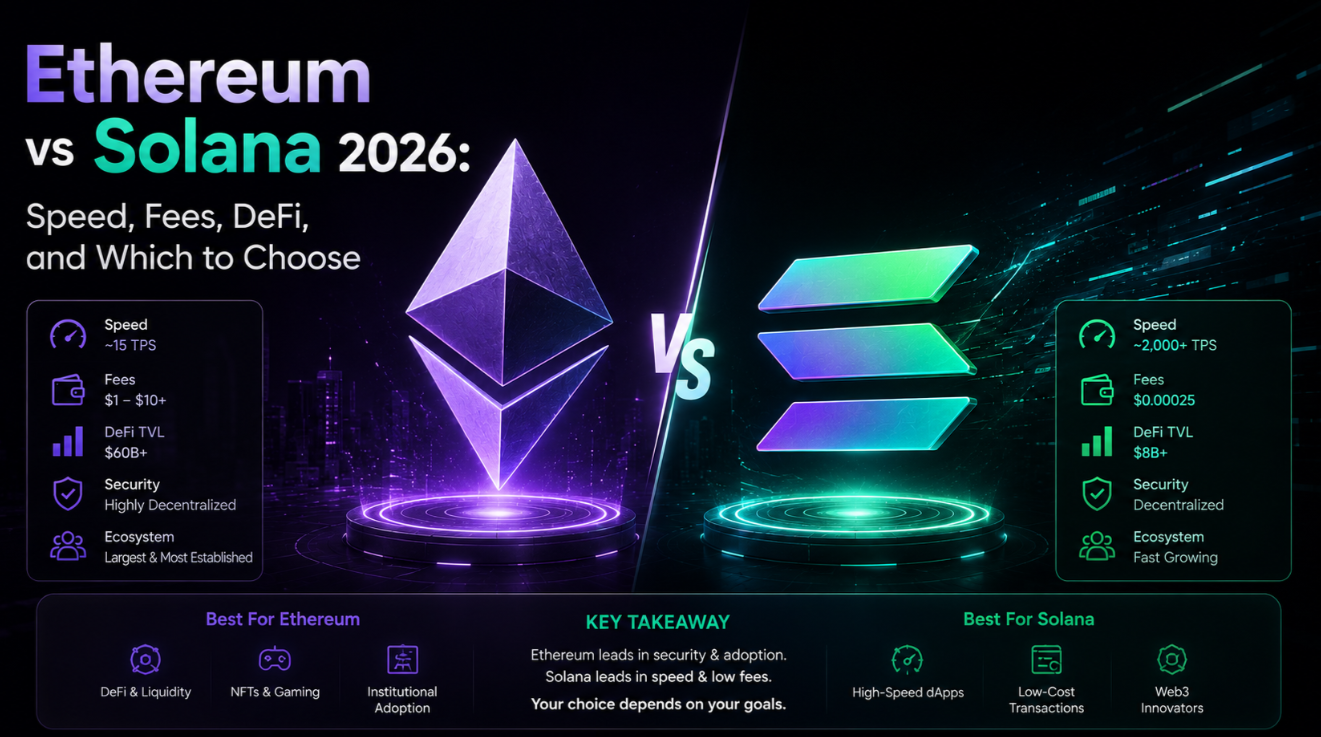
Solana's raw TPS advantage is real but context-dependent. In practice, Solana sustains 3,000–5,000 TPS of real user transactions. Ethereum mainnet sustains 15–30 TPS. The gap is about 150–200x in favour of Solana.
But for Ethereum users operating on Layer 2 networks, the comparison changes. Arbitrum and Base together process 50–100 TPS each, with theoretical capacity in the thousands. zkSync and Starknet add further capacity. The aggregate L2 ecosystem already exceeds Solana's throughput — and all of it settles proofs to Ethereum L1. The key difference: L2 transactions require bridging to the right network and carry a different UX than a single unified chain.
Transaction fees: a radical difference
Solana fees are designed to be negligible: a base fee of 5,000 lamports (0.000005 SOL, fractions of a cent). During high demand, a priority fee system similar to Ethereum's tips allows users to pay more for faster inclusion. Even with priority fees during peak periods, Solana transactions rarely exceed $0.02.
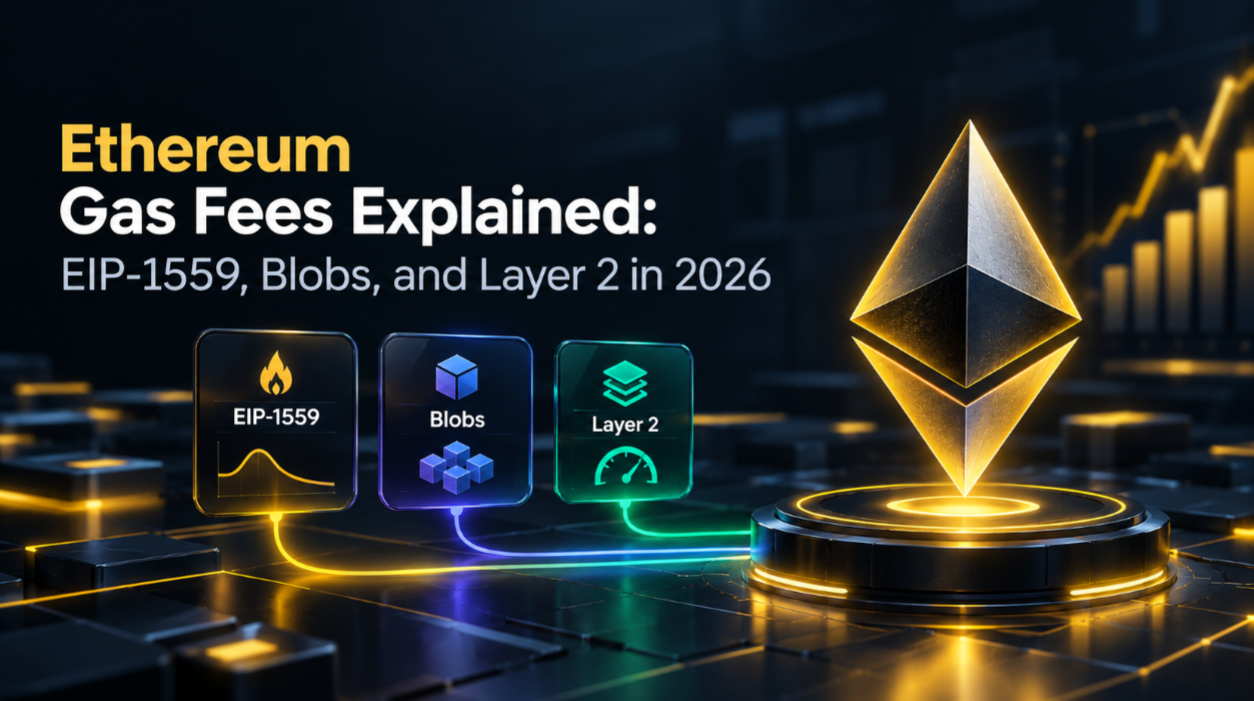
Ethereum mainnet fees are significantly higher — $1–20+ for complex interactions during moderate to high demand. However, on Ethereum L2s (post-EIP-4844), fees are $0.001–0.01 per transaction, comparable to or cheaper than Solana. The practical fee advantage of Solana over Ethereum has largely been neutralised by L2 adoption — with the caveat that L2 usage requires a one-time bridge transaction.
Decentralisation and validator landscape
Ethereum has over one million active validators as of 2026, distributed globally. The 32 ETH minimum entry requirement is offset by liquid staking pools that allow smaller participants. The validator set is large enough that no single entity controls more than ~33% — and the network is designed to tolerate up to 33% malicious or offline validators without losing finality.
Solana has approximately 3,000 active validators. Hardware requirements are significantly higher than Ethereum: a Solana validator requires a high-performance server (128 GB RAM, NVMe SSDs, 10+ Gbps network) costing $10,000–$30,000+. This creates a smaller, more specialised validator set. Solana's Nakamoto coefficient (the number of validators needed to collude to halt the network) is roughly 20–30, lower than Ethereum's but competitive with most other proof-of-stake chains.
Reliability and uptime: Solana's historical weakness
Solana's most significant weakness has been network reliability. The chain experienced multiple partial or full outages between 2021 and 2023: spam-induced consensus failures, degraded performance under extreme load, and validator restart events. These outages lasted hours to days and resulted in real financial losses for DeFi users unable to manage positions.
Since the Firedancer validator client (built by Jump Crypto) began rolling out in late 2024, Solana's stability has improved markedly. Firedancer is a ground-up rewrite of the validator in C, designed for extreme performance and resilience. By 2026, Solana has not experienced a major network outage for over 18 months. The track record is improving, but Ethereum's zero-major-outage history since launch remains a differentiator for risk-sensitive applications.
DeFi ecosystems compared
Ethereum's DeFi ecosystem is older, larger, and more battle-tested. Total value locked (TVL) across Ethereum L1 + L2s exceeds $120 billion. The flagship protocols — Aave, Uniswap, Curve, MakerDAO — have years of on-chain track records, multiple security audits, and the deepest liquidity in crypto.
Solana's DeFi ecosystem has grown rapidly. Jupiter (DEX aggregator), Raydium (AMM), Kamino (yield optimization), and Drift (perpetuals) are among the leading protocols. Solana's DeFi TVL is $8–12 billion — roughly 10% of Ethereum's — but growing faster. For users prioritising low fees and high speed, Solana's DeFi is compelling. See the Ethereum market overview and ETH price forecast for current metrics.
NFT and consumer applications: where each chain dominates
Ethereum dominated the NFT market from 2017 through 2022 — CryptoPunks, Bored Apes, Azuki, and most high-value collections live there. Ethereum's NFT ecosystem benefits from network effects, established marketplaces (OpenSea, Blur, Reservoir), and the perception of permanence for high-value assets.
Solana became the preferred chain for high-volume, low-cost NFT activity: generative collections, gaming assets, and social tokens. Magic Eden is Solana's dominant NFT marketplace. By 2026, both chains are active in NFTs, with Ethereum holding larger average sale values and Solana hosting higher transaction volumes.
Developer experience and ecosystem maturity
Ethereum has a decade-long head start in developer tooling. The EVM (Ethereum Virtual Machine) is the most widely supported smart contract environment: Solidity and Vyper are the dominant smart contract languages, with deep support in Hardhat, Foundry, Remix, and Tenderly. Every major oracle, bridge, and infrastructure provider supports EVM first.
Solana uses a different programming model: Rust-based smart contracts (called programs) deployed to a runtime called Sealevel. The learning curve is steeper than Solidity, and the tooling ecosystem (Anchor framework, Solana Playground, Metaplex) is smaller but functional. Solana attracts developers who prioritise performance over ecosystem depth.
Which should you choose in 2026?
- Choose Ethereum (+ L2) for: Maximum security, largest DeFi TVL, most audited protocols, EVM tooling, high-value NFTs, governance participation, institutional DeFi.
- Choose Solana for: Sub-cent transaction fees without bridging, high-frequency trading, consumer apps requiring instant UX, cost-sensitive gaming and social applications.
- Both make sense for: Multi-chain portfolios, cross-chain arbitrage, ecosystem diversification.
The "Ethereum killer" narrative has faded. Solana is not trying to replace Ethereum — it is carving out its own niche. The future is multi-chain, with Ethereum + L2s and Solana serving different segments of the market.
Investing perspective: ETH vs SOL
ETH is the native asset of the largest smart-contract ecosystem by TVL, with proven staking yield, deflationary mechanics via EIP-1559 burns, and the deepest institutional infrastructure. SOL offers higher beta growth potential as the ecosystem matures, but with more volatility and execution risk. Most portfolio approaches treat ETH as a core holding and SOL as a satellite position. See the full ETH price forecast for our market analysis.
This article is for educational purposes only. Not financial advice. Crypto assets carry high risk of loss. Past performance is not indicative of future results.