Hong Kong launches the world's first formal stablecoin issuer licensing regime under the HKMA, requiring reserve audits, redemption guarantees, and capital buffers — positioning the city as Asia's regulated crypto-asset hub.
The UK Financial Conduct Authority has published its final rules on crypto-asset promotions, requiring all firms marketing to UK consumers to obtain FCA approval, implement risk warnings, and introduce a 24-hour cooling-off period for first-time investors.
MiCA Phase 2 extends the EU regulatory framework to decentralised finance, imposing disclosure and governance requirements on DeFi protocols with EU-accessible interfaces and demanding stablecoin operators hold segregated reserves.
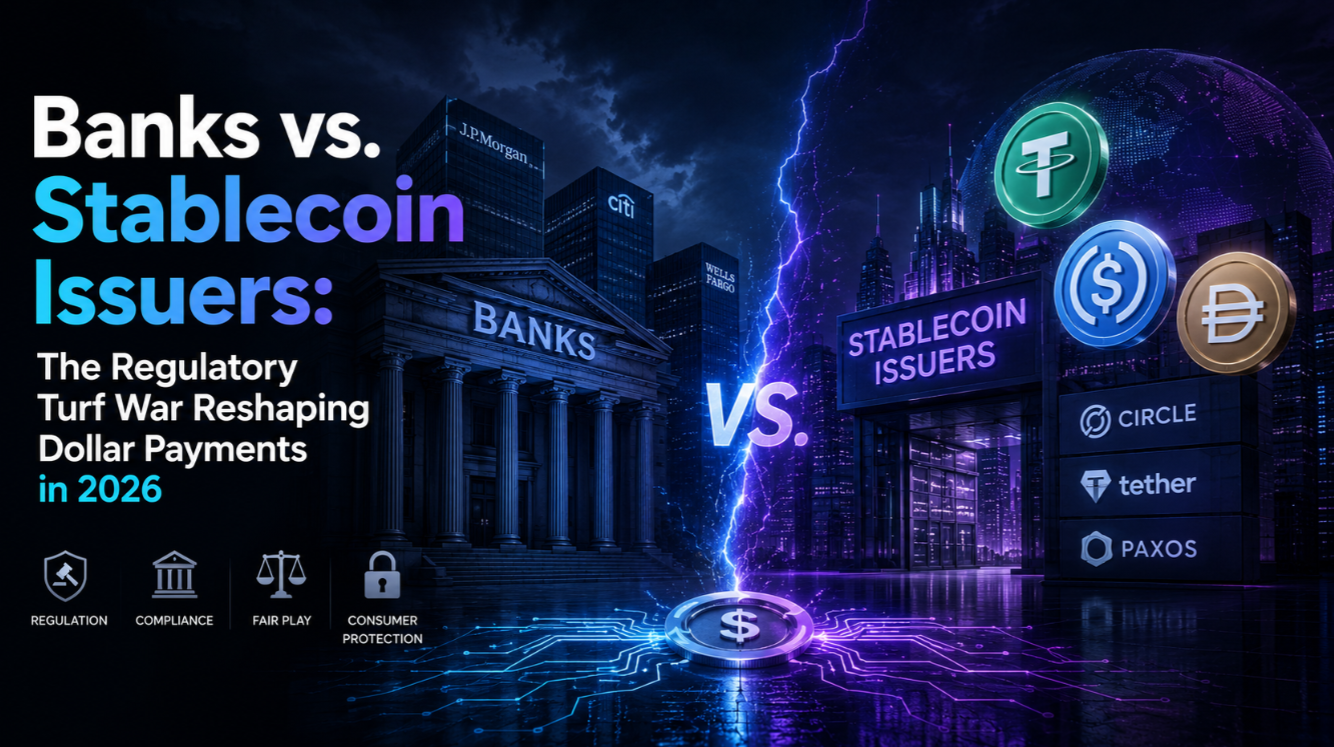
The GENIUS Act opened the door for non-bank stablecoin issuers — and the banking industry is fighting back on three fronts simultaneously. Who controls the rails for a $300B stablecoin market will shape global payments for decades.
The CLARITY Act clears a historic bipartisan Senate hurdle, establishing the first comprehensive US federal framework for digital assets and redefining the SEC–CFTC boundary for cryptocurrencies.
JPMorgan's permissioned digital dollar JPM Coin has processed $5 trillion in cumulative settlement volume since 2019. The milestone confirms that enterprise blockchain payment rails are production-grade — and handling more institutional flows than most public-chain metrics reveal.
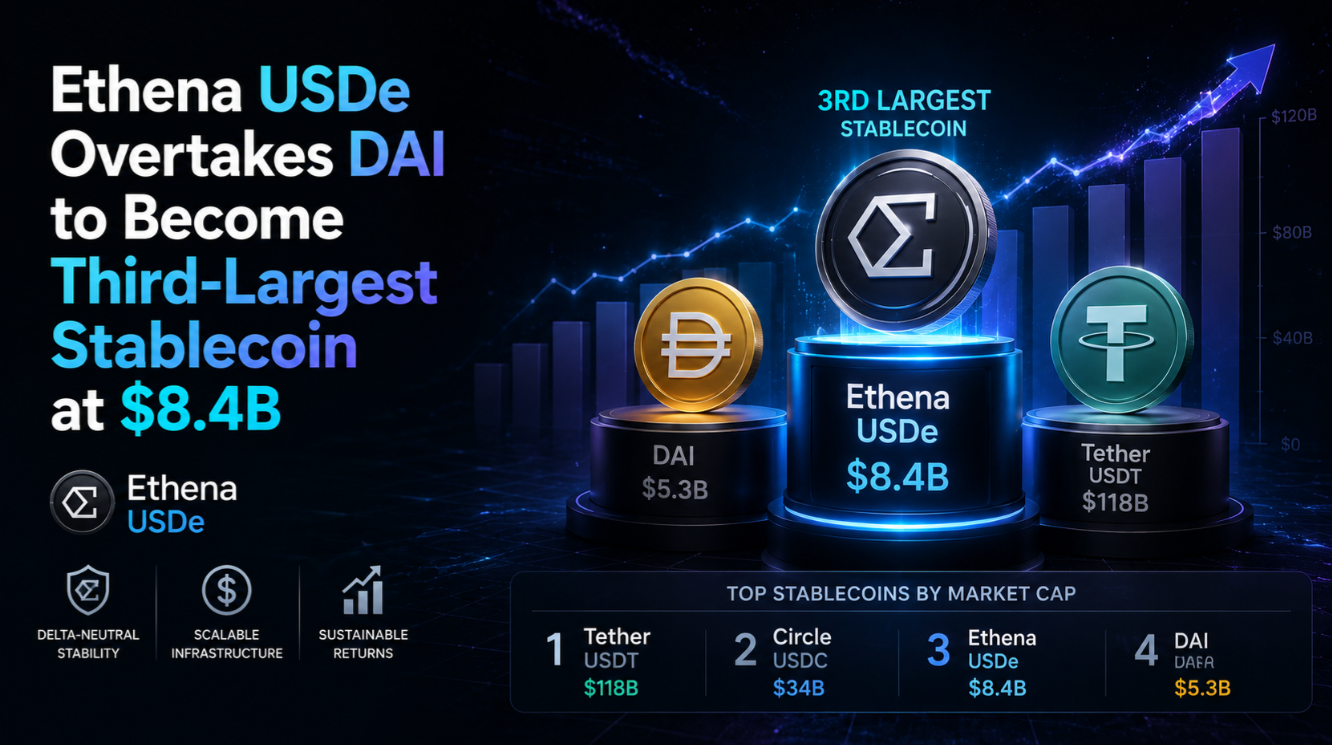
Ethena's yield-bearing USDe has surpassed DAI in market cap to claim the third spot in the stablecoin rankings. The milestone signals a structural shift toward delta-neutral synthetic designs as the dominant format for decentralised dollar exposure.
PayPal's PYUSD stablecoin has crossed $1 billion in supply on Solana and is now live across 35 million merchants, powering Xoom remittances and expanding into Solana DeFi protocols — a genuine mainstream moment for stablecoin payments.
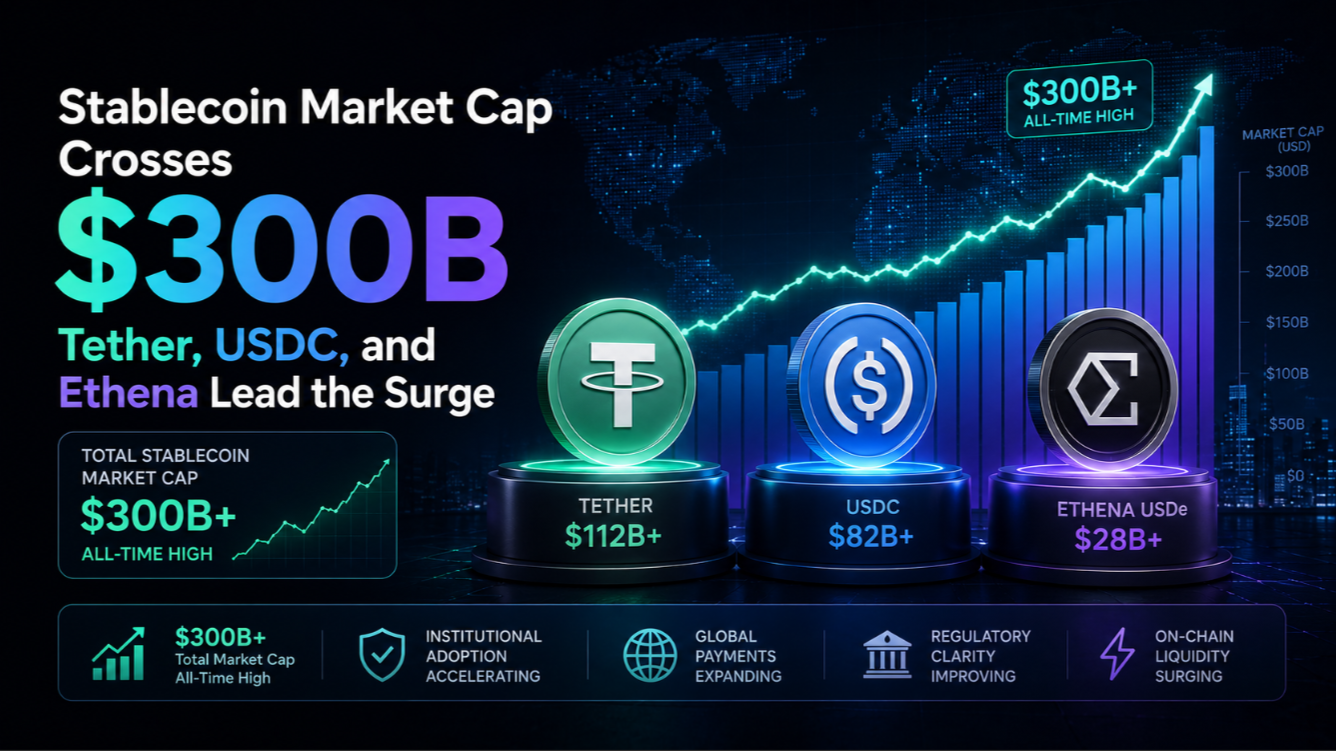
The combined market cap of all stablecoins has hit $300 billion for the first time. Tether holds 48 % of supply, USDC advances on institutional demand, and Ethena's USDe has overtaken DAI as the third-largest dollar-pegged token.
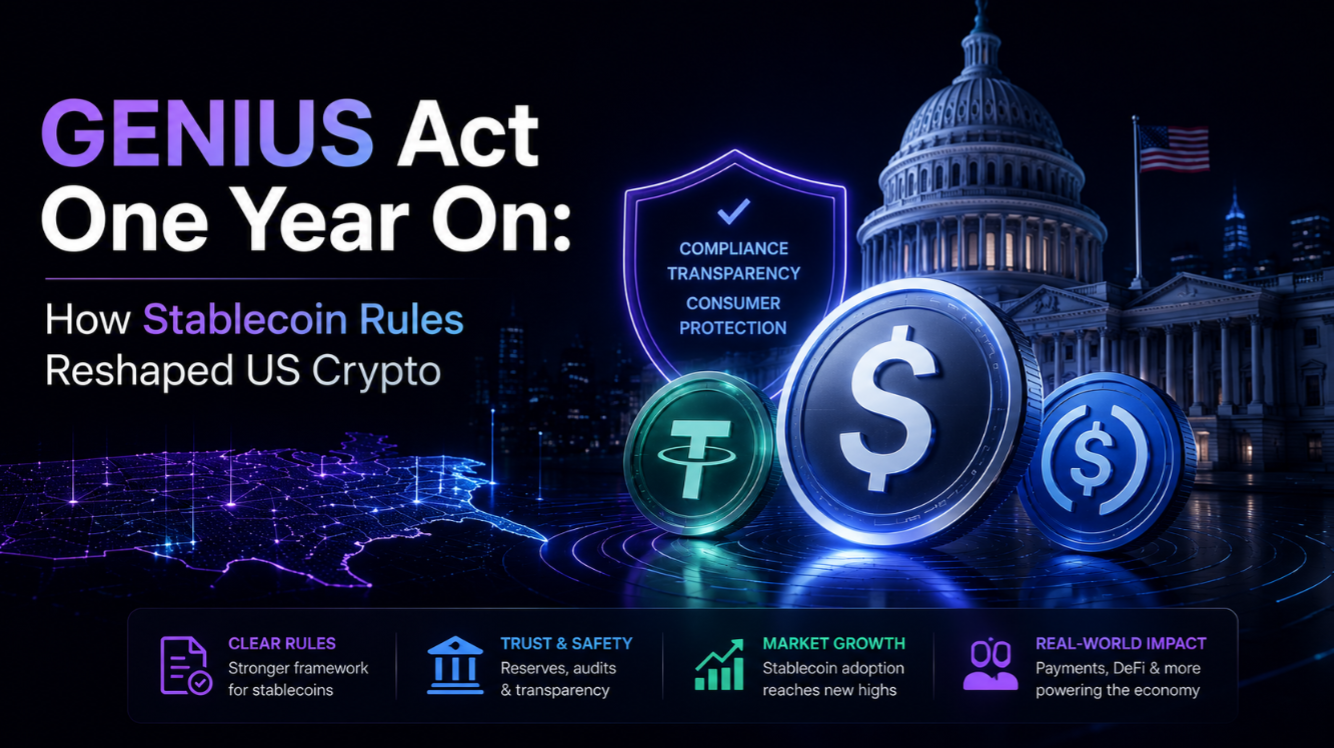
One year after the GENIUS Act, US stablecoin regulation transformed the ecosystem. Tether and Circle adapted, new bank-issued stablecoins like USAT launched, and yield-bearing tokens emerged. How compliance reshaped the market.
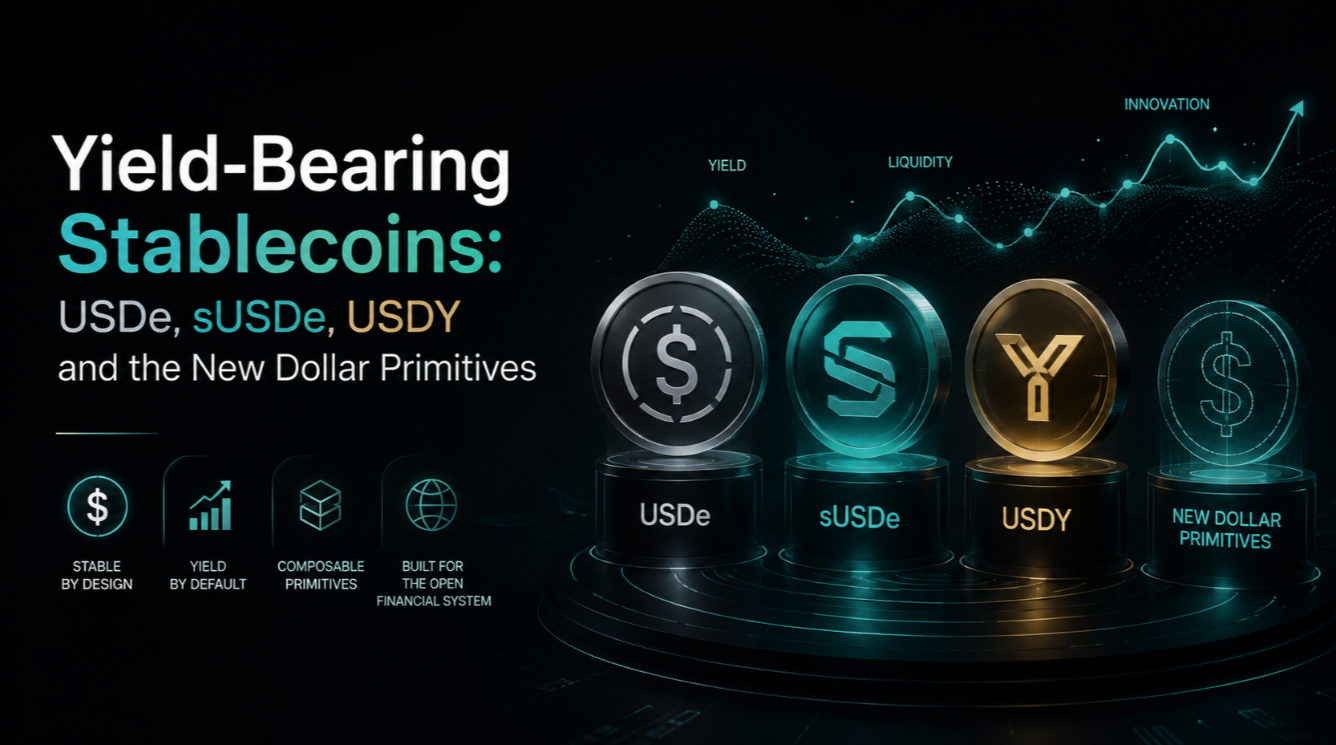
A deep-dive into yield-bearing stablecoins in 2026 — how Ethena's USDe and sUSDe work, the risks of delta-neutral mechanisms, how USDY and BUIDL differ, and how to choose the right product for your risk profile.
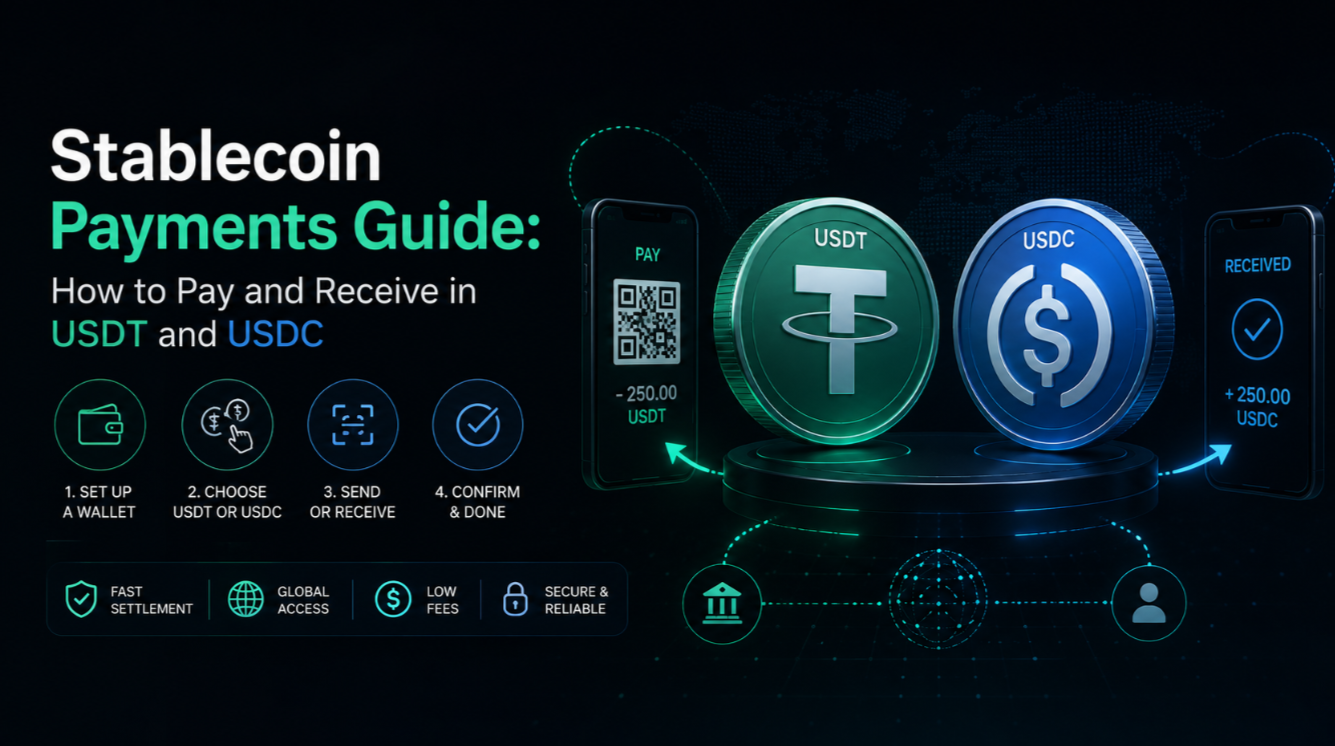
A practical guide to making and receiving payments in USDC and USDT — covering network selection, step-by-step sending, business payment processors, fiat off-ramps, security best practices, and tax implications.
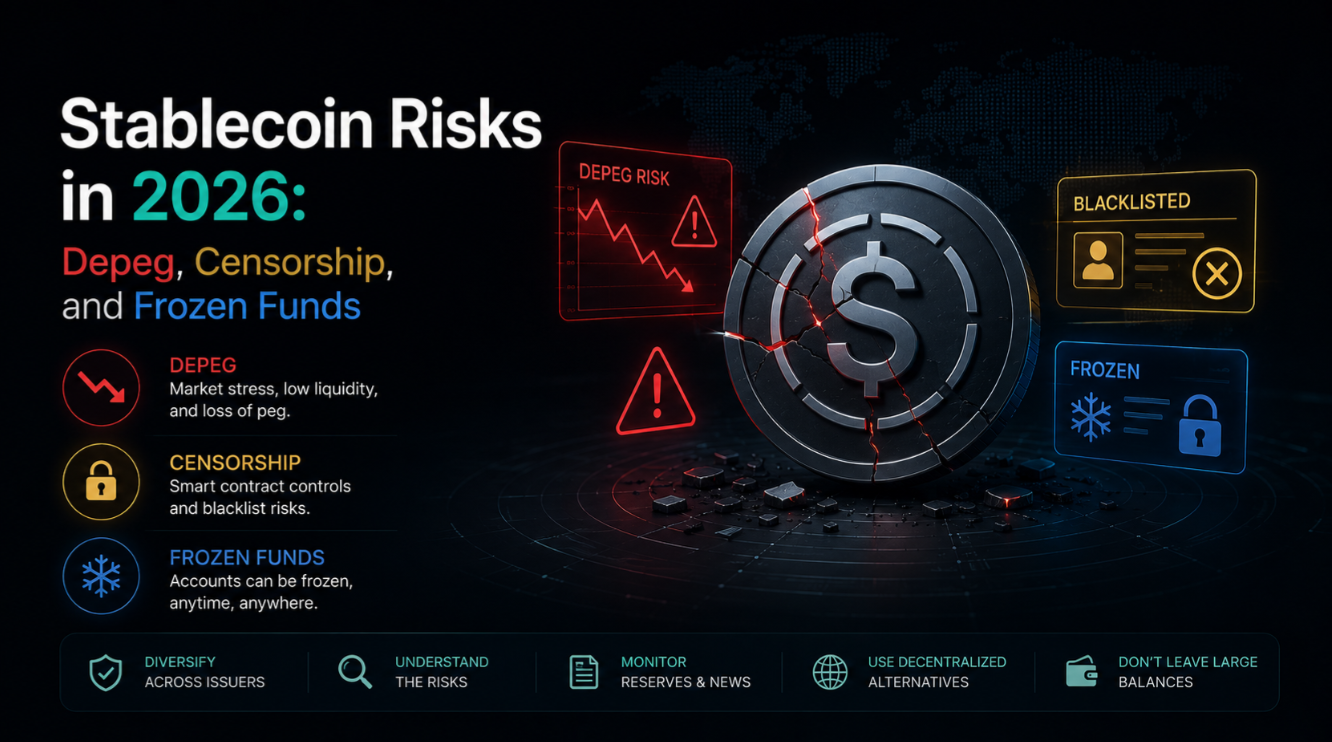
The complete guide to stablecoin risk — how depegs happen, which stablecoins can freeze your funds, what the UST collapse taught us, and how to diversify across stablecoins to reduce tail risk.
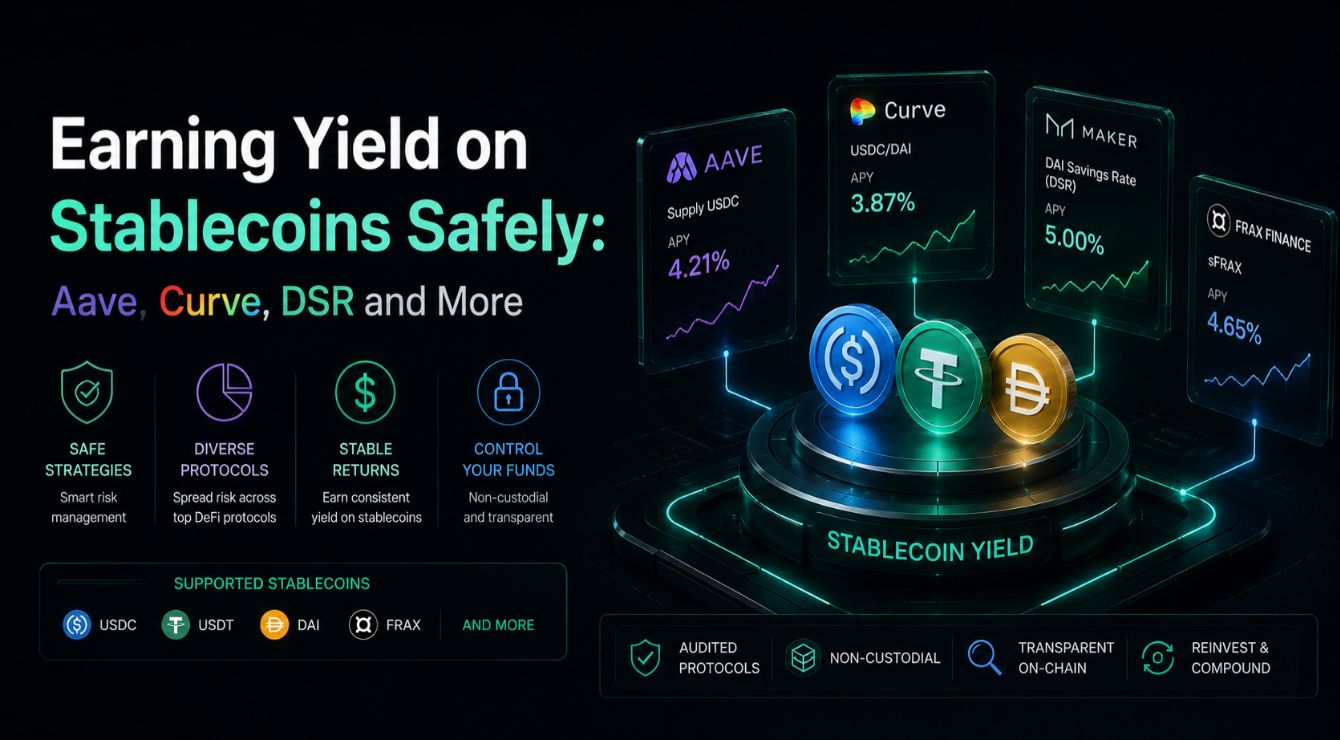
A practical guide to earning sustainable yield on USDC, USDT, and DAI in 2026 — covering Aave, Curve Finance, the DAI Savings Rate, yield aggregators, and tokenised T-bill products with honest risk assessments.
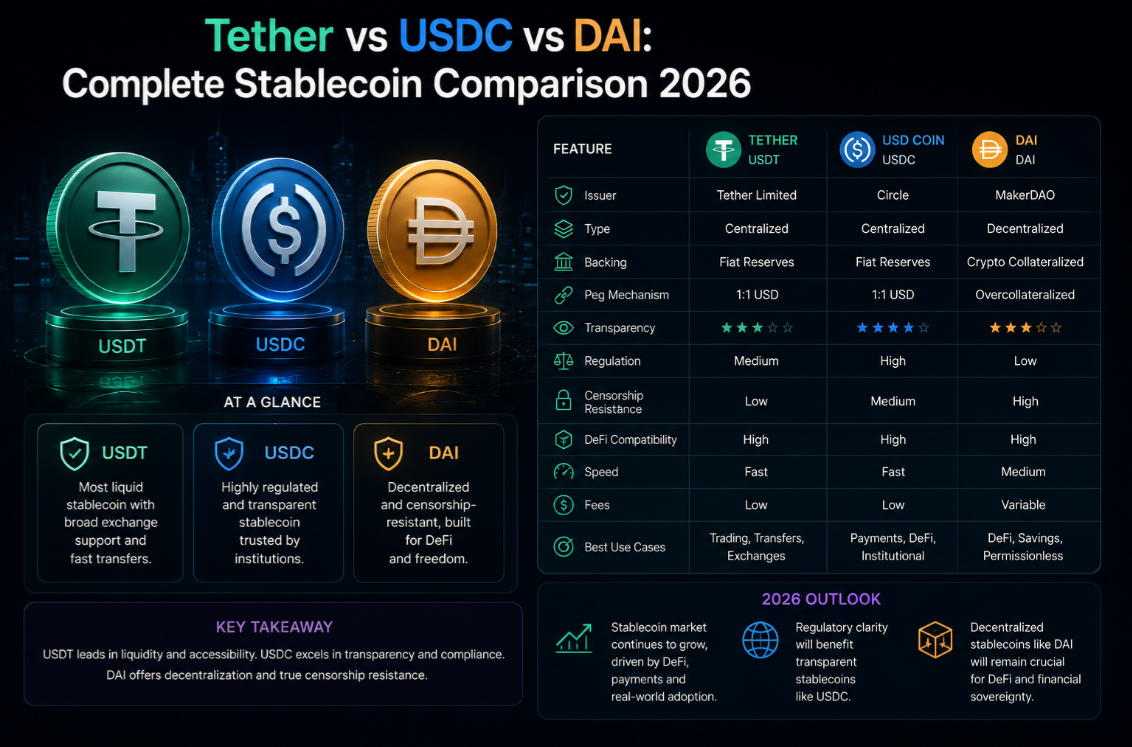
A comprehensive comparison of the three largest stablecoins — Tether (USDT), USD Coin (USDC), and DAI — covering reserve quality, censorship resistance, DeFi integration, peg history, and which to choose for each use case.
A complete beginner guide to stablecoins in 2026: how they work, the four main types (fiat-backed, crypto-collateralised, algorithmic, yield-bearing), real depeg history, MiCA and GENIUS Act regulation, and how to use them safely.